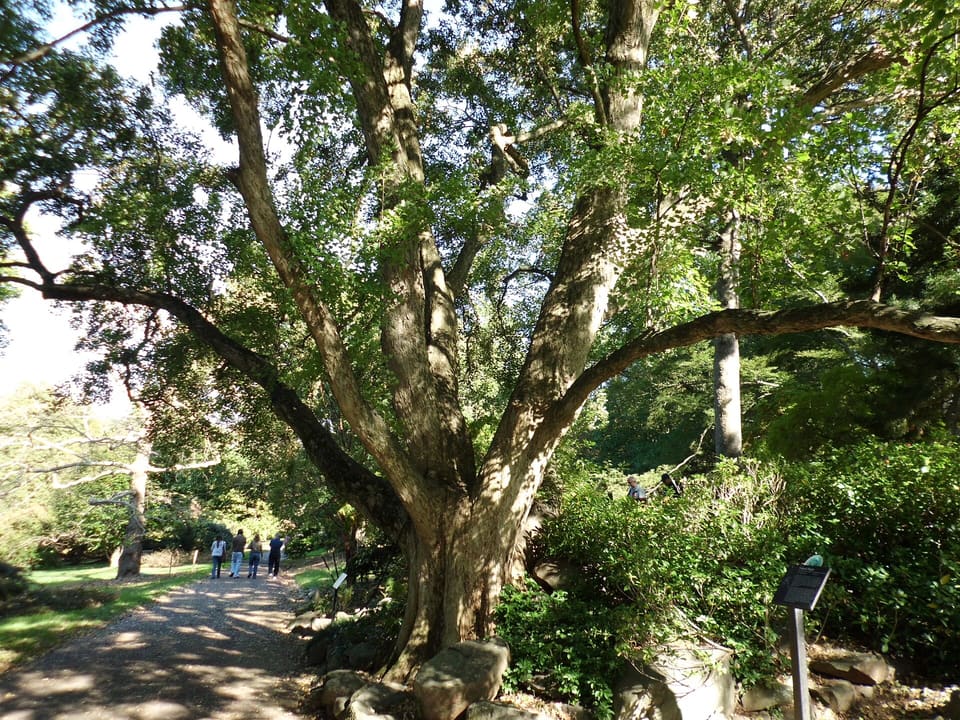
+ Add to My Garden
About the plant What it is and where it grows — not part of any germination protocol.
The plant
Habit Perennial, Tree Extension Gardener Plant Toolbox
Habit tree Plants of the World Online
Height 25-35 ft 8-11 m Extension Gardener Plant Toolbox
Spread 20-30 ft 6.1-9.1 m Extension Gardener Plant Toolbox
Flower Gold/Yellow, Green Extension Gardener Plant Toolbox
Blooms Spring Extension Gardener Plant Toolbox
Native range China North-Central, China South-Central, China Southeast, Taiwan GBIF Backbone Taxonomy
Hardiness zones 5-9 Extension Gardener Plant Toolbox Growing conditions
Sun Full sun Extension Gardener Plant Toolbox
Soil Clay, Loam (Silt), Sand Extension Gardener Plant Toolbox
Soil pH Acid (<6.0), Neutral (6.0-8.0) Extension Gardener Plant Toolbox
Moisture Good Drainage, Moist, Occasionally Dry, Occasionally Wet Extension Gardener Plant Toolbox Toxicity is noted only where a source states it. No note here is not a finding of safety.
Sources: Extension Gardener Plant Toolbox — NC State Extension; Plants of the World Online — Royal Botanic Gardens, Kew; GBIF Backbone Taxonomy — Global Biodiversity Information Facility.
Worth knowing The trident maple's leaves usually have three lobes. It is a popular choice for bonsai. It honors the Dutch plant hunter J. Buerger. Wikipedia: Acer buergerianum This source reports three treatments. All are shown.
Protocol 1 N. C. Deno, 1993 Difficulty Moderate Rated by us, not by the source.
Start around September 16, 2027 for a May 3 last frost. Too late for spring 2027 — that needed starting on September 15, 2026.
1 Warm moist stratification
Duration: 90 days · Temperature: 70°F 21°C
2 Cold moist stratification
Duration: 90 days · Temperature: 40°F 4°C
about 3 months from start to step 2. Germination happens during step 2, in 112 days.
89% germination in 70–112 days.
Seed Germination Theory and Practice, 2nd ed. — N. C. Deno, 1993 · Ch. 20, Acer p. 83Public domain Show the original text Acer (Aceraceae). The three dominant themes in this genus are the diversity of germination behaviors, the presence of impervious seed coats in about half of the species, and the large percentages (90% an more) of empty seed coats in some of the samples even though the seeds were collected from thriving natural colonies. The genus divides into three groups. (a) Seeds ripen in late spring, germinate immediately at 70 (and 40), and do not survive dry storage. (b) Seeds ripen in fall, tolerate dry storage, and usually germinate at 40. (c) Seeds ripen in fall, usually tolerate dry storage, have an impervious seed coat, and mayor may not have inhibitors. The discovery of an impervious seed coat in A. buergerianum germ. 40(82% in 6-8 w), 70-40(89% in 10-16 w), and outdoor treatment (59% in March and April). The preliminary 3 m at 70 slowed down the germination at 40, but did not affect the overall percent germination. Removing the seed coats or producing a hole in the seed coats only increased the percentage that rotted (presumably due td mechanical injury). Although the seeds were obtained from an isolated specimen, all contained endosperm and 80-90% were viable. Seed Germination Theory and Practice, 2nd ed., Ch. 20, Acer p. 83. Quoted exactly. Every value on this card comes from this record, except the difficulty rating, which is ours; the step names come from a fixed list. Protocol 2 N. C. Deno, 1993 Difficulty Low Rated by us, not by the source.
Start around February 8, 2027 for a May 3 last frost.
1 Cold moist stratification
Temperature: 40°F 4°C
Germination happens during step 1, in 56 days.
82% germination in 42–56 days.
Seed Germination Theory and Practice, 2nd ed. — N. C. Deno, 1993 · Ch. 20, Acer p. 83Public domain Show the original text Acer (Aceraceae). The three dominant themes in this genus are the diversity of germination behaviors, the presence of impervious seed coats in about half of the species, and the large percentages (90% an more) of empty seed coats in some of the samples even though the seeds were collected from thriving natural colonies. The genus divides into three groups. (a) Seeds ripen in late spring, germinate immediately at 70 (and 40), and do not survive dry storage. (b) Seeds ripen in fall, tolerate dry storage, and usually germinate at 40. (c) Seeds ripen in fall, usually tolerate dry storage, have an impervious seed coat, and mayor may not have inhibitors. The discovery of an impervious seed coat in A. buergerianum germ. 40(82% in 6-8 w), 70-40(89% in 10-16 w), and outdoor treatment (59% in March and April). The preliminary 3 m at 70 slowed down the germination at 40, but did not affect the overall percent germination. Removing the seed coats or producing a hole in the seed coats only increased the percentage that rotted (presumably due td mechanical injury). Although the seeds were obtained from an isolated specimen, all contained endosperm and 80-90% were viable. Seed Germination Theory and Practice, 2nd ed., Ch. 20, Acer p. 83. Quoted exactly. Every value on this card comes from this record, except the difficulty rating, which is ours; the step names come from a fixed list. Protocol 3 N. C. Deno, 1993 Difficulty Moderate Rated by us, not by the source.
1 Sow outdoors and leave it
Up in March and April.
No stated waiting before sowing.
59% germination.
This source doesn't state how long step 1 lasts.
Seed Germination Theory and Practice, 2nd ed. — N. C. Deno, 1993 · Ch. 20, Acer p. 83Public domain Show the original text Acer (Aceraceae). The three dominant themes in this genus are the diversity of germination behaviors, the presence of impervious seed coats in about half of the species, and the large percentages (90% an more) of empty seed coats in some of the samples even though the seeds were collected from thriving natural colonies. The genus divides into three groups. (a) Seeds ripen in late spring, germinate immediately at 70 (and 40), and do not survive dry storage. (b) Seeds ripen in fall, tolerate dry storage, and usually germinate at 40. (c) Seeds ripen in fall, usually tolerate dry storage, have an impervious seed coat, and mayor may not have inhibitors. The discovery of an impervious seed coat in A. buergerianum germ. 40(82% in 6-8 w), 70-40(89% in 10-16 w), and outdoor treatment (59% in March and April). The preliminary 3 m at 70 slowed down the germination at 40, but did not affect the overall percent germination. Removing the seed coats or producing a hole in the seed coats only increased the percentage that rotted (presumably due td mechanical injury). Although the seeds were obtained from an isolated specimen, all contained endosperm and 80-90% were viable. Seed Germination Theory and Practice, 2nd ed., Ch. 20, Acer p. 83. Quoted exactly. Every value on this card comes from this record, except the difficulty rating, which is ours; the step names come from a fixed list. How each step is done , in Deno’s words, and what Verified and Derived mean.
Germination trials Readers’ own records of sowing this species, published after review. Share your trial · All trials
No trials shared for this species yet.