Deno’s GardenMy Garden

Daphne mezereum

February Daphne · Mezereon · Paradise Plant

Family ThymelaeaceaeGenus Daphne

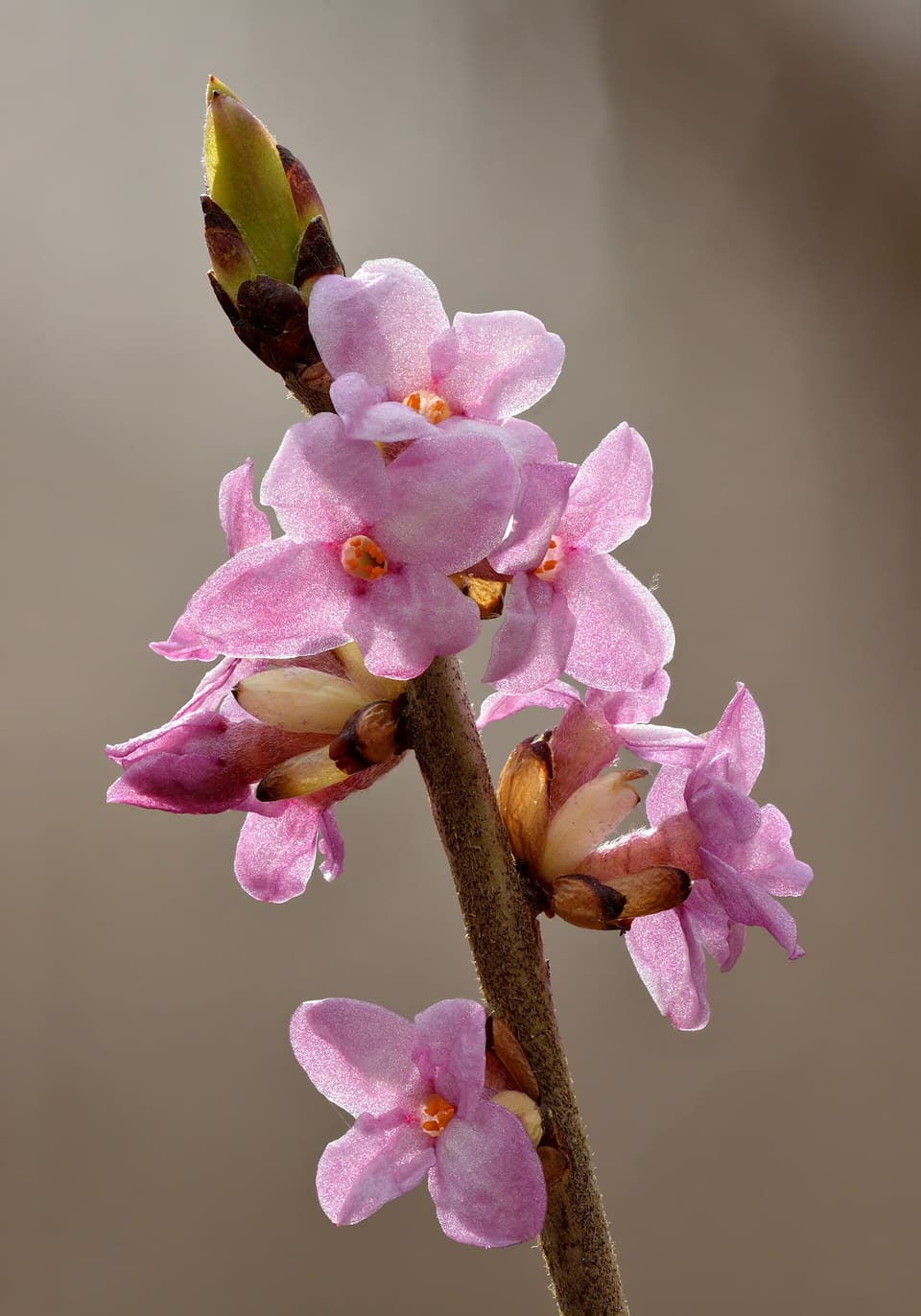
Pink four-petalled flowers clustered directly on a bare woody stem, with a green leaf bud at the tip
FlowerIvar LeidusCC BY-SA 4.0

About the plant

What it is and where it grows — not part of any germination protocol.

The plant

Habit
ShrubExtension Gardener Plant Toolbox
Habit
shrubPlants of the World Online
Height
3-5 ft0.9-1.5 mExtension Gardener Plant Toolbox
Spread
3-5 ft0.9-1.5 mExtension Gardener Plant Toolbox
Flower
Pink, Purple/Lavender, WhiteExtension Gardener Plant Toolbox
Blooms
SpringExtension Gardener Plant Toolbox
Native range
Albania, Altay, Austria, Baltic States, Belarus, Belgium and elsewhereGBIF Backbone Taxonomy
Hardiness zones
4-7Extension Gardener Plant Toolbox

Growing conditions

Sun
Deep shade; Partial ShadeExtension Gardener Plant Toolbox
Soil
High Organic Matter, SandExtension Gardener Plant Toolbox
Soil pH
Alkaline (>8.0)Extension Gardener Plant Toolbox
Moisture
Good Drainage, MoistExtension Gardener Plant Toolbox

Toxicity is noted only where a source states it. No note here is not a finding of safety.

Sources: Extension Gardener Plant Toolbox — NC State Extension; Plants of the World Online — Royal Botanic Gardens, Kew; GBIF Backbone Taxonomy — Global Biodiversity Information Facility.

Worth knowing

  • Its bright red fruit is very poisonous to people, but thrushes are immune and eat it. Mezereon comes from the Arabic māzaryūn. Britain's wild plants have been protected since 1975. Wikipedia: Daphne mezereum

This source reports 6 treatments. All are shown.

Protocol 1

DerivedN. C. Deno, 1996

Difficulty Moderate Rated by us, not by the source.

Start around October 21, 2027 for a May 3 last frost. Too late for spring 2027 — that needed starting on October 20, 2026.

  1. Cold moist stratification

    Duration: 90 daysTemperature: 40°F 4°C

  2. Warm moist stratification

    Duration: 90 daysTemperature: 70°F 21°C

about 3 months from start to step 2. Germination happens during step 2, in 77 days.

100% germination in 42–77 days.

Seed Germination Theory and Practice, 1st Supplement — N. C. Deno, 1996 · 1st Supplement, Daphne p. 36Public domain
Show the original text
Daphne (Thymelaceae). D. mezereum and its alba form gave somewhat different germination patterns. The seedlings from GA-3 treatment developed a stem and leaves a few weeks after germination, but the seedlings from a 40-70 pattern were slower to develop a stem and leaves and some had to go through 3 m at 40 before such development occurred. The 40-70 and 40-70-40-70 treatments were best. D. mezereum germ. 40-70(26%)-40-70(74% in 1-6 w), 70 GA-3(60% in 5-10 w), and 70D(15%)-40(8%)-70(15%). D. mezereum alba germ. 40-70(100% in 6-11 w), 70 GA-3(55% in 3-5 w), and 70D(10%).
Seed Germination Theory and Practice, 1st Supplement, 1st Supplement, Daphne p. 36. Quoted exactly. Every value on this card comes from this record, except the difficulty rating, which is ours; the step names come from a fixed list.

Protocol 2

DerivedN. C. Deno, 1996

Difficulty Moderate Rated by us, not by the source.

Start around May 29, 2027 for a May 3 last frost. Too late for spring 2027 — that needed starting on May 28, 2026.

  1. Cold moist stratification

    Duration: 90 daysTemperature: 40°F 4°C

  2. Warm moist stratification

    Duration: 90 daysTemperature: 70°F 21°C

    26 germinated in this phase.

  3. Cold moist stratification

    Duration: 90 daysTemperature: 40°F 4°C

  4. Warm moist stratification

    Duration: 90 daysTemperature: 70°F 21°C

about 9 months from start to step 4. Germination happens during step 4, in 42 days.

74% germination in 7–42 days.

Seed Germination Theory and Practice, 1st Supplement — N. C. Deno, 1996 · 1st Supplement, Daphne p. 36Public domain
Show the original text
Daphne (Thymelaceae). D. mezereum and its alba form gave somewhat different germination patterns. The seedlings from GA-3 treatment developed a stem and leaves a few weeks after germination, but the seedlings from a 40-70 pattern were slower to develop a stem and leaves and some had to go through 3 m at 40 before such development occurred. The 40-70 and 40-70-40-70 treatments were best. D. mezereum germ. 40-70(26%)-40-70(74% in 1-6 w), 70 GA-3(60% in 5-10 w), and 70D(15%)-40(8%)-70(15%). D. mezereum alba germ. 40-70(100% in 6-11 w), 70 GA-3(55% in 3-5 w), and 70D(10%).
Seed Germination Theory and Practice, 1st Supplement, 1st Supplement, Daphne p. 36. Quoted exactly. Every value on this card comes from this record, except the difficulty rating, which is ours; the step names come from a fixed list.

Protocol 3

DerivedN. C. Deno, 1996

Difficulty Moderate Rated by us, not by the source.

Start around January 25, 2027 for a May 3 last frost.

  1. Gibberellic acid soak

  2. Sow and cover

    Temperature: 70°F 21°C

No stated waiting before sowing. Then 70 days to germinate.

60% germination in 35–70 days.

Seed Germination Theory and Practice, 1st Supplement — N. C. Deno, 1996 · 1st Supplement, Daphne p. 36Public domain
Show the original text
Daphne (Thymelaceae). D. mezereum and its alba form gave somewhat different germination patterns. The seedlings from GA-3 treatment developed a stem and leaves a few weeks after germination, but the seedlings from a 40-70 pattern were slower to develop a stem and leaves and some had to go through 3 m at 40 before such development occurred. The 40-70 and 40-70-40-70 treatments were best. D. mezereum germ. 40-70(26%)-40-70(74% in 1-6 w), 70 GA-3(60% in 5-10 w), and 70D(15%)-40(8%)-70(15%). D. mezereum alba germ. 40-70(100% in 6-11 w), 70 GA-3(55% in 3-5 w), and 70D(10%).
Seed Germination Theory and Practice, 1st Supplement, 1st Supplement, Daphne p. 36. Quoted exactly. Every value on this card comes from this record, except the difficulty rating, which is ours; the step names come from a fixed list.

Protocol 4

DerivedN. C. Deno, 1996

Difficulty Moderate Rated by us, not by the source.

Start around March 1, 2027 for a May 3 last frost.

  1. Gibberellic acid soak

  2. Sow and cover

    Temperature: 70°F 21°C

No stated waiting before sowing. Then 35 days to germinate.

55% germination in 21–35 days.

Seed Germination Theory and Practice, 1st Supplement — N. C. Deno, 1996 · 1st Supplement, Daphne p. 36Public domain
Show the original text
Daphne (Thymelaceae). D. mezereum and its alba form gave somewhat different germination patterns. The seedlings from GA-3 treatment developed a stem and leaves a few weeks after germination, but the seedlings from a 40-70 pattern were slower to develop a stem and leaves and some had to go through 3 m at 40 before such development occurred. The 40-70 and 40-70-40-70 treatments were best. D. mezereum germ. 40-70(26%)-40-70(74% in 1-6 w), 70 GA-3(60% in 5-10 w), and 70D(15%)-40(8%)-70(15%). D. mezereum alba germ. 40-70(100% in 6-11 w), 70 GA-3(55% in 3-5 w), and 70D(10%).
Seed Germination Theory and Practice, 1st Supplement, 1st Supplement, Daphne p. 36. Quoted exactly. Every value on this card comes from this record, except the difficulty rating, which is ours; the step names come from a fixed list.

Protocol 5

DerivedN. C. Deno, 1996

Difficulty High Rated by us, not by the source.

Start around March 15, 2027 for a May 3 last frost.

  1. Warm moist stratification

    Duration: 90 daysTemperature: 70°F 21°C Light: dark

  2. Cold moist stratification

    Duration: 90 daysTemperature: 40°F 4°C

    8 germinated in this phase.

  3. Warm moist stratification

    Duration: 90 daysTemperature: 70°F 21°C

    15 germinated in this phase.

Steps after step 1 run on after germination.

Germination happens during step 1; time not stated, 21 days assumed.

15% germination.

Seed Germination Theory and Practice, 1st Supplement — N. C. Deno, 1996 · 1st Supplement, Daphne p. 36Public domain
Show the original text
Daphne (Thymelaceae). D. mezereum and its alba form gave somewhat different germination patterns. The seedlings from GA-3 treatment developed a stem and leaves a few weeks after germination, but the seedlings from a 40-70 pattern were slower to develop a stem and leaves and some had to go through 3 m at 40 before such development occurred. The 40-70 and 40-70-40-70 treatments were best. D. mezereum germ. 40-70(26%)-40-70(74% in 1-6 w), 70 GA-3(60% in 5-10 w), and 70D(15%)-40(8%)-70(15%). D. mezereum alba germ. 40-70(100% in 6-11 w), 70 GA-3(55% in 3-5 w), and 70D(10%).
Seed Germination Theory and Practice, 1st Supplement, 1st Supplement, Daphne p. 36. Quoted exactly. Every value on this card comes from this record, except the difficulty rating, which is ours; the step names come from a fixed list.

Protocol 6

DerivedN. C. Deno, 1996

Difficulty High Rated by us, not by the source.

Start around March 15, 2027 for a May 3 last frost.

  1. Sow and cover

    Temperature: 70°F 21°C Light: dark

No stated waiting before sowing. Germination time not stated; 21 days assumed.
10% germination.

Seed Germination Theory and Practice, 1st Supplement — N. C. Deno, 1996 · 1st Supplement, Daphne p. 36Public domain
Show the original text
Daphne (Thymelaceae). D. mezereum and its alba form gave somewhat different germination patterns. The seedlings from GA-3 treatment developed a stem and leaves a few weeks after germination, but the seedlings from a 40-70 pattern were slower to develop a stem and leaves and some had to go through 3 m at 40 before such development occurred. The 40-70 and 40-70-40-70 treatments were best. D. mezereum germ. 40-70(26%)-40-70(74% in 1-6 w), 70 GA-3(60% in 5-10 w), and 70D(15%)-40(8%)-70(15%). D. mezereum alba germ. 40-70(100% in 6-11 w), 70 GA-3(55% in 3-5 w), and 70D(10%).
Seed Germination Theory and Practice, 1st Supplement, 1st Supplement, Daphne p. 36. Quoted exactly. Every value on this card comes from this record, except the difficulty rating, which is ours; the step names come from a fixed list.

Germination trials

Readers’ own records of sowing this species, published after review. Share your trial · All trials

Add to My Garden

View species page