Deno’s GardenMy Garden

Echinocereus pectinatus

Arizona Hedgehog Cactus · Rainbow Cactus · Spiny Hedgehog Cactus · Comb Hedgehog Cactus

Family CactaceaeGenus Echinocereus

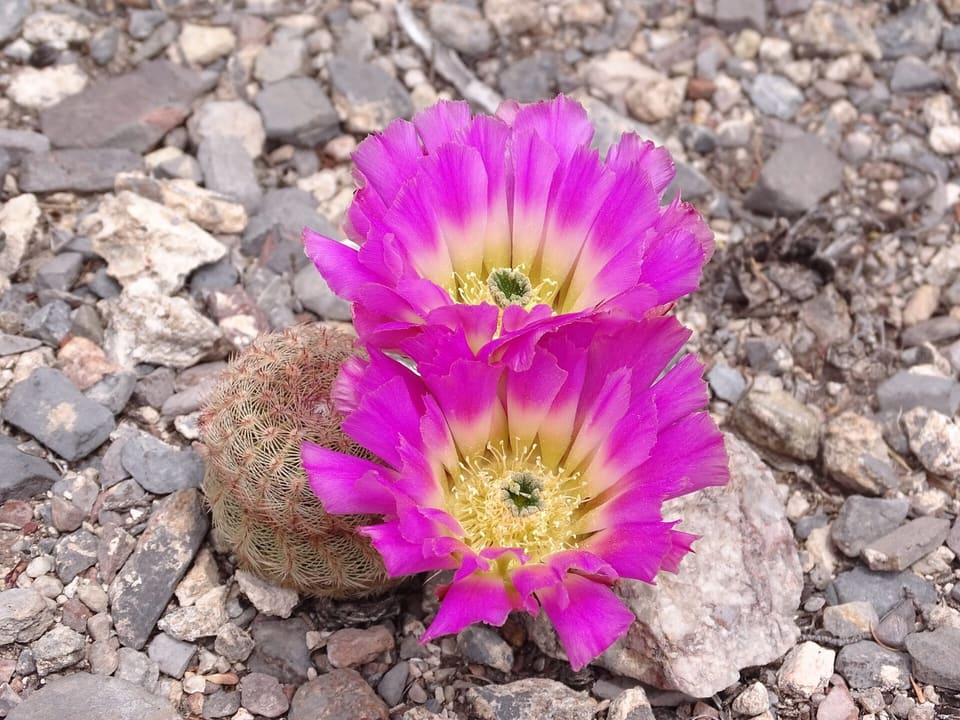
Two magenta flowers with pale throats opening on a small ribbed cactus
FlowerUlises PinedoCC BY 4.0

About the plant

What it is and where it grows — not part of any germination protocol.

Habit
succulent subshrubPlants of the World Online
Habit
Perennial, ShrubPLANTS Database
Flower
MagentaRead from the photograph on this page
Native range
Mexico Northeast, Mexico Northwest, TexasGBIF Backbone Taxonomy

Toxicity is noted only where a source states it. No note here is not a finding of safety.

Sources: Plants of the World Online — Royal Botanic Gardens, Kew; PLANTS Database — USDA NRCS; Read from the photograph on this page — Deno's Garden; GBIF Backbone Taxonomy — Global Biodiversity Information Facility.

This source reports 4 treatments. All are shown.

Protocol 1

DerivedN. C. Deno, 1993

Difficulty Moderate Rated by us, not by the source.

Start around December 28, 2026 for a May 3 last frost.

  1. Clean the flesh off the seed

    Washed free of the sweet pulp.

  2. Gibberellic acid soak

  3. Sow and cover

No stated waiting before sowing. Then 98 days to germinate.

51% germination in 7–98 days.

Deno's seed was hybrids among E. baileyi, pectinatus and reichenbachii. A second sample of fresh seed gave 80%.

Seed Germination Theory and Practice, 2nd ed. — N. C. Deno, 1993 · Ch. 20, EchinocereusPublic domain
Show the original text
Echinocereus (Cactaceae). The discovery that GA-3 was required for the germination of seeds of E. pectinatus hybrids (E. baileyi, pectinatus, and reichenbachii) led to the recognition that fungál products of the gibberelin type are natural requirements for germination … Prior treatments seem to have little effect, and germination was about the same for fresh seeds (51% in 1-14 w), seeds that had been DS up to 3 y (44% in 1-14w), and seeds that had been exposed to outdoor treatment for up to 3 y (45% in 1-14 w). A second sample germ. 80% with fresh seed, and the detailed rate data are presented in Chapter 19. … Prior to the, use of GA-3 a number Of treatments were tried varying times at 40 and 70 and varying the DS. None of these treatments gave more than 5% germination and germination extended over 1-2 y of alternating cycles. … when the capsule first splits, the capsule is collected and the seeds washed free of the sweet pulp. It has been claimed that scarification effects immediate germination, but all abrasion experiments in the present work failed to enhance germination.
Seed Germination Theory and Practice, 2nd ed., Ch. 20, Echinocereus. Quoted exactly. Every value on this card comes from this record, except the difficulty rating, which is ours; the step names come from a fixed list.

Protocol 2

DerivedN. C. Deno, 1993

Difficulty Moderate Rated by us, not by the source.

  1. Clean the flesh off the seed

    Washed free of the sweet pulp.

  2. Sow outdoors and leave it

    Outdoors for up to 3 years.

  3. Gibberellic acid soak

  4. Sow and cover

45% germination in 7–98 days.

Deno's seed was hybrids among E. baileyi, pectinatus and reichenbachii. Three years outdoors made almost no difference.

This source doesn't state how long step 2 lasts.

Seed Germination Theory and Practice, 2nd ed. — N. C. Deno, 1993 · Ch. 20, EchinocereusPublic domain
Show the original text
Echinocereus (Cactaceae). The discovery that GA-3 was required for the germination of seeds of E. pectinatus hybrids (E. baileyi, pectinatus, and reichenbachii) led to the recognition that fungál products of the gibberelin type are natural requirements for germination … Prior treatments seem to have little effect, and germination was about the same for fresh seeds (51% in 1-14 w), seeds that had been DS up to 3 y (44% in 1-14w), and seeds that had been exposed to outdoor treatment for up to 3 y (45% in 1-14 w). A second sample germ. 80% with fresh seed, and the detailed rate data are presented in Chapter 19. … Prior to the, use of GA-3 a number Of treatments were tried varying times at 40 and 70 and varying the DS. None of these treatments gave more than 5% germination and germination extended over 1-2 y of alternating cycles. … when the capsule first splits, the capsule is collected and the seeds washed free of the sweet pulp. It has been claimed that scarification effects immediate germination, but all abrasion experiments in the present work failed to enhance germination.
Seed Germination Theory and Practice, 2nd ed., Ch. 20, Echinocereus. Quoted exactly. Every value on this card comes from this record, except the difficulty rating, which is ours; the step names come from a fixed list.

Protocol 3

DerivedN. C. Deno, 1993

Difficulty Moderate Rated by us, not by the source.

Start around December 28, 2026 for a May 3 last frost.

  1. Clean the flesh off the seed

    Washed free of the sweet pulp.

  2. Dry storage

    Dry stored for up to 3 years.

  3. Gibberellic acid soak

  4. Sow and cover

Then 98 days to germinate.

44% germination in 7–98 days.

Deno's seed was hybrids among E. baileyi, pectinatus and reichenbachii. Dry storage made almost no difference.

This source doesn't state how long step 2 lasts.

Seed Germination Theory and Practice, 2nd ed. — N. C. Deno, 1993 · Ch. 20, EchinocereusPublic domain
Show the original text
Echinocereus (Cactaceae). The discovery that GA-3 was required for the germination of seeds of E. pectinatus hybrids (E. baileyi, pectinatus, and reichenbachii) led to the recognition that fungál products of the gibberelin type are natural requirements for germination … Prior treatments seem to have little effect, and germination was about the same for fresh seeds (51% in 1-14 w), seeds that had been DS up to 3 y (44% in 1-14w), and seeds that had been exposed to outdoor treatment for up to 3 y (45% in 1-14 w). A second sample germ. 80% with fresh seed, and the detailed rate data are presented in Chapter 19. … Prior to the, use of GA-3 a number Of treatments were tried varying times at 40 and 70 and varying the DS. None of these treatments gave more than 5% germination and germination extended over 1-2 y of alternating cycles. … when the capsule first splits, the capsule is collected and the seeds washed free of the sweet pulp. It has been claimed that scarification effects immediate germination, but all abrasion experiments in the present work failed to enhance germination.
Seed Germination Theory and Practice, 2nd ed., Ch. 20, Echinocereus. Quoted exactly. Every value on this card comes from this record, except the difficulty rating, which is ours; the step names come from a fixed list.

Protocol 4

DerivedN. C. Deno, 1993
  1. Dry storage

  2. Cold moist stratification

    Temperature: 40°F 4°C

  3. Warm moist stratification

    Temperature: 70°F 21°C

Germination happens during step 3.

None of these gave more than 5%, over 1-2 years of alternating cycles; abrasion did not help either.

This source doesn't state how long steps 1, 2 and 3 last.

Seed Germination Theory and Practice, 2nd ed. — N. C. Deno, 1993 · Ch. 20, EchinocereusPublic domain
Show the original text
Echinocereus (Cactaceae). The discovery that GA-3 was required for the germination of seeds of E. pectinatus hybrids (E. baileyi, pectinatus, and reichenbachii) led to the recognition that fungál products of the gibberelin type are natural requirements for germination … Prior treatments seem to have little effect, and germination was about the same for fresh seeds (51% in 1-14 w), seeds that had been DS up to 3 y (44% in 1-14w), and seeds that had been exposed to outdoor treatment for up to 3 y (45% in 1-14 w). A second sample germ. 80% with fresh seed, and the detailed rate data are presented in Chapter 19. … Prior to the, use of GA-3 a number Of treatments were tried varying times at 40 and 70 and varying the DS. None of these treatments gave more than 5% germination and germination extended over 1-2 y of alternating cycles. … when the capsule first splits, the capsule is collected and the seeds washed free of the sweet pulp. It has been claimed that scarification effects immediate germination, but all abrasion experiments in the present work failed to enhance germination.
Seed Germination Theory and Practice, 2nd ed., Ch. 20, Echinocereus. Quoted exactly. Every value on this card comes from this record; the step names come from a fixed list.

Germination trials

Readers’ own records of sowing this species, published after review. Share your trial · All trials

Add to My Garden

View species page