Deno’s GardenMy Garden

Erigeron compositus

Cutleaf Daisy · Compound Fleabane · Cut-leaf Fleabane

Family AsteraceaeGenus Erigeron

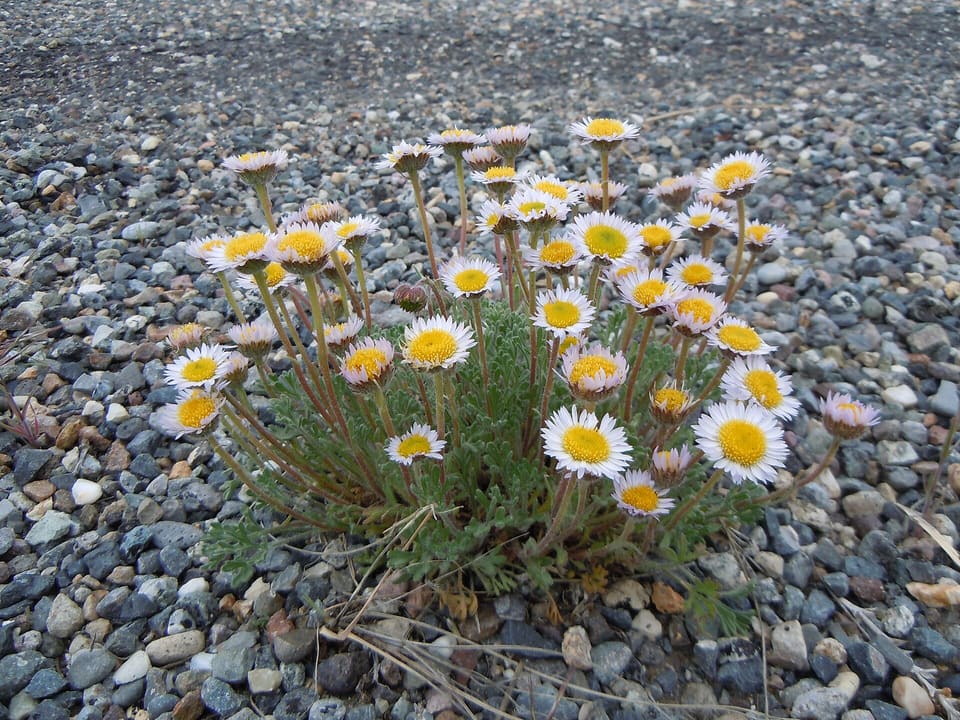
A low tuft carrying many white daisy flowers with yellow centers, growing on gray gravel
The whole plantMatt Lavin from Bozeman, Montana, USACC BY-SA 2.0

About the plant

What it is and where it grows — not part of any germination protocol.

The plant

Habit
Perennial, Forb/herbPLANTS Database
Height
1.0 ft30 cmPLANTS Database
Flower
WhitePLANTS Database
Blooms
Late SpringPLANTS Database
Native range
Alaska, Canada, Greenland, lower 48 statesPLANTS Database

Growing conditions

Sun
Shade tolerance: HighPLANTS Database
Soil
Adapted to coarse, medium, fine textured soilsPLANTS Database
Soil pH
6.1-8.1PLANTS Database
Moisture
Moisture use: LowPLANTS Database
Watering
Drought tolerance: HighPLANTS Database

Toxicity is noted only where a source states it. No note here is not a finding of safety.

Source: PLANTS Database — USDA NRCS.

This source reports 4 treatments. All are shown.

Protocol 1

DerivedN. C. Deno, 1993

Difficulty Low Rated by us, not by the source.

Start around March 15, 2027 for a May 3 last frost.

  1. Sow and cover

    Temperature: 70°F 21°C

No stated waiting before sowing. Germination time not stated; 21 days assumed.

100% germination.

Seed Germination Theory and Practice, 2nd ed. — N. C. Deno, 1993 · Ch. 20, Erigeron p. 139Public domain
Show the original text
Erigeron (Asteraceae). These are mainly-D-70 germinators. Germination failed in 60% of the samples received, and this is believed to be due to the absence of viable seed among the copious chaff. The following species germ. in 4-10 d at 70: E. compositus germ. 70(100%) and 40(32%)-70(68%) using fresh seed. Seed DS 6 m at 70 or 40 germ. 70(100%) and 40(18%)-70(82%).
Seed Germination Theory and Practice, 2nd ed., Ch. 20, Erigeron p. 139. Quoted exactly. Every value on this card comes from this record, except the difficulty rating, which is ours; the step names come from a fixed list.

Protocol 2

DerivedN. C. Deno, 1993

Difficulty Low Rated by us, not by the source.

Start around September 17, 2027 for a May 3 last frost. Too late for spring 2027 — that needed starting on September 16, 2026.

  1. Dry storage

    Duration: 180 days

  2. Sow and cover

    Temperature: 70°F 21°C

about 6 months from start to sowing. Germination time not stated; 21 days assumed.

100% germination.

Seed Germination Theory and Practice, 2nd ed. — N. C. Deno, 1993 · Ch. 20, Erigeron p. 139Public domain
Show the original text
Erigeron (Asteraceae). These are mainly-D-70 germinators. Germination failed in 60% of the samples received, and this is believed to be due to the absence of viable seed among the copious chaff. The following species germ. in 4-10 d at 70: E. compositus germ. 70(100%) and 40(32%)-70(68%) using fresh seed. Seed DS 6 m at 70 or 40 germ. 70(100%) and 40(18%)-70(82%).
Seed Germination Theory and Practice, 2nd ed., Ch. 20, Erigeron p. 139. Quoted exactly. Every value on this card comes from this record, except the difficulty rating, which is ours; the step names come from a fixed list.

Protocol 3

DerivedN. C. Deno, 1993

Difficulty Moderate Rated by us, not by the source.

Start around June 19, 2027 for a May 3 last frost. Too late for spring 2027 — that needed starting on June 18, 2026.

  1. Dry storage

    Duration: 180 days

  2. Cold moist stratification

    Duration: 90 daysTemperature: 40°F 4°C

    18 germinated in this phase.

  3. Warm moist stratification

    Duration: 90 daysTemperature: 70°F 21°C

about 9 months from start to step 3. Germination happens during step 3; time not stated, 21 days assumed.

82% germination.

Seed Germination Theory and Practice, 2nd ed. — N. C. Deno, 1993 · Ch. 20, Erigeron p. 139Public domain
Show the original text
Erigeron (Asteraceae). These are mainly-D-70 germinators. Germination failed in 60% of the samples received, and this is believed to be due to the absence of viable seed among the copious chaff. The following species germ. in 4-10 d at 70: E. compositus germ. 70(100%) and 40(32%)-70(68%) using fresh seed. Seed DS 6 m at 70 or 40 germ. 70(100%) and 40(18%)-70(82%).
Seed Germination Theory and Practice, 2nd ed., Ch. 20, Erigeron p. 139. Quoted exactly. Every value on this card comes from this record, except the difficulty rating, which is ours; the step names come from a fixed list.

Protocol 4

DerivedN. C. Deno, 1993

Difficulty Moderate Rated by us, not by the source.

Start around December 15, 2026 for a May 3 last frost.

  1. Cold moist stratification

    Duration: 90 daysTemperature: 40°F 4°C

    32 germinated in this phase.

  2. Warm moist stratification

    Duration: 90 daysTemperature: 70°F 21°C

about 3 months from start to step 2. Germination happens during step 2; time not stated, 21 days assumed.

68% germination.

Seed Germination Theory and Practice, 2nd ed. — N. C. Deno, 1993 · Ch. 20, Erigeron p. 139Public domain
Show the original text
Erigeron (Asteraceae). These are mainly-D-70 germinators. Germination failed in 60% of the samples received, and this is believed to be due to the absence of viable seed among the copious chaff. The following species germ. in 4-10 d at 70: E. compositus germ. 70(100%) and 40(32%)-70(68%) using fresh seed. Seed DS 6 m at 70 or 40 germ. 70(100%) and 40(18%)-70(82%).
Seed Germination Theory and Practice, 2nd ed., Ch. 20, Erigeron p. 139. Quoted exactly. Every value on this card comes from this record, except the difficulty rating, which is ours; the step names come from a fixed list.

Germination trials

Readers’ own records of sowing this species, published after review. Share your trial · All trials

Add to My Garden

View species page