Fritillaria pudica
Yellow Bell · Yellow Bells · Yellow Fritillaria · Yellow Fritillary
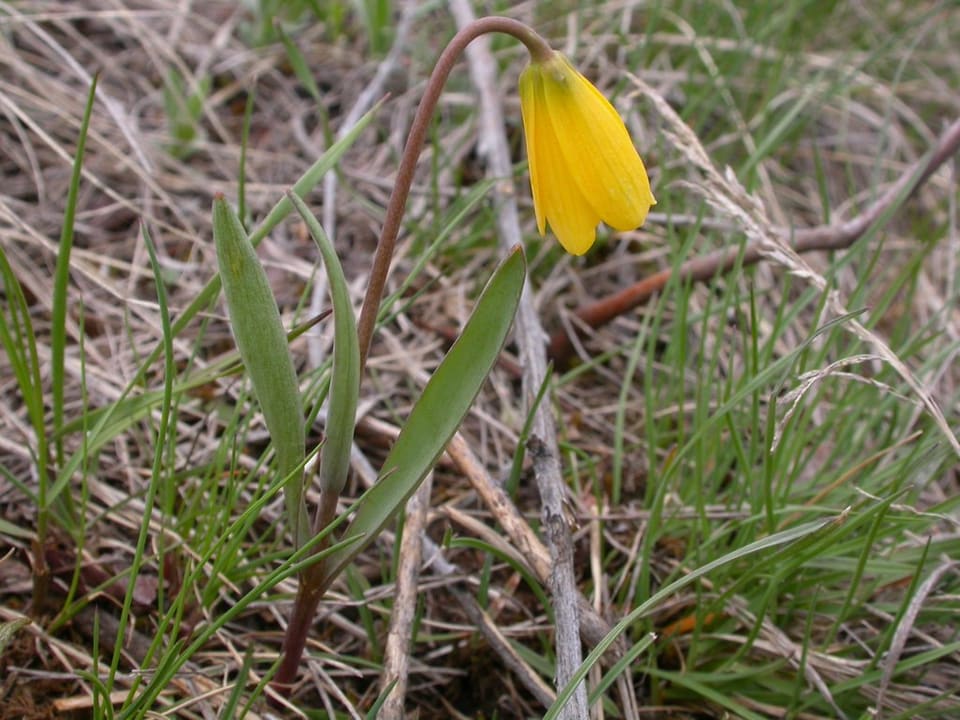

About the plant
What it is and where it grows — not part of any germination protocol.
The plant
- Habit
- bulbous geophytePlants of the World Online
- Habit
- Perennial, Forb/herbPLANTS Database
- Height
- 1.0 ft30 cmPLANTS Database
- Flower
- YellowPLANTS Database
- Blooms
- Early SpringPLANTS Database
- Native range
- Canada, lower 48 statesPLANTS Database
Growing conditions
- Sun
- Shade tolerance: MediumPLANTS Database
- Soil
- Adapted to coarse, medium, fine textured soilsPLANTS Database
- Soil pH
- 6.5-9.0PLANTS Database
- Moisture
- Moisture use: MediumPLANTS Database
- Watering
- Drought tolerance: MediumPLANTS Database
Toxicity is noted only where a source states it. No note here is not a finding of safety.
Sources: Plants of the World Online — Royal Botanic Gardens, Kew; PLANTS Database — USDA NRCS.
Worth knowing
- The single yellow bell turns rusty red or purple as it ages. Bears and rodents dig up the bulbs. Lady Bird Johnson Wildflower Center: Fritillaria pudica
This source reports two treatments. Both are shown.
Protocol 1
DerivedN. C. Deno, 1993Difficulty Moderate
Sow outdoors and leave it
Up in April.
No stated waiting before sowing.
36% germination.
This source doesn't state how long step 1 lasts.
Protocol 2
DerivedN. C. Deno, 1993Difficulty High
Start around August 6, 2027 for a May 3 last frost. Too late for spring 2027 — that needed starting on August 5, 2026.
Cold moist stratification
Duration: 90 daysTemperature: 40°F 4°C
Warm moist stratification
Duration: 90 daysTemperature: 70°F 21°C
Cold moist stratification
Duration: 90 daysTemperature: 40°F 4°C
about 6 months from start to step 3. Germination happens during step 3, in 63 days.
20% germination in 14–63 days.
How each step is done, in Deno’s words, and what Verified and Derived mean.
Germination trials
Readers’ own records of sowing this species, published after review. Share your trial · All trials
No trials shared for this species yet.