Hypericum perforatum
Common St. John's Wort · Gammock · Goatweed · Common St. Johnswort
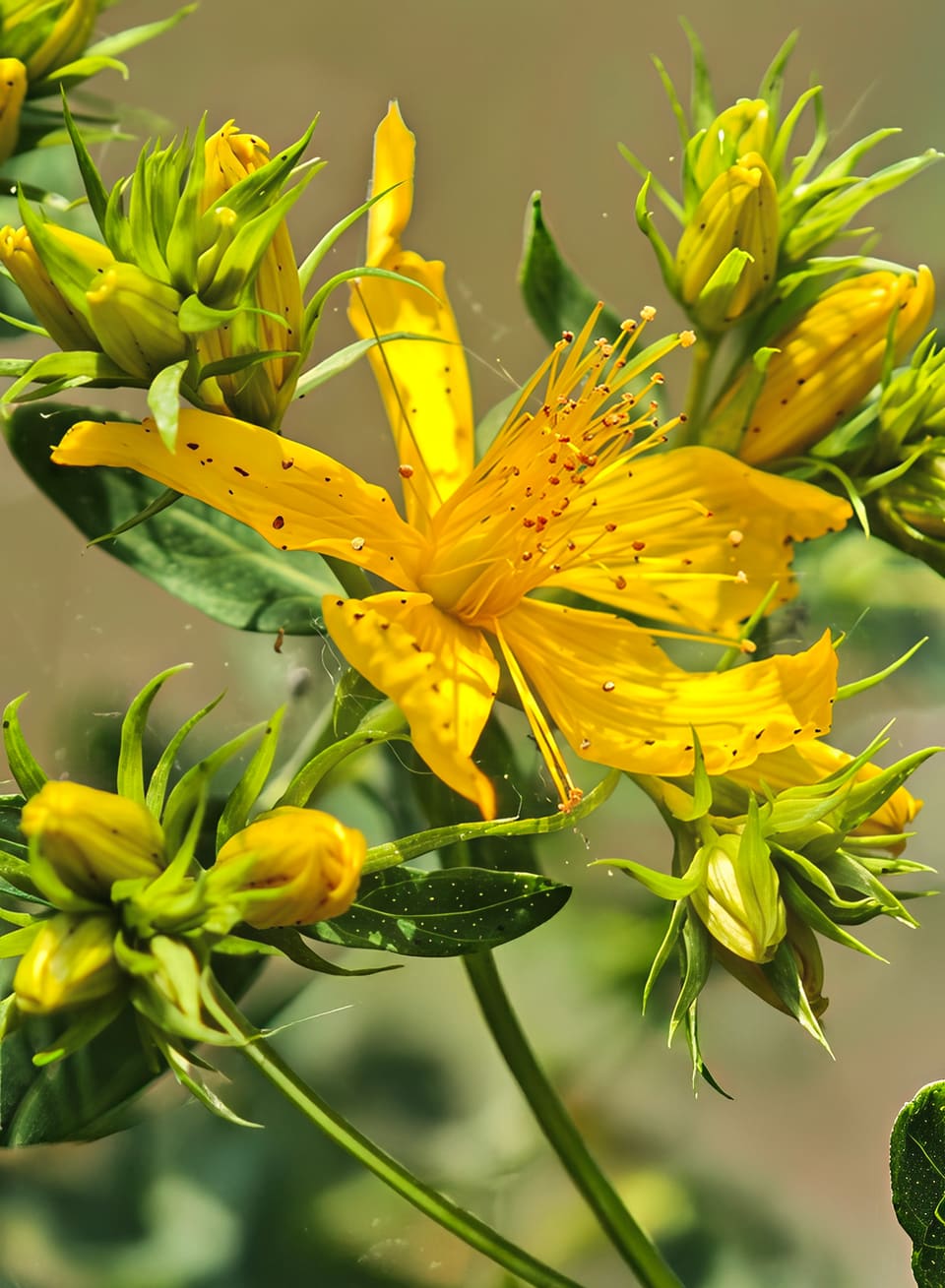

About the plant
What it is and where it grows — not part of any germination protocol.
The plant
- Habit
- Ground Cover, Perennial, WildflowerExtension Gardener Plant Toolbox
- Habit
- perennialPlants of the World Online
- Height
- 1-3 ft30-90 cmExtension Gardener Plant Toolbox
- Spread
- 0.8-2 ft25-60 cmExtension Gardener Plant Toolbox
- Flower
- Gold/YellowExtension Gardener Plant Toolbox
- Blooms
- Spring, SummerExtension Gardener Plant Toolbox
- Native range
- Albania, Altay, Austria, Baltic States, Belarus, Belgium and elsewhereGBIF Backbone Taxonomy
- Hardiness zones
- 3-8Extension Gardener Plant Toolbox
Growing conditions
- Sun
- Full sun; Partial ShadeExtension Gardener Plant Toolbox
- Soil
- Clay, Loam (Silt), SandExtension Gardener Plant Toolbox
- Soil pH
- Acid (<6.0), Alkaline (>8.0), Neutral (6.0-8.0)Extension Gardener Plant Toolbox
- Moisture
- Good Drainage, MoistExtension Gardener Plant Toolbox
Toxicity is noted only where a source states it. No note here is not a finding of safety.
Sources: Extension Gardener Plant Toolbox — NC State Extension; Plants of the World Online — Royal Botanic Gardens, Kew; GBIF Backbone Taxonomy — Global Biodiversity Information Facility.
Worth knowing
- It was harvested at the Midsummer festival, later St John's Day on 24 June, when its healing and magical powers were thought strongest; hence St John's wort. Wikipedia: Hypericum perforatum
- Hypericum may come from the Greek for above a picture, from the custom of hanging it over religious icons. Translucent glands make the leaves look perforated. Wikipedia: Hypericum perforatum
This source reports 5 treatments. All are shown.
Protocol 1
DerivedN. C. Deno, 1993Difficulty Low
Start around September 10, 2027 for a May 3 last frost. Too late for spring 2027 — that needed starting on September 9, 2026.
Dry storage
Duration: 180 daysTemperature: 70°F 21°C
Gibberellic acid soak
Sow and cover
Temperature: 70°F 21°C Light: dark
about 6 months from start to sowing. Then 28 days to germinate.
100% germination in 7–28 days.
Protocol 2
DerivedN. C. Deno, 1993Difficulty Moderate
Start around September 17, 2027 for a May 3 last frost. Too late for spring 2027 — that needed starting on September 16, 2026.
Warm moist stratification
Duration: 90 daysTemperature: 70°F 21°C Light: dark
Cold moist stratification
Duration: 90 daysTemperature: 40°F 4°C
Warm moist stratification
Duration: 90 daysTemperature: 70°F 21°C Light: light
about 6 months from start to step 3. Germination happens during step 3; time not stated, 21 days assumed.
100% germination.
Protocol 3
DerivedN. C. Deno, 1993Difficulty Low
Start around September 10, 2027 for a May 3 last frost. Too late for spring 2027 — that needed starting on September 9, 2026.
Dry storage
Duration: 180 daysTemperature: 70°F 21°C
Sow and cover
Temperature: 70°F 21°C Light: light
about 6 months from start to sowing. Then 28 days to germinate.
90% germination in 7–28 days.
Protocol 4
DerivedN. C. Deno, 1993Difficulty High
Start around September 10, 2027 for a May 3 last frost. Too late for spring 2027 — that needed starting on September 9, 2026.
Dry storage
Duration: 180 daysTemperature: 70°F 21°C
Sow and cover
Temperature: 70°F 21°C Light: dark
about 6 months from start to sowing. Then 28 days to germinate.
20% germination in 7–28 days.
Protocol 5
DerivedN. C. Deno, 1993Difficulty High
Start around June 19, 2027 for a May 3 last frost. Too late for spring 2027 — that needed starting on June 18, 2026.
Dry storage
Duration: 180 daysTemperature: 70°F 21°C
Cold moist stratification
Duration: 90 daysTemperature: 40°F 4°C
Warm moist stratification
Duration: 90 daysTemperature: 70°F 21°C Light: light
about 9 months from start to step 3. Germination happens during step 3; time not stated, 21 days assumed.
10% germination.
How each step is done, in Deno’s words, and what Verified and Derived mean.
Germination trials
Readers’ own records of sowing this species, published after review. Share your trial · All trials
No trials shared for this species yet.