Macleaya cordata
Five-seed Plume-poppy · Five-seeded Plume-poppy · Plume Poppy · Tree Celandine
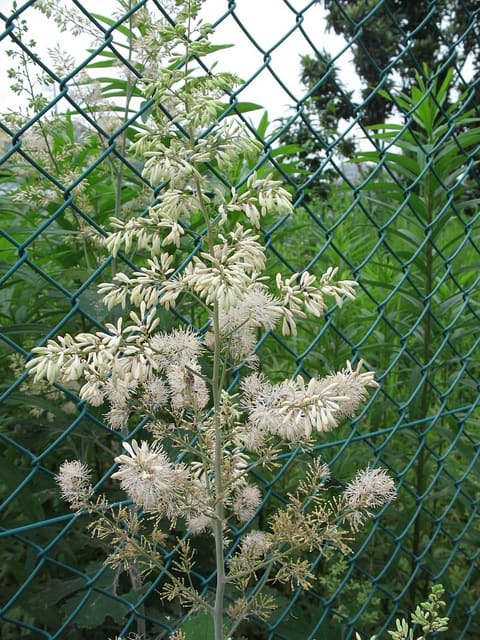

About the plant
What it is and where it grows — not part of any germination protocol.
The plant
- Habit
- Herbaceous perennialPlant Finder
- Habit
- perennial or rhizomatous geophytePlants of the World Online
- Height
- 5-8 ft1.5-2.4 mPlant Finder
- Spread
- 2-4 ft0.6-1.2 mPlant Finder
- Flower
- Showy; creamy whitePlant Finder
- Blooms
- July to AugustPlant Finder
- Native range
- China, Japan, TaiwanPlant Finder
- Hardiness zones
- 3-8Plant Finder
Growing conditions
- Sun
- Full sun to part shadePlant Finder
- Soil
- Moist, sandy, well-drained loamPlant Finder
- Watering
- MediumPlant Finder
Toxicity is noted only where a source states it. No note here is not a finding of safety.
Sources: Plant Finder — Missouri Botanical Garden; Plants of the World Online — Royal Botanic Gardens, Kew.
Worth knowing
- A plume poppy from China and Japan that grows to 2.5 m tall and 1 m or more wide. Cordata means "heart-shaped", for its leaves. Wikipedia: Macleaya cordata
This source reports two treatments. Both are shown.
Protocol 1
DerivedN. C. Deno, 1993Difficulty Moderate
Start around September 10, 2027 for a May 3 last frost. Too late for spring 2027 — that needed starting on September 9, 2026.
Warm moist stratification
Duration: 90 daysTemperature: 70°F 21°C
Deno gives no length for this period; three months is his standard cycle.
Cold moist stratification
Duration: 90 daysTemperature: 40°F 4°C
Warm moist stratification
Temperature: 70°F 21°C Light: light
Deno moved half the seed into light a month into this third cycle; 32% followed.
about 6 months from start to step 3. Germination happens during step 3, in 28 days.
32% germination in 14–28 days.
Deno calls the experiment less than ideal, but the light requirement is not in doubt.
Protocol 2
DerivedN. C. Deno, 1993Warm moist stratification
Duration: 90 daysTemperature: 70°F 21°C
Deno gives no length for this period; three months is his standard cycle.
Cold moist stratification
Duration: 90 daysTemperature: 40°F 4°C
Warm moist stratification
Temperature: 70°F 21°C Light: dark
The half kept dark gave nothing at all.
about 6 months from start to step 3. Germination happens during step 3.
0% germination.
Nothing in the dark -- and the same seeds gave 32% as soon as they were moved into light.
This source doesn't state how long step 3 lasts.
How each step is done, in Deno’s words, and what Verified and Derived mean.
Germination trials
Readers’ own records of sowing this species, published after review. Share your trial · All trials
No trials shared for this species yet.