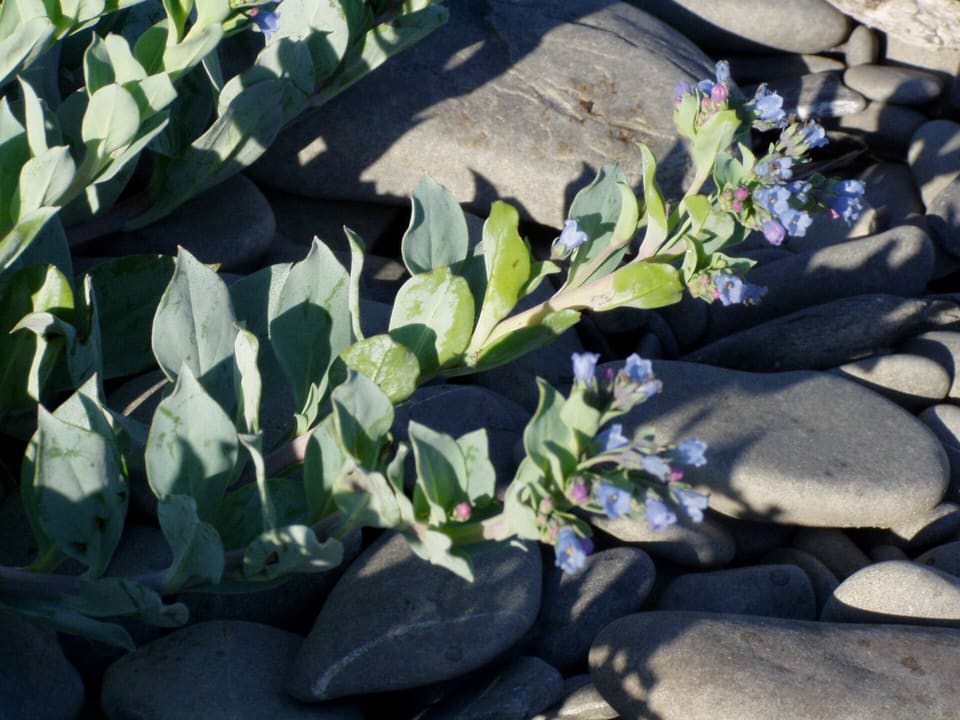
The whole plantNo machine-readable author provided. Dlanglois assumed (based on copyright claims).CC BY-SA 3.0
About the plant
What it is and where it grows — not part of any germination protocol.
Habit
perennialPlants of the World Online
Flower
Blue, pinkRead from the photograph on this page
Toxicity is noted only where a source states it. No note here is not a finding of safety.
Sources: Plants of the World Online — Royal Botanic Gardens, Kew; Read from the photograph on this page — Deno's Garden.
Worth knowing
Oyster plant gets its name because its leaves taste vaguely of oysters when eaten. Crushed, they give off dimethyl sulphide, a major part of the smell of raw oysters. It grows on gravelly shores, usually within reach of the highest winter tides, as far north as Svalbard.Wikipedia: Mertensia maritima
This source reports 4 treatments. All are shown.
Protocol 1
DerivedN. C. Deno, 1996
Difficulty ModerateRated by us, not by the source.
Start around March 27, 2027 for a May 3 last frost.
1
Sow and cover
Temperature: 70°F 21°C · Light: light
No stated waiting before sowing. Then 9 days to germinate.
50% germination in 5–9 days.
Protocol 2
DerivedN. C. Deno, 1996
Difficulty ModerateRated by us, not by the source.
Start around March 22, 2027 for a May 3 last frost.
1
Alternating temperatures
Temperature: 40–70°F 4–21°C
Germination happens during step 1, in 14 days.
43% germination in 14 days.
Protocol 3
DerivedN. C. Deno, 1996
Difficulty HighRated by us, not by the source.
Start around December 30, 2026 for a May 3 last frost.
1
Cold moist stratification
Duration: 90 days · Temperature: 40°F 4°C
2
Warm moist stratification
Duration: 90 days · Temperature: 70°F 21°C · Light: dark
about 3 months from start to step 2. Germination happens during step 2, in 6 days.