Deno’s GardenMy Garden

Ribes cereum

Squaw Currant · Wax Currant · White Currant

Family GrossulariaceaeGenus Ribes

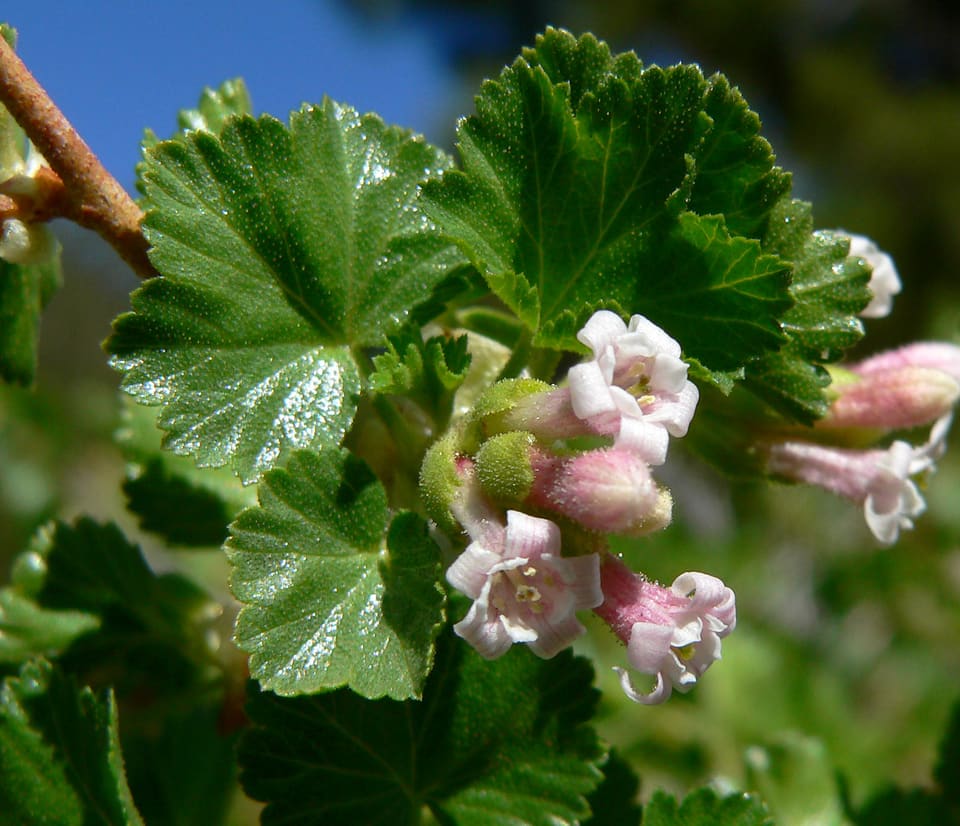
Small pink-and-white tubular flowers flaring at the mouth, clustered among round scalloped leaves on a twig.
FlowerStan ShebsCC BY-SA 3.0

About the plant

What it is and where it grows — not part of any germination protocol.

The plant

Habit
subshrub or shrubPlants of the World Online
Habit
Perennial, ShrubPLANTS Database
Height
3.0 ft90 cmPLANTS Database
Flower
WhitePLANTS Database
Blooms
Early SummerPLANTS Database
Native range
Canada, lower 48 statesPLANTS Database

Growing conditions

Sun
Shade tolerance: HighPLANTS Database
Soil
Adapted to coarse, medium textured soilsPLANTS Database
Soil pH
6.5-7.5PLANTS Database
Moisture
Moisture use: LowPLANTS Database
Watering
Drought tolerance: HighPLANTS Database

Toxicity is noted only where a source states it. No note here is not a finding of safety.

Sources: Plants of the World Online — Royal Botanic Gardens, Kew; PLANTS Database — USDA NRCS.

Worth knowing

  • The wax currant's berries are a significant food for deer. Some Native American tribes ate them, among them the Zuni. Wikipedia: Ribes cereum

This source reports two treatments. Both are shown.

Protocol 1

DerivedN. C. Deno, 1993

Difficulty High Rated by us, not by the source.

Sow around December 2026 — a date the source gives, not one counted back from a May 3 last frost.

  1. Clean the flesh off the seed

  2. Leach in running water

    Duration: 7 days

    Washed and cleaned daily for 7 days.

  3. Sow outdoors and leave it

    Sown outdoors in December; up in April.

7 days from start to sowing. Germination time not stated; 21 days assumed.

16% germination.

Seed Germination Theory and Practice, 2nd ed. — N. C. Deno, 1993 · Ch. 20, Ribes p. 206Public domain
Show the original text
Ribes. (Saxifragaceae). All seed was WC for 7 d. R. cereum was received in the red berried form and the orange berried form. Gibberelins are a natural germination requirement for this species, and the survival value of this is discussed in Chapter 12. The GA-3 treatment was varied in an effort to optimize the production of healthy seedlings. The seeds were exposed to the GA-3 for 1, 3, 5, and 8 days before removal and the GA-3 was used as described in Chapter 12 and in a dosage about 1/10 as much. The percent germinations for the normal GA-3 dosage were 90%, 29%, 61%, and 49% respectively and 30%, 35%, 42%, and 56% respectively for the 1/10 dosage. Only the lighter dosage gave healthy seedlings. The number of days of exposure did not seem to matter. The behavior of the orange berried form paralleled that of the red berried form except germination was lower. Seeds of the red berried form placed outdoors in December germ. 1% in April and an additional 2% in April a year later. Seeds of the orange berried form placed outdoors in December germ. 16% in April and an additional 25% the following April. All other treatments gave less than 1% germination over 2 y.
Seed Germination Theory and Practice, 2nd ed., Ch. 20, Ribes p. 206. Quoted exactly. Every value on this card comes from this record, except the difficulty rating, which is ours; the step names come from a fixed list.

Protocol 2

DerivedN. C. Deno, 1993

Difficulty Very high Rated by us, not by the source.

Sow around December 2026 — a date the source gives, not one counted back from a May 3 last frost.

  1. Clean the flesh off the seed

  2. Leach in running water

    Duration: 7 days

    Washed and cleaned daily for 7 days.

  3. Sow outdoors and leave it

    Sown outdoors in December; up in April.

7 days from start to sowing. Germination time not stated; 21 days assumed.

1% germination.

Seed Germination Theory and Practice, 2nd ed. — N. C. Deno, 1993 · Ch. 20, Ribes p. 206Public domain
Show the original text
Ribes. (Saxifragaceae). All seed was WC for 7 d. R. cereum was received in the red berried form and the orange berried form. Gibberelins are a natural germination requirement for this species, and the survival value of this is discussed in Chapter 12. The GA-3 treatment was varied in an effort to optimize the production of healthy seedlings. The seeds were exposed to the GA-3 for 1, 3, 5, and 8 days before removal and the GA-3 was used as described in Chapter 12 and in a dosage about 1/10 as much. The percent germinations for the normal GA-3 dosage were 90%, 29%, 61%, and 49% respectively and 30%, 35%, 42%, and 56% respectively for the 1/10 dosage. Only the lighter dosage gave healthy seedlings. The number of days of exposure did not seem to matter. The behavior of the orange berried form paralleled that of the red berried form except germination was lower. Seeds of the red berried form placed outdoors in December germ. 1% in April and an additional 2% in April a year later. Seeds of the orange berried form placed outdoors in December germ. 16% in April and an additional 25% the following April. All other treatments gave less than 1% germination over 2 y.
Seed Germination Theory and Practice, 2nd ed., Ch. 20, Ribes p. 206. Quoted exactly. Every value on this card comes from this record, except the difficulty rating, which is ours; the step names come from a fixed list.

Germination trials

Readers’ own records of sowing this species, published after review. Share your trial · All trials

Add to My Garden

View species page