Deno’s GardenMy Garden

Romneya coulteri

California Tree-poppy · Coulter's Matilija Poppy · Matilija Poppy

Family PapaveraceaeGenus Romneya

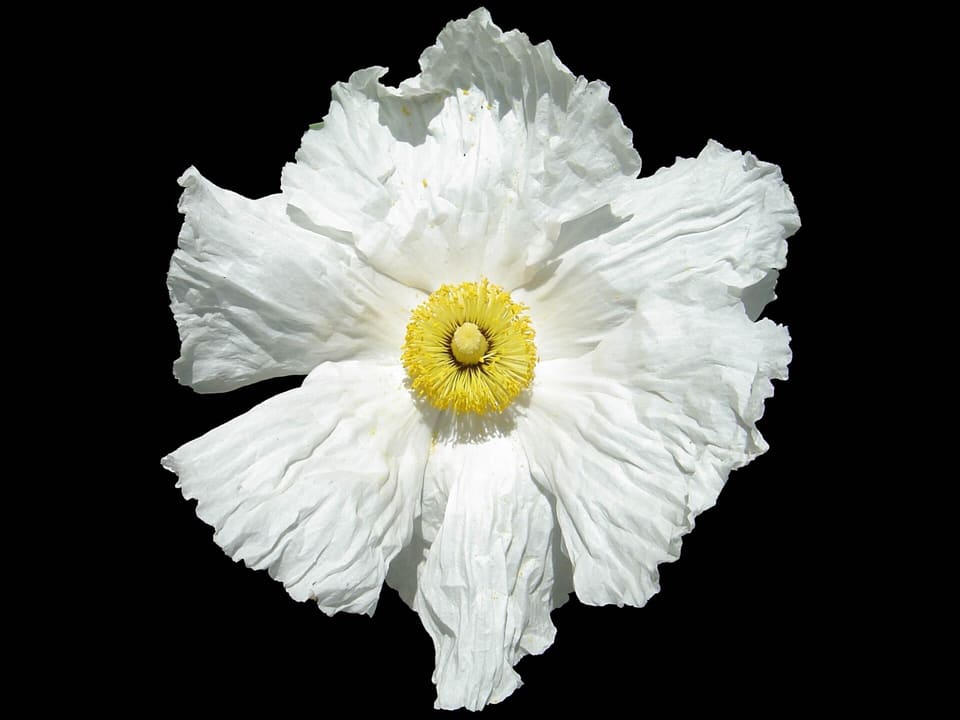
A large white flower of six crumpled tissue-thin petals around a dense golden boss of stamens, against black.
FlowerFlorian SiebeckCC BY 2.5

About the plant

What it is and where it grows — not part of any germination protocol.

Habit
PerennialExtension Gardener Plant Toolbox
Habit
shrubPlants of the World Online
Flower
WhiteExtension Gardener Plant Toolbox
Native range
California, Mexico NorthwestGBIF Backbone Taxonomy

Toxicity is noted only where a source states it. No note here is not a finding of safety.

Sources: Extension Gardener Plant Toolbox — NC State Extension; Plants of the World Online — Royal Botanic Gardens, Kew; GBIF Backbone Taxonomy — Global Biodiversity Information Facility.

Worth knowing

Two sources report 5 treatments between them. All are shown.

Protocol 1

DerivedN. C. Deno, 1996

Difficulty Low Rated by us, not by the source.

Start around July 30, 2027 for a May 3 last frost. Too late for spring 2027 — that needed starting on July 29, 2026.

  1. Dry storage

    Duration: 180 daysTemperature: 70°F 21°C

  2. Gibberellic acid soak

  3. Sow and cover

    Temperature: 70°F 21°C

about 6 months from start to sowing. Then 70 days to germinate.

100% germination in 28–70 days.

Seed Germination Theory and Practice, 1st Supplement — N. C. Deno, 1996 · 1st Supplement, Romneya p. 71Public domain
Show the original text
Romneya (Papaveraceae). R. coulteri), but DS had a marked effect. Germination was 70 GA-3(10%)-40(74% in 2-7 w) for fresh seed, 70 GA-3(100% in 4-10 w) for seeds DS 6 m, and 70 GA-3(100% in 2-4 w) for seeds DS either 2 y or 3 y. None germ. in any other treatment. Note that DS improved the germination. AH the seeds were killed by temperatures around zero.
Seed Germination Theory and Practice, 1st Supplement, 1st Supplement, Romneya p. 71. Quoted exactly. Every value on this card comes from this record, except the difficulty rating, which is ours; the step names come from a fixed list.

Protocol 2

DerivedN. C. Deno, 1996

Difficulty Low Rated by us, not by the source.

Start around March 9, 2027 for a May 3 last frost. Too late for spring 2027 — that needed starting on March 8, 2024.

  1. Dry storage

    Duration: 730–1095 daysTemperature: 70°F 21°C

  2. Gibberellic acid soak

  3. Sow and cover

    Temperature: 70°F 21°C

about 3 years from start to sowing. Then 28 days to germinate.

100% germination in 14–28 days.

Seed Germination Theory and Practice, 1st Supplement — N. C. Deno, 1996 · 1st Supplement, Romneya p. 71Public domain
Show the original text
Romneya (Papaveraceae). R. coulteri), but DS had a marked effect. Germination was 70 GA-3(10%)-40(74% in 2-7 w) for fresh seed, 70 GA-3(100% in 4-10 w) for seeds DS 6 m, and 70 GA-3(100% in 2-4 w) for seeds DS either 2 y or 3 y. None germ. in any other treatment. Note that DS improved the germination. AH the seeds were killed by temperatures around zero.
Seed Germination Theory and Practice, 1st Supplement, 1st Supplement, Romneya p. 71. Quoted exactly. Every value on this card comes from this record, except the difficulty rating, which is ours; the step names come from a fixed list.

Protocol 3

DerivedN. C. Deno, 1996

Difficulty Moderate Rated by us, not by the source.

Start around November 17, 2026 for a May 3 last frost.

  1. Gibberellic acid soak

  2. Warm moist stratification

    Duration: 90 daysTemperature: 70°F 21°C

    10 germinated in this phase.

  3. Cold moist stratification

    Duration: 90 daysTemperature: 40°F 4°C

about 3 months from start to step 3. Germination happens during step 3, in 49 days.

74% germination in 14–49 days.

Seed Germination Theory and Practice, 1st Supplement — N. C. Deno, 1996 · 1st Supplement, Romneya p. 71Public domain
Show the original text
Romneya (Papaveraceae). R. coulteri), but DS had a marked effect. Germination was 70 GA-3(10%)-40(74% in 2-7 w) for fresh seed, 70 GA-3(100% in 4-10 w) for seeds DS 6 m, and 70 GA-3(100% in 2-4 w) for seeds DS either 2 y or 3 y. None germ. in any other treatment. Note that DS improved the germination. AH the seeds were killed by temperatures around zero.
Seed Germination Theory and Practice, 1st Supplement, 1st Supplement, Romneya p. 71. Quoted exactly. Every value on this card comes from this record, except the difficulty rating, which is ours; the step names come from a fixed list.

Protocol 4

DerivedN. C. Deno, 1993

Difficulty Moderate Rated by us, not by the source.

Start around March 14, 2027 for a May 3 last frost. Too late for spring 2027 — that needed starting on March 13, 2026.

  1. Dry storage

    Duration: 360 daysTemperature: 70°F 21°C

  2. Gibberellic acid soak

  3. Sow and cover

    Temperature: 70°F 21°C Light: dark

about 12 months from start to sowing. Then 28 days to germinate.

62% germination in 7–28 days.

Seed Germination Theory and Practice, 2nd ed. — N. C. Deno, 1993 · Ch. 20, Romneya p. 207Public domain
Show the original text
Romneya (Papaveraceae). R. coulteri germ. 70D GA-3(62% in 1-4 w) and none in 70D, 70L, or 40 using seeds that had been DS for 12 m. There have been some weird myths about germinating this species. The truth is that it is another cold desert plant that requires GA-3 for germination.
Seed Germination Theory and Practice, 2nd ed., Ch. 20, Romneya p. 207. Quoted exactly. Every value on this card comes from this record, except the difficulty rating, which is ours; the step names come from a fixed list.

Protocol 5

DerivedN. C. Deno, 1993
  1. Dry storage

    Duration: 360 daysTemperature: 70°F 21°C

  2. Sow and cover

    Temperature: 70°F 21°C Light: dark

about 12 months from start to sowing.

0% germination.

Nothing germinated at 70.

Seed Germination Theory and Practice, 2nd ed. — N. C. Deno, 1993 · Ch. 20, Romneya p. 207Public domain
Show the original text
Romneya (Papaveraceae). R. coulteri germ. 70D GA-3(62% in 1-4 w) and none in 70D, 70L, or 40 using seeds that had been DS for 12 m. There have been some weird myths about germinating this species. The truth is that it is another cold desert plant that requires GA-3 for germination.
Seed Germination Theory and Practice, 2nd ed., Ch. 20, Romneya p. 207. Quoted exactly. Every value on this card comes from this record; the step names come from a fixed list.

Germination trials

Readers’ own records of sowing this species, published after review. Share your trial · All trials

Add to My Garden

View species page