+ Add to My Garden
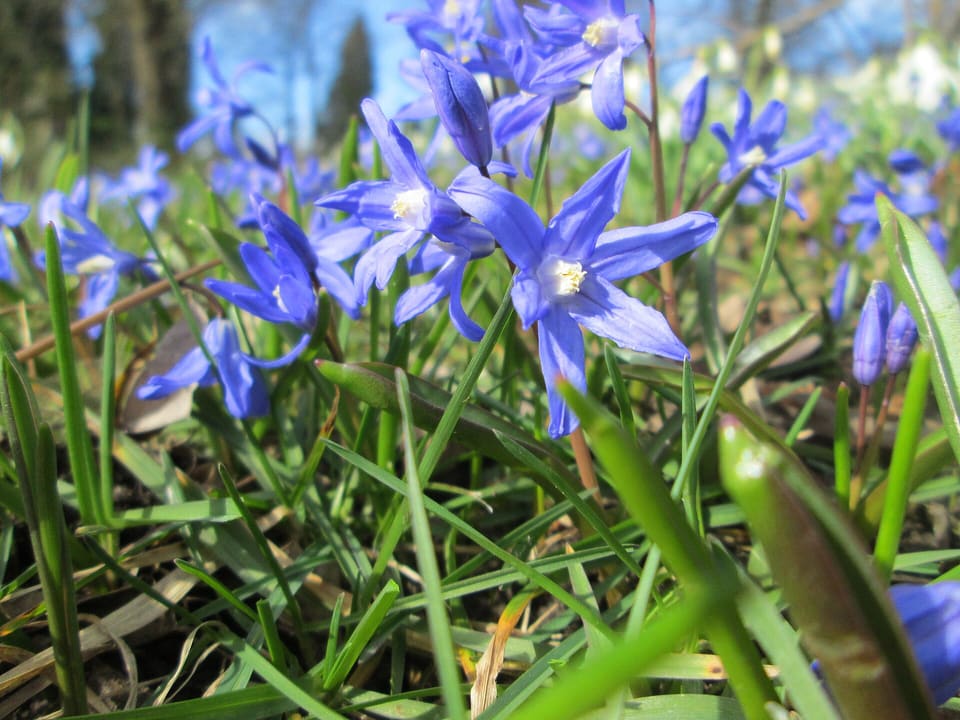
Flower AnRo0002 CC0 About the plant What it is and where it grows — not part of any germination protocol.
The plant
Habit Bulb Extension Gardener Plant Toolbox
Habit bulbous geophyte Plants of the World Online
Height 4-6 in 10-15 cm Extension Gardener Plant Toolbox
Spread 3-6 in 10-15 cm Extension Gardener Plant Toolbox
Flower Blue, Pink, White Extension Gardener Plant Toolbox
Blooms Spring Extension Gardener Plant Toolbox
Native range Türkiye GBIF Backbone Taxonomy
Hardiness zones 3-8 Extension Gardener Plant Toolbox Growing conditions
Sun Full sun; Partial Shade Extension Gardener Plant Toolbox
Soil Clay, Loam (Silt) Extension Gardener Plant Toolbox
Soil pH Neutral (6.0-8.0) Extension Gardener Plant Toolbox
Moisture Good Drainage, Moist, Occasionally Dry Extension Gardener Plant Toolbox Toxicity is noted only where a source states it. No note here is not a finding of safety.
Sources: Extension Gardener Plant Toolbox — NC State Extension; Plants of the World Online — Royal Botanic Gardens, Kew; GBIF Backbone Taxonomy — Global Biodiversity Information Facility.
Worth knowing Named for Lucile, wife of the Swiss botanist Pierre Edmond Boissier. After flowering in early spring it goes dormant until the next spring. Wikipedia: Scilla luciliae This source reports two treatments. Both are shown.
Protocol 1 N. C. Deno, 1993 Difficulty High Rated by us, not by the source.
1 Clean the flesh off the seed
2 Sow outdoors and leave it
Up in March.
No stated waiting before sowing.
22% germination.
This source doesn't state how long step 2 lasts.
Seed Germination Theory and Practice, 2nd ed. — N. C. Deno, 1993 · Ch. 20, Chionodoxa p. 117Public domain Show the original text Chionodoxa (Liliaceae). C. luciliae self sows abundantly here and seed was plentiful. Seed was collected in three succesive years. The three consistent resultswere (a) all DS seed rotted (DS is fatal), (b) seed WC for a week to remove the aril germ. much better than unwashed seed, and (c) the cycles at 40 should be extended to 4-5 m instead of the usual 3 m. Seed collected in May 1989 and WC germ. 70-40(50% in 12-16 w)-70-40-70(15%). The first 40 cycle was extended to 16 w as evident from the data, and the last 15% that germ. at 70 would probably have germ. in the preceding 40 cycle if it had been extended beyond 4 m. Unwashed seed germ. 70-40-70(7%)-40(10%), but the cycles at 40 should have been extended beyond 3 m, and the experiments need repeating. The 1989 and 1988 collections should have been given outdoOr treatment because the 1990 seed germ. 22% in March in outdoor treatment. Cotyledons developed normally only lithe seedlings Were left for 1-2 m at 40 after germination before the shift to 70. Seed Germination Theory and Practice, 2nd ed., Ch. 20, Chionodoxa p. 117. Quoted exactly. Every value on this card comes from this record, except the difficulty rating, which is ours; the step names come from a fixed list. Protocol 2 N. C. Deno, 1993 Difficulty High Rated by us, not by the source.
Start around June 19, 2027 for a May 3 last frost. Too late for spring 2027 — that needed starting on June 18, 2026.
1 Clean the flesh off the seed
2 Warm moist stratification
Duration: 90 days · Temperature: 70°F 21°C
3 Cold moist stratification
Duration: 90 days · Temperature: 40°F 4°C
4 Warm moist stratification
Duration: 90 days · Temperature: 70°F 21°C
7 germinated in this phase.
5 Cold moist stratification
Duration: 90 days · Temperature: 40°F 4°C
about 9 months from start to step 5. Germination happens during step 5; time not stated, 21 days assumed.
10% germination.
Seed Germination Theory and Practice, 2nd ed. — N. C. Deno, 1993 · Ch. 20, Chionodoxa p. 117Public domain Show the original text Chionodoxa (Liliaceae). C. luciliae self sows abundantly here and seed was plentiful. Seed was collected in three succesive years. The three consistent resultswere (a) all DS seed rotted (DS is fatal), (b) seed WC for a week to remove the aril germ. much better than unwashed seed, and (c) the cycles at 40 should be extended to 4-5 m instead of the usual 3 m. Seed collected in May 1989 and WC germ. 70-40(50% in 12-16 w)-70-40-70(15%). The first 40 cycle was extended to 16 w as evident from the data, and the last 15% that germ. at 70 would probably have germ. in the preceding 40 cycle if it had been extended beyond 4 m. Unwashed seed germ. 70-40-70(7%)-40(10%), but the cycles at 40 should have been extended beyond 3 m, and the experiments need repeating. The 1989 and 1988 collections should have been given outdoOr treatment because the 1990 seed germ. 22% in March in outdoor treatment. Cotyledons developed normally only lithe seedlings Were left for 1-2 m at 40 after germination before the shift to 70. Seed Germination Theory and Practice, 2nd ed., Ch. 20, Chionodoxa p. 117. Quoted exactly. Every value on this card comes from this record, except the difficulty rating, which is ours; the step names come from a fixed list. How each step is done , in Deno’s words, and what Verified and Derived mean.
Germination trials Readers’ own records of sowing this species, published after review. Share your trial · All trials
No trials shared for this species yet.