Deno’s GardenMy Garden

Trillium tschonoskii

A Pearl on Head · Mountain Woods Trillium · Pointed-petal Trillium

Family MelanthiaceaeGenus Trillium

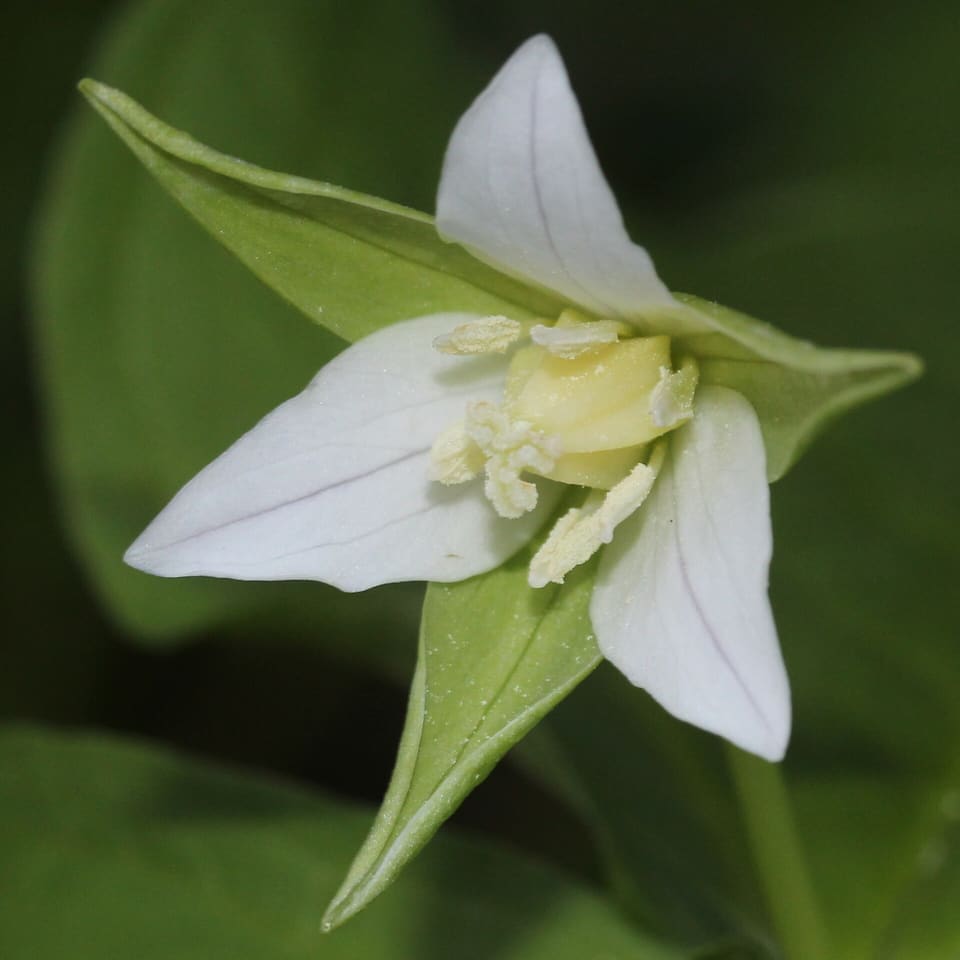
A white three-petalled flower with a cream center and cream anthers, above three pointed green bracts.
FlowerAlpsdakeCC BY-SA 4.0

About the plant

What it is and where it grows — not part of any germination protocol.

Habit
rhizomatous geophytePlants of the World Online
Flower
WhiteRead from the photograph on this page
Native range
China North-Central, China South-Central, China Southeast, East Himalaya, Japan, Korea and elsewhereGBIF Backbone Taxonomy

Toxicity is noted only where a source states it. No note here is not a finding of safety.

Sources: Plants of the World Online — Royal Botanic Gardens, Kew; Read from the photograph on this page — Deno's Garden; GBIF Backbone Taxonomy — Global Biodiversity Information Facility.

This source reports two treatments. Both are shown.

Protocol 1

DerivedN. C. Deno, 1993

Difficulty Low Rated by us, not by the source.

Start around January 25, 2027 for a May 3 last frost.

  1. Gibberellic acid soak

  2. Sow and cover

    Temperature: 70°F 21°C

No stated waiting before sowing. Then 70 days to germinate.

80% germination in 56–70 days.

Seed Germination Theory and Practice, 2nd ed. — N. C. Deno, 1993 · Ch. 20, Trillium p. 223Public domain
Show the original text
Trillium (Llliaceae). Gibberelins are at least desirable if not requisite for both germination and the production of healthy seedlings. More work is necessary before an optimum procedure can be recommended. The GA-3 treatment was tried with fresh seeds of T. tschonoski germ. 70 GA-3(80% in 8-10 w) and 40-70 GA-3(50% in 7th w) using fresh seeds. None germ. in other treatments. Development of the corm and radicle takes another 2 m. On shifting the seedlings to 40 the cotyledons slowly expand. A full 3 m at 40 is required. It would probably be best to slowly raise the temperature, most conveniently by planting outdoors in April. -
Seed Germination Theory and Practice, 2nd ed., Ch. 20, Trillium p. 223. Quoted exactly. Every value on this card comes from this record, except the difficulty rating, which is ours; the step names come from a fixed list.

Protocol 2

DerivedN. C. Deno, 1993

Difficulty Moderate Rated by us, not by the source.

Start around November 17, 2026 for a May 3 last frost.

  1. Gibberellic acid soak

  2. Cold moist stratification

    Duration: 90 daysTemperature: 40°F 4°C

  3. Warm moist stratification

    Duration: 90 daysTemperature: 70°F 21°C

about 3 months from start to step 3. Germination happens during step 3, in 49 days.

50% germination in 49 days.

Seed Germination Theory and Practice, 2nd ed. — N. C. Deno, 1993 · Ch. 20, Trillium p. 223Public domain
Show the original text
Trillium (Llliaceae). Gibberelins are at least desirable if not requisite for both germination and the production of healthy seedlings. More work is necessary before an optimum procedure can be recommended. The GA-3 treatment was tried with fresh seeds of T. tschonoski germ. 70 GA-3(80% in 8-10 w) and 40-70 GA-3(50% in 7th w) using fresh seeds. None germ. in other treatments. Development of the corm and radicle takes another 2 m. On shifting the seedlings to 40 the cotyledons slowly expand. A full 3 m at 40 is required. It would probably be best to slowly raise the temperature, most conveniently by planting outdoors in April. -
Seed Germination Theory and Practice, 2nd ed., Ch. 20, Trillium p. 223. Quoted exactly. Every value on this card comes from this record, except the difficulty rating, which is ours; the step names come from a fixed list.

Germination trials

Readers’ own records of sowing this species, published after review. Share your trial · All trials

Add to My Garden

View species page