Uvularia grandiflora
Bellwort · Large-flowered Bellwort · Largeflower Bellwort

About the plant
What it is and where it grows — not part of any germination protocol.
The plant
- Habit
- Herbaceous perennialPlant Finder
- Habit
- rhizomatous geophytePlants of the World Online
- Height
- 1.5-2 ft45-60 cmPlant Finder
- Spread
- 1-1.5 ft30-45 cmPlant Finder
- Flower
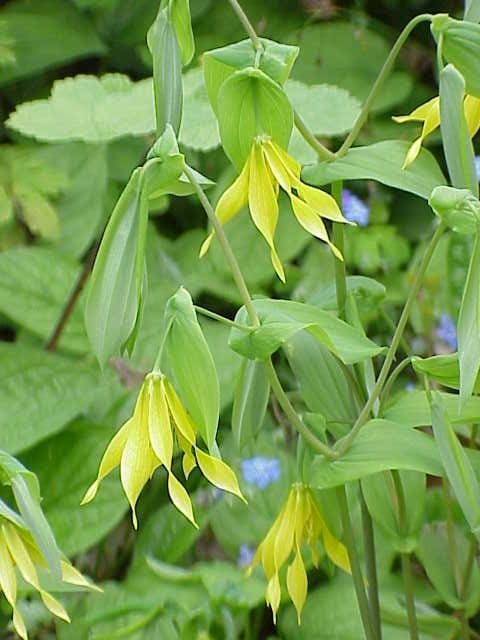
- Showy, good cut; yellowPlant Finder
- Blooms
- April to MayPlant Finder
- Native range
- Eastern and central North AmericaPlant Finder
- Hardiness zones
- 4-9Plant Finder
- Note
- Two-step, hypogeal germination. It self-sows where Deno gardened, but his sown seedlings did not develop properly.Seed Germination Theory and Practice, 2nd ed.
Growing conditions
- Sun
- Part shade to full shadePlant Finder
- Soil
- Average, medium, well-drained; prefers moist and humusyPlant Finder
- Moisture
- Good Drainage, MoistExtension Gardener Plant Toolbox
- Watering
- MediumPlant Finder
Toxicity is noted only where a source states it. No note here is not a finding of safety.
Sources: Plant Finder — Missouri Botanical Garden; Plants of the World Online — Royal Botanic Gardens, Kew; Extension Gardener Plant Toolbox — NC State Extension; Seed Germination Theory and Practice, 2nd ed. — N. C. Deno.
Worth knowing
- Bumblebees, mason bees and other bees feed at its flowers. Its seeds carry food bodies that attract ants, and deer love to eat it. Wikipedia: Uvularia grandiflora
Protocol
DerivedN. C. Deno, 1993Difficulty Moderate
Sow outdoors and leave it
Sow in August, as soon as the seed is ripe. Up in May and June of the next year.
No stated waiting before sowing. Germination time not stated; 21 days assumed.
32% germination.
32%, up the following May and June. Every other treatment Deno tried came in under 10%.
How each step is done, in Deno’s words, and what Verified and Derived mean.
Germination trials
Readers’ own records of sowing this species, published after review. Share your trial · All trials
No trials shared for this species yet.