Xeronema callistemon
Poor Knights Lily

About the plant
What it is and where it grows — not part of any germination protocol.
- Habit
- rhizomatous geophytePlants of the World Online
- Flower
- RedWikipedia
- Native range
- New Zealand NorthGBIF Backbone Taxonomy
Toxicity is noted only where a source states it. No note here is not a finding of safety.
Sources: Plants of the World Online — Royal Botanic Gardens, Kew; Wikipedia — Wikipedia contributors; GBIF Backbone Taxonomy — Global Biodiversity Information Facility.
Worth knowing
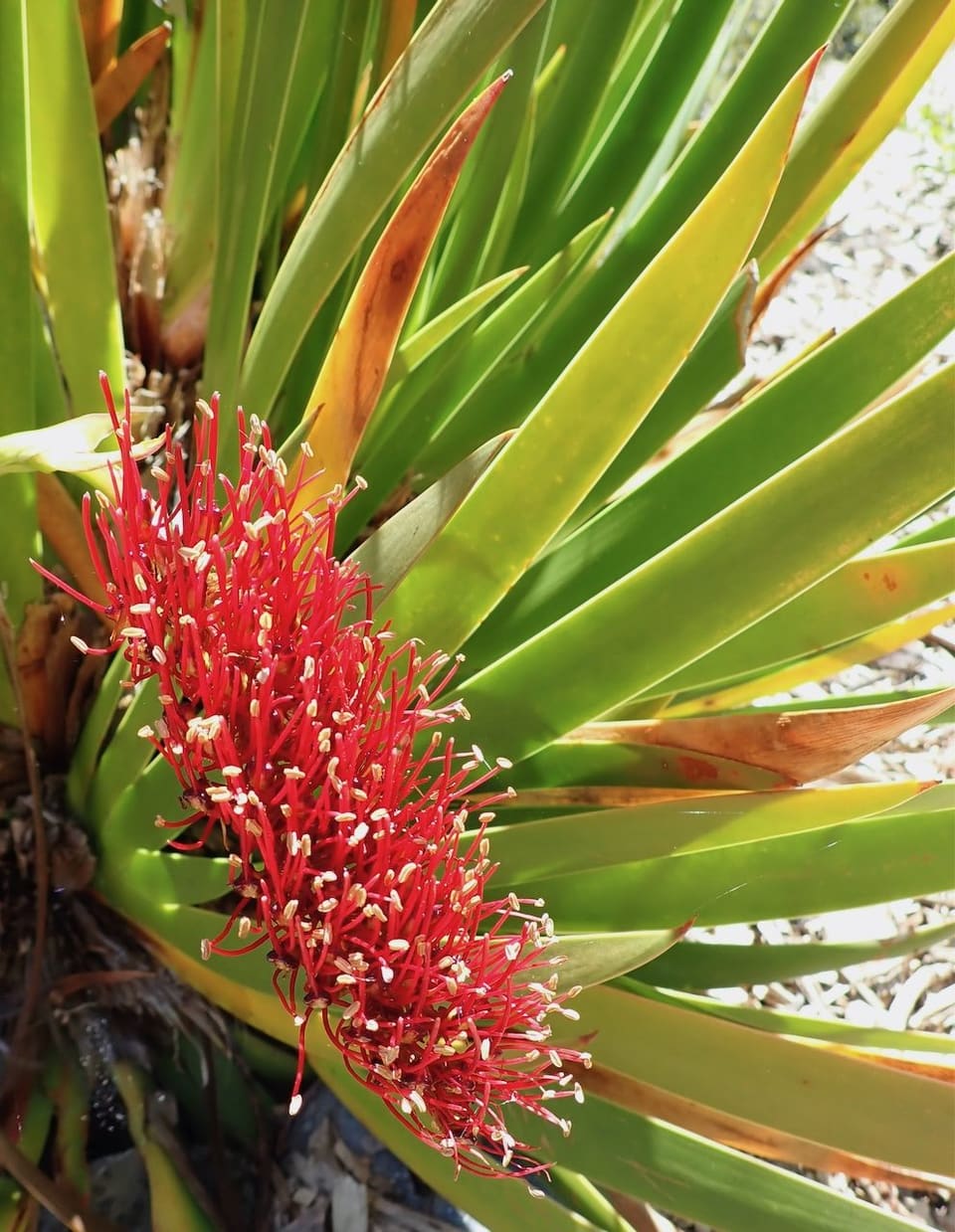
- The Poor Knights lily grows wild only on New Zealand's Poor Knights Islands and Taranga Island, and was discovered in 1924. Its red flower spike looks like a giant bottlebrush. The islands were named for their shape, which recalled a bread dish called Poor Knights Pudding. Wikipedia: Xeronema callistemon
This source reports three treatments. All are shown.
Protocol 1
DerivedN. C. Deno, 1993Difficulty High
Start around March 8, 2027 for a May 3 last frost.
Cold moist stratification
Temperature: 40°F 4°C
8%, in the fourth week -- it germinates in the cold.
Warm moist stratification
Temperature: 70°F 21°C
A further 5%, in the second week.
Germination happens during step 2, in 28 days.
8% germination in 28 days.
8% in the cold and 5% more after the move. Thirteen per cent is the best this one did.
This source doesn't state how long step 1 lasts.
Protocol 2
DerivedN. C. Deno, 1993Warm moist stratification
Duration: 90 daysTemperature: 70°F 21°C Light: dark
Deno gives no length for this period; three months is his standard cycle.
Cold moist stratification
Temperature: 40°F 4°C
Nothing.
about 3 months from start to step 2. Germination happens during step 2.
0% germination.
Nothing. Starting warm and in the dark is the wrong way round for this one.
This source doesn't state how long step 2 lasts.
Protocol 3
DerivedN. C. Deno, 1993Gibberellic acid soak
Warm moist stratification
Duration: 90 daysTemperature: 70°F 21°C Light: dark
Deno gives no length for this period; three months is his standard cycle.
Cold moist stratification
Temperature: 40°F 4°C
Nothing.
about 3 months from start to step 3. Germination happens during step 3.
0% germination.
Nothing, and GA-3 did not change it.
This source doesn't state how long step 3 lasts.
How each step is done, in Deno’s words, and what Verified and Derived mean.
Germination trials
Readers’ own records of sowing this species, published after review. Share your trial · All trials
No trials shared for this species yet.