Adenophora triphylla
Three-leaf Ladybell · Whorled-leaf Ladybell · Giant-bellflower
Also published as Adenophora kurilensis. You are in the right place.
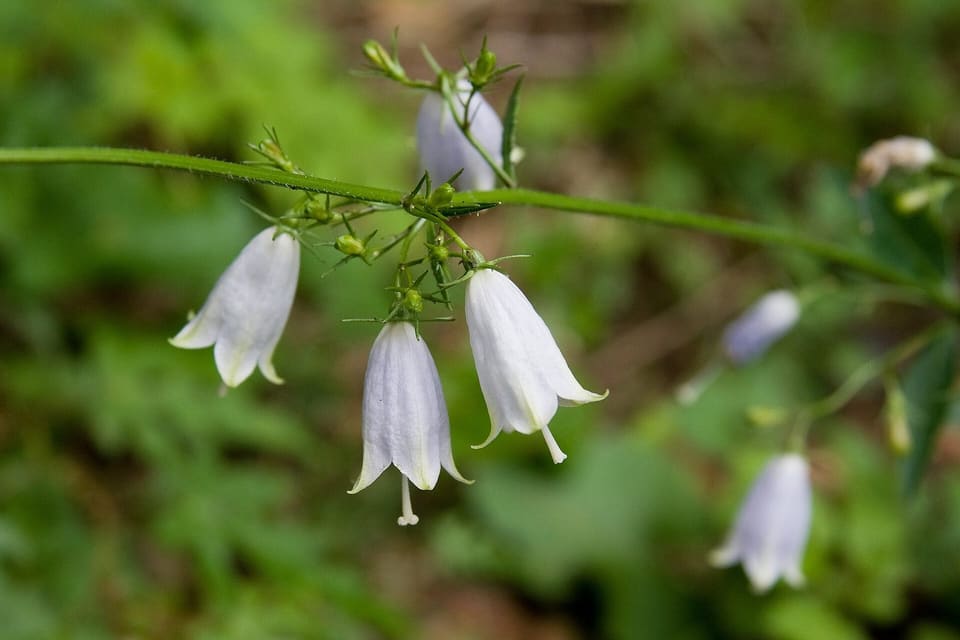

About the plant
What it is and where it grows — not part of any germination protocol.
- Habit
- perennialPlants of the World Online
- Flower
- Blue, purpleFlora of China
- Native range
- Amur, Buryatiya, China North-Central, China South-Central, China Southeast, Chita and elsewhereGBIF Backbone Taxonomy
Toxicity is noted only where a source states it. No note here is not a finding of safety.
Sources: Plants of the World Online — Royal Botanic Gardens, Kew; Flora of China — Wu Zhengyi, Peter H. Raven and Hong Deyuan (eds.); GBIF Backbone Taxonomy — Global Biodiversity Information Facility.
Worth knowing
- The dried roots of Japanese lady bell are eaten roasted, stir-fried or pickled, and used as a seasoning in Korean dishes. Its white taproot is shaped like a carrot. Wikipedia: Adenophora triphylla
This source reports two treatments. Both are shown.
Protocol 1
DerivedN. C. Deno, 1993Difficulty Moderate
Start around March 15, 2027 for a May 3 last frost.
Gibberellic acid soak
Sow and cover
Temperature: 70°F 21°C Light: dark
No stated waiting before sowing. Then 21 days to germinate.
46% germination in 21 days.
Nothing germinated in the dark without GA-3.
Protocol 2
DerivedN. C. Deno, 1993Difficulty High
Start around March 22, 2027 for a May 3 last frost.
Sow and cover
Temperature: 70°F 21°C Light: light
No stated waiting before sowing. Then 14 days to germinate.
17% germination in 14 days.
How each step is done, in Deno’s words, and what Verified and Derived mean.
Germination trials
Readers’ own records of sowing this species, published after review. Share your trial · All trials
No trials shared for this species yet.