Deno’s GardenMy Garden

Anemonastrum fasciculatum

Clustered Anemone

Family RanunculaceaeGenus Anemonastrum

Also published as Anemone fasciculata. You are in the right place.
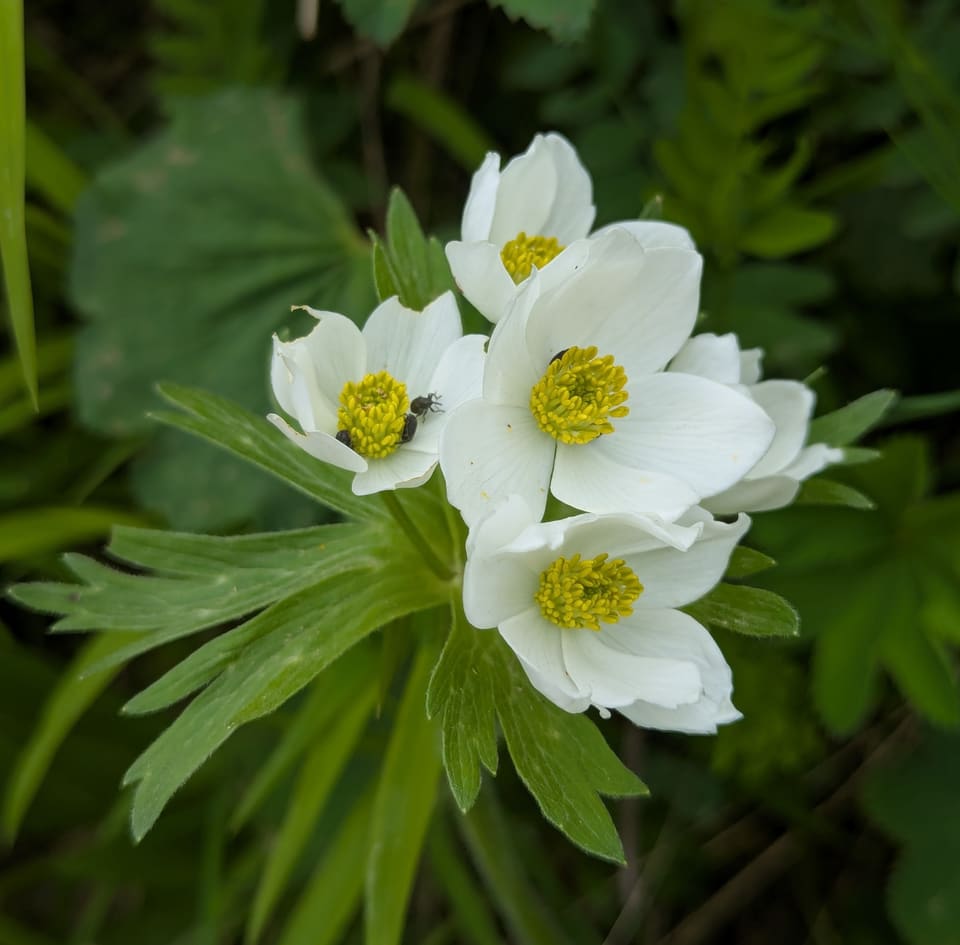
A cluster of white five-petalled flowers with yellow centers above narrow, finely divided leaves
FlowerMichael, Antoni and Nihat HinczewskiCC BY 4.0

About the plant

What it is and where it grows — not part of any germination protocol.

Habit
perennialPlants of the World Online
Flower
White, pinkOrnamental Plants From Russia And Adjacent States Of The Former Soviet Union
Native range
Iran, North Caucasus, Transcaucasus, TürkiyeGBIF Backbone Taxonomy

Toxicity is noted only where a source states it. No note here is not a finding of safety.

Sources: Plants of the World Online — Royal Botanic Gardens, Kew; Ornamental Plants From Russia And Adjacent States Of The Former Soviet Union; GBIF Backbone Taxonomy — Global Biodiversity Information Facility.

This source reports three treatments. All are shown.

Protocol 1

DerivedN. C. Deno, 1993

Difficulty Moderate Rated by us, not by the source.

Start around December 8, 2026 for a May 3 last frost.

  1. Cold moist stratification

    Duration: 90 daysTemperature: 40°F 4°C

  2. Warm moist stratification

    Duration: 90 daysTemperature: 70°F 21°C

about 3 months from start to step 2. Germination happens during step 2, in 28 days.

95% germination in 28 days.

Seed Germination Theory and Practice, 2nd ed. — N. C. Deno, 1993 · Ch. 20, Anemone p. 94Public domain
Show the original text
Anemone (Ranunculaceae). This genus divides into two groups. The .first group are early spring bloomers with hairless seed coats, multicycle germination patterns, and intolerance of OS. The second group are taller and bloom in summer and fall, the seed is embedded in cotton in a spherical cluster, and germination is largely D-70 with curious differences between DS seed and fresh seed. A. fasciculata germ 70(87% in 2-11 w), 40-70(95% in 4th w if cleaned), and 40- 70(84% in 3-9 w if not cleaned). The term cleaned as used here means that the dark brown wafer like covering was removed leaving the seeds in their light brown seed coat. Treatment with GA-3 on shifting from 40 to 70 did accelerate germination so that 90% germ. in 16-18 d, but the seedlings were weak and died, and in any event is of no practical importance. This species may well be the seed listed as
Seed Germination Theory and Practice, 2nd ed., Ch. 20, Anemone p. 94. Quoted exactly. Every value on this card comes from this record, except the difficulty rating, which is ours; the step names come from a fixed list.

Protocol 2

DerivedN. C. Deno, 1993

Difficulty Low Rated by us, not by the source.

Start around January 18, 2027 for a May 3 last frost.

  1. Sow and cover

    Temperature: 70°F 21°C

No stated waiting before sowing. Then 77 days to germinate.

87% germination in 14–77 days.

Seed Germination Theory and Practice, 2nd ed. — N. C. Deno, 1993 · Ch. 20, Anemone p. 94Public domain
Show the original text
Anemone (Ranunculaceae). This genus divides into two groups. The .first group are early spring bloomers with hairless seed coats, multicycle germination patterns, and intolerance of OS. The second group are taller and bloom in summer and fall, the seed is embedded in cotton in a spherical cluster, and germination is largely D-70 with curious differences between DS seed and fresh seed. A. fasciculata germ 70(87% in 2-11 w), 40-70(95% in 4th w if cleaned), and 40- 70(84% in 3-9 w if not cleaned). The term cleaned as used here means that the dark brown wafer like covering was removed leaving the seeds in their light brown seed coat. Treatment with GA-3 on shifting from 40 to 70 did accelerate germination so that 90% germ. in 16-18 d, but the seedlings were weak and died, and in any event is of no practical importance. This species may well be the seed listed as
Seed Germination Theory and Practice, 2nd ed., Ch. 20, Anemone p. 94. Quoted exactly. Every value on this card comes from this record, except the difficulty rating, which is ours; the step names come from a fixed list.

Protocol 3

DerivedN. C. Deno, 1993

Difficulty Moderate Rated by us, not by the source.

Start around November 3, 2026 for a May 3 last frost.

  1. Cold moist stratification

    Duration: 90 daysTemperature: 40°F 4°C

  2. Warm moist stratification

    Duration: 90 daysTemperature: 70°F 21°C

about 3 months from start to step 2. Germination happens during step 2, in 63 days.

84% germination in 21–63 days.

Seed Germination Theory and Practice, 2nd ed. — N. C. Deno, 1993 · Ch. 20, Anemone p. 94Public domain
Show the original text
Anemone (Ranunculaceae). This genus divides into two groups. The .first group are early spring bloomers with hairless seed coats, multicycle germination patterns, and intolerance of OS. The second group are taller and bloom in summer and fall, the seed is embedded in cotton in a spherical cluster, and germination is largely D-70 with curious differences between DS seed and fresh seed. A. fasciculata germ 70(87% in 2-11 w), 40-70(95% in 4th w if cleaned), and 40- 70(84% in 3-9 w if not cleaned). The term cleaned as used here means that the dark brown wafer like covering was removed leaving the seeds in their light brown seed coat. Treatment with GA-3 on shifting from 40 to 70 did accelerate germination so that 90% germ. in 16-18 d, but the seedlings were weak and died, and in any event is of no practical importance. This species may well be the seed listed as
Seed Germination Theory and Practice, 2nd ed., Ch. 20, Anemone p. 94. Quoted exactly. Every value on this card comes from this record, except the difficulty rating, which is ours; the step names come from a fixed list.

Germination trials

Readers’ own records of sowing this species, published after review. Share your trial · All trials

Add to My Garden

View species page