Deno’s GardenMy Garden

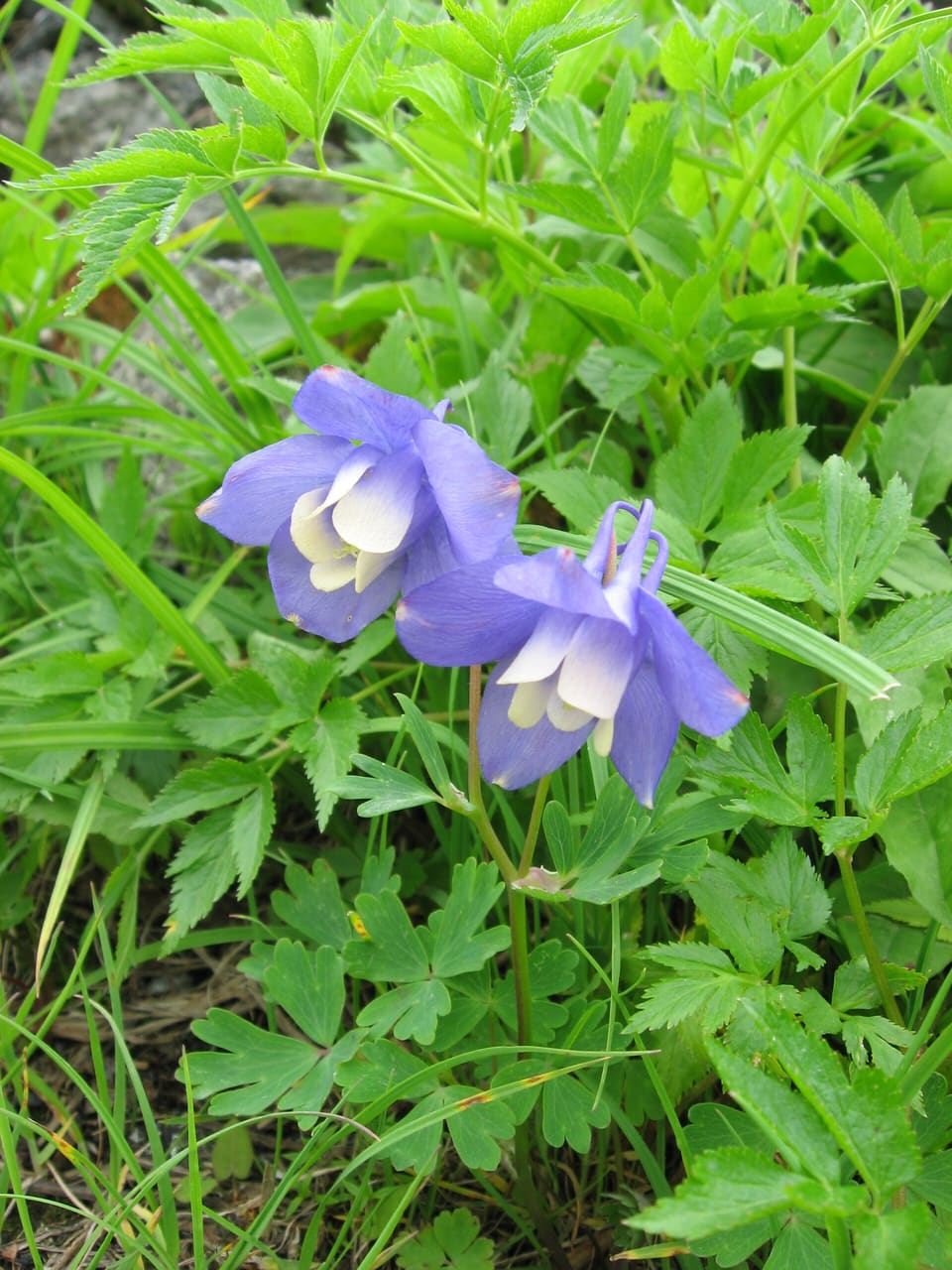
Aquilegia flabellata

Fan Columbine

Family RanunculaceaeGenus Aquilegia

Two nodding flowers with violet-blue outer petals and white cups, above rounded lobed leaves
FlowerΣ64CC BY-SA 3.0

About the plant

What it is and where it grows — not part of any germination protocol.

Habit
perennialPlants of the World Online
Flower
Purple, yellowish-white, whiteWikipedia
Native range
Amur, Buryatiya, Chita, Inner Mongolia, Irkutsk, Japan and elsewhereGBIF Backbone Taxonomy

Toxicity is noted only where a source states it. No note here is not a finding of safety.

Sources: Plants of the World Online — Royal Botanic Gardens, Kew; Wikipedia — Wikipedia contributors; GBIF Backbone Taxonomy — Global Biodiversity Information Facility.

Worth knowing

  • Columbine comes from the Latin columbinus, dove, for flowers that look like a group of doves. Aquilegia may come from aquila, eagle, for petals like talons. Wikipedia: Aquilegia flabellata

Two sources report 8 treatments between them. All are shown.

Protocol 1

DerivedN. C. Deno, 1998

Difficulty Low Rated by us, not by the source.

Start around March 16, 2027 for a May 3 last frost. Too late for spring 2027 — that needed starting on March 15, 2026.

  1. Dry storage

    Duration: 365 daysTemperature: 70°F 21°C

  2. Gibberellic acid soak

  3. Sow and cover

    Temperature: 70°F 21°C

about 12 months from start to sowing. Then 21 days to germinate.

100% germination in 7–21 days.

Seed Germination Theory and Practice, 2nd Supplement — N. C. Deno, 1998 · 2nd Supplement, Aquilegia p. 14Public domain
Show the original text
Aquilegia (Ranunculaceae). A. japonica germ. 70D(7%) and 70 GA-3(12% in 3rd w). Seeds DS 1 y germ. 70D(7% in 2nd w) and 70 GA-3(100% in 1-3 w). The favorable effect of the DS needs to be checked, but it does seem that GA-3 is required for germination and that the seeds show no sign of dying after 1 y DS.
Seed Germination Theory and Practice, 2nd Supplement, 2nd Supplement, Aquilegia p. 14. Quoted exactly. Every value on this card comes from this record, except the difficulty rating, which is ours; the step names come from a fixed list.

Protocol 2

DerivedN. C. Deno, 1998

Difficulty High Rated by us, not by the source.

Start around March 15, 2027 for a May 3 last frost.

  1. Gibberellic acid soak

  2. Sow and cover

    Temperature: 70°F 21°C

No stated waiting before sowing. Then 21 days to germinate.

12% germination in 21 days.

Seed Germination Theory and Practice, 2nd Supplement — N. C. Deno, 1998 · 2nd Supplement, Aquilegia p. 14Public domain
Show the original text
Aquilegia (Ranunculaceae). A. japonica germ. 70D(7%) and 70 GA-3(12% in 3rd w). Seeds DS 1 y germ. 70D(7% in 2nd w) and 70 GA-3(100% in 1-3 w). The favorable effect of the DS needs to be checked, but it does seem that GA-3 is required for germination and that the seeds show no sign of dying after 1 y DS.
Seed Germination Theory and Practice, 2nd Supplement, 2nd Supplement, Aquilegia p. 14. Quoted exactly. Every value on this card comes from this record, except the difficulty rating, which is ours; the step names come from a fixed list.

Protocol 3

DerivedN. C. Deno, 1998

Difficulty Very high Rated by us, not by the source.

Start around March 15, 2027 for a May 3 last frost.

  1. Sow and cover

    Temperature: 70°F 21°C Light: dark

No stated waiting before sowing. Germination time not stated; 21 days assumed.

7% germination.

Seed Germination Theory and Practice, 2nd Supplement — N. C. Deno, 1998 · 2nd Supplement, Aquilegia p. 14Public domain
Show the original text
Aquilegia (Ranunculaceae). A. japonica germ. 70D(7%) and 70 GA-3(12% in 3rd w). Seeds DS 1 y germ. 70D(7% in 2nd w) and 70 GA-3(100% in 1-3 w). The favorable effect of the DS needs to be checked, but it does seem that GA-3 is required for germination and that the seeds show no sign of dying after 1 y DS.
Seed Germination Theory and Practice, 2nd Supplement, 2nd Supplement, Aquilegia p. 14. Quoted exactly. Every value on this card comes from this record, except the difficulty rating, which is ours; the step names come from a fixed list.

Protocol 4

DerivedN. C. Deno, 1998

Difficulty Very high Rated by us, not by the source.

Start around March 23, 2027 for a May 3 last frost. Too late for spring 2027 — that needed starting on March 22, 2026.

  1. Dry storage

    Duration: 365 daysTemperature: 70°F 21°C

  2. Sow and cover

    Temperature: 70°F 21°C Light: dark

about 12 months from start to sowing. Then 14 days to germinate.

7% germination in 14 days.

Seed Germination Theory and Practice, 2nd Supplement — N. C. Deno, 1998 · 2nd Supplement, Aquilegia p. 14Public domain
Show the original text
Aquilegia (Ranunculaceae). A. japonica germ. 70D(7%) and 70 GA-3(12% in 3rd w). Seeds DS 1 y germ. 70D(7% in 2nd w) and 70 GA-3(100% in 1-3 w). The favorable effect of the DS needs to be checked, but it does seem that GA-3 is required for germination and that the seeds show no sign of dying after 1 y DS.
Seed Germination Theory and Practice, 2nd Supplement, 2nd Supplement, Aquilegia p. 14. Quoted exactly. Every value on this card comes from this record, except the difficulty rating, which is ours; the step names come from a fixed list.

Protocol 5

DerivedN. C. Deno, 1993

Difficulty Moderate Rated by us, not by the source.

Sow around March 1, 2027 — a date the source gives, not one counted back from a May 3 last frost.

  1. Dry storage

    Duration: 180 daysTemperature: 70°F 21°C

  2. Sow outdoors and leave it

    Sown outdoors in March 1; up in April.

about 6 months from start to sowing. Then 30 days to germinate.

65% germination in 30 days.

Seed Germination Theory and Practice, 2nd ed. — N. C. Deno, 1993 · Ch. 20, Aquilegia p. 97Public domain
Show the original text
Aquilegia (Ranunculaceae). Three treatments gave germination, and all other treatments failed. The three were (a) treatment of fresh or DS seed with GA-3 at 70, (b) sowing of OS seed at 70, and (c) outdoor treatment. All three of the treatments were used In only a few of the species so that it is not certain that all three will work with every species. Stewart and Presley (ref. 9) were the first to report that GA-3 was valuable in stimulating the germination of A. flabellata nana germ. 70 GA-3(100% in 2nd w) and none in 70 or 40-70. Seeds DS 6 m at 70 germ. 70(28% in 1-3 w), 40-70(17% in 1-4 w), and 65% in April in outdoor treatment from seed sown March 1 a month earlier. Seed DS 2 y was dead.
Seed Germination Theory and Practice, 2nd ed., Ch. 20, Aquilegia p. 97. Quoted exactly. Every value on this card comes from this record, except the difficulty rating, which is ours; the step names come from a fixed list.

Protocol 6

DerivedN. C. Deno, 1993

Difficulty High Rated by us, not by the source.

Start around September 17, 2027 for a May 3 last frost. Too late for spring 2027 — that needed starting on September 16, 2026.

  1. Dry storage

    Duration: 180 daysTemperature: 70°F 21°C

  2. Sow and cover

    Temperature: 70°F 21°C

about 6 months from start to sowing. Then 21 days to germinate.

28% germination in 7–21 days.

Seed Germination Theory and Practice, 2nd ed. — N. C. Deno, 1993 · Ch. 20, Aquilegia p. 97Public domain
Show the original text
Aquilegia (Ranunculaceae). Three treatments gave germination, and all other treatments failed. The three were (a) treatment of fresh or DS seed with GA-3 at 70, (b) sowing of OS seed at 70, and (c) outdoor treatment. All three of the treatments were used In only a few of the species so that it is not certain that all three will work with every species. Stewart and Presley (ref. 9) were the first to report that GA-3 was valuable in stimulating the germination of A. flabellata nana germ. 70 GA-3(100% in 2nd w) and none in 70 or 40-70. Seeds DS 6 m at 70 germ. 70(28% in 1-3 w), 40-70(17% in 1-4 w), and 65% in April in outdoor treatment from seed sown March 1 a month earlier. Seed DS 2 y was dead.
Seed Germination Theory and Practice, 2nd ed., Ch. 20, Aquilegia p. 97. Quoted exactly. Every value on this card comes from this record, except the difficulty rating, which is ours; the step names come from a fixed list.

Protocol 7

DerivedN. C. Deno, 1993

Difficulty High Rated by us, not by the source.

Start around June 12, 2027 for a May 3 last frost. Too late for spring 2027 — that needed starting on June 11, 2026.

  1. Dry storage

    Duration: 180 daysTemperature: 70°F 21°C

  2. Cold moist stratification

    Duration: 90 daysTemperature: 40°F 4°C

  3. Warm moist stratification

    Duration: 90 daysTemperature: 70°F 21°C

about 9 months from start to step 3. Germination happens during step 3, in 28 days.
17% germination in 7–28 days.

Seed Germination Theory and Practice, 2nd ed. — N. C. Deno, 1993 · Ch. 20, Aquilegia p. 97Public domain
Show the original text
Aquilegia (Ranunculaceae). Three treatments gave germination, and all other treatments failed. The three were (a) treatment of fresh or DS seed with GA-3 at 70, (b) sowing of OS seed at 70, and (c) outdoor treatment. All three of the treatments were used In only a few of the species so that it is not certain that all three will work with every species. Stewart and Presley (ref. 9) were the first to report that GA-3 was valuable in stimulating the germination of A. flabellata nana germ. 70 GA-3(100% in 2nd w) and none in 70 or 40-70. Seeds DS 6 m at 70 germ. 70(28% in 1-3 w), 40-70(17% in 1-4 w), and 65% in April in outdoor treatment from seed sown March 1 a month earlier. Seed DS 2 y was dead.
Seed Germination Theory and Practice, 2nd ed., Ch. 20, Aquilegia p. 97. Quoted exactly. Every value on this card comes from this record, except the difficulty rating, which is ours; the step names come from a fixed list.

Protocol 8

DerivedN. C. Deno, 1993
  1. Sow and cover

    Temperature: 70°F 21°C

No stated waiting before sowing.

0% germination.

Nothing germinated at 70.

Seed Germination Theory and Practice, 2nd ed. — N. C. Deno, 1993 · Ch. 20, Aquilegia p. 97Public domain
Show the original text
Aquilegia (Ranunculaceae). Three treatments gave germination, and all other treatments failed. The three were (a) treatment of fresh or DS seed with GA-3 at 70, (b) sowing of OS seed at 70, and (c) outdoor treatment. All three of the treatments were used In only a few of the species so that it is not certain that all three will work with every species. Stewart and Presley (ref. 9) were the first to report that GA-3 was valuable in stimulating the germination of A. flabellata nana germ. 70 GA-3(100% in 2nd w) and none in 70 or 40-70. Seeds DS 6 m at 70 germ. 70(28% in 1-3 w), 40-70(17% in 1-4 w), and 65% in April in outdoor treatment from seed sown March 1 a month earlier. Seed DS 2 y was dead.
Seed Germination Theory and Practice, 2nd ed., Ch. 20, Aquilegia p. 97. Quoted exactly. Every value on this card comes from this record; the step names come from a fixed list.

Germination trials

Readers’ own records of sowing this species, published after review. Share your trial · All trials

Add to My Garden

View species page