Deno’s GardenMy Garden

Asclepias incarnata

Pleurisy Root · Swamp Milkweed

Family ApocynaceaeGenus Asclepias

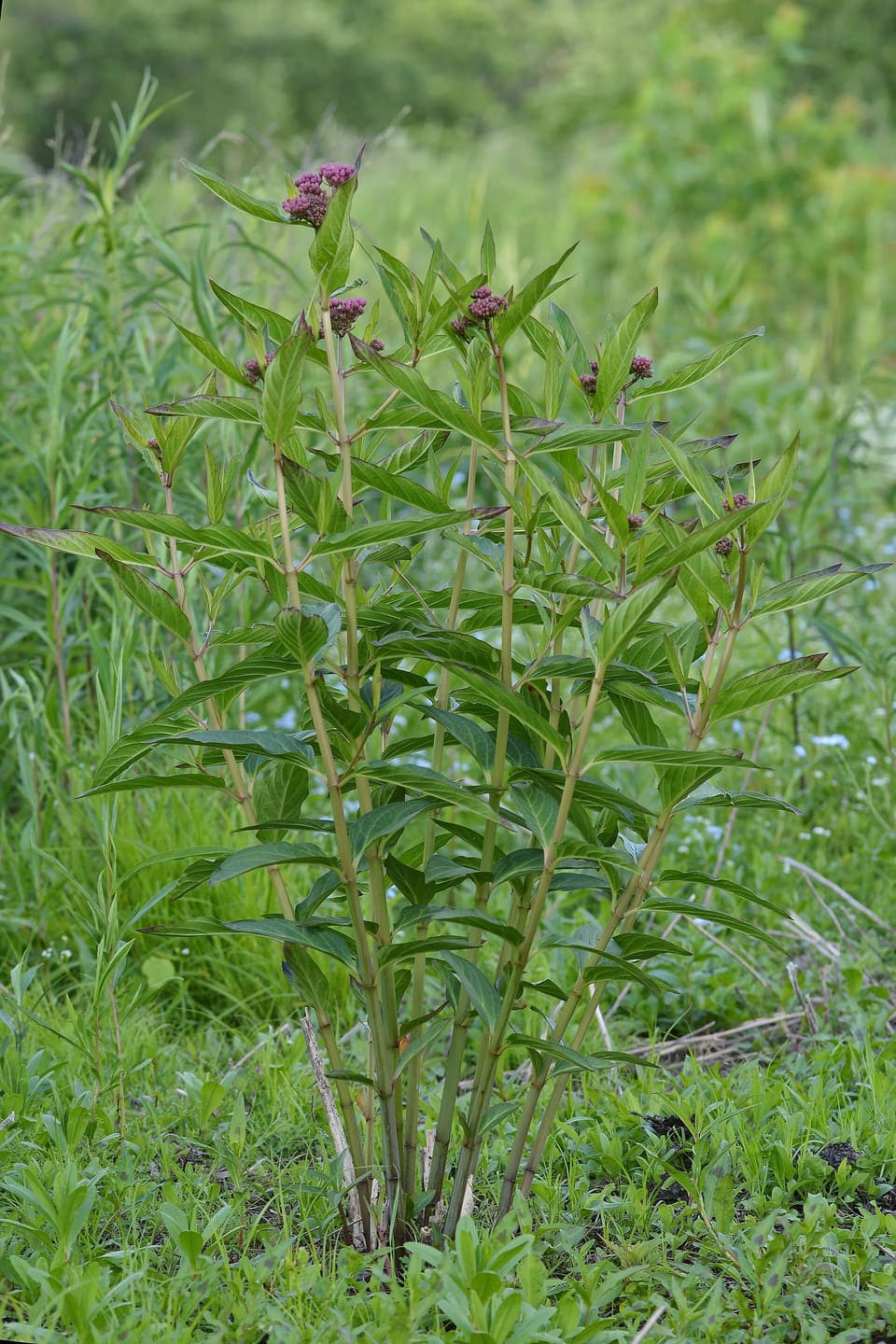
An upright clump of straight stems with narrow opposite leaves, topped by tight heads of dark pink buds
The whole plantRyan HodnettCC BY-SA 4.0

About the plant

What it is and where it grows — not part of any germination protocol.

The plant

Habit
Herbaceous Perennial, WildflowerExtension Gardener Plant Toolbox
Habit
perennialPlants of the World Online
Height
3-5 ft0.9-1.5 mExtension Gardener Plant Toolbox
Spread
2-3 ft60-90 cmExtension Gardener Plant Toolbox
Flower
Pink, WhiteExtension Gardener Plant Toolbox
Blooms
Fall, SummerExtension Gardener Plant Toolbox
Native range
Canada, lower 48 statesPLANTS Database
Hardiness zones
3-9Extension Gardener Plant Toolbox

Growing conditions

Sun
Full sun; Partial ShadeExtension Gardener Plant Toolbox
Soil
Clay, High Organic Matter, Loam (Silt)Extension Gardener Plant Toolbox
Soil pH
Acid (<6.0), Neutral (6.0-8.0)Extension Gardener Plant Toolbox
Moisture
Good Drainage, Moist, Occasionally WetExtension Gardener Plant Toolbox
Watering
Drought tolerance: NonePLANTS Database

Toxicity is noted only where a source states it. No note here is not a finding of safety.

Sources: Extension Gardener Plant Toolbox — NC State Extension; Plants of the World Online — Royal Botanic Gardens, Kew; PLANTS Database — USDA NRCS.

Worth knowing

This source reports 6 treatments. All are shown.

Protocol 1

DerivedN. C. Deno, 1993

Difficulty Moderate Rated by us, not by the source.

Start around December 15, 2026 for a May 3 last frost.

  1. Cold moist stratification

    Duration: 90 daysTemperature: 40°F 4°C

  2. Warm moist stratification

    Duration: 90 daysTemperature: 70°F 21°C Light: light

about 3 months from start to step 2. Germination happens during step 2, in 21 days.

100% germination in 7–21 days.

Seed Germination Theory and Practice, 2nd ed. — N. C. Deno, 1993 · Ch. 20, Asclepias p. 103Public domain
Show the original text
Asclepias (Asclepiadaceae). The four species studied have wind born seed indicating that DS is tolerated. This was generally true; but some deterioration on DS was noted in A. incarnata.germ. 40-70L(100% in 1-3 w) and none in 70L. None germ. in up to two years of alternating 3 m cycles in the dark starting at either 40 or 70. When such seed was shifted to 70L, 90-100% germ. in 3-5 d. It is evident .that seed of A. incarnata could lie buried for years and still retain viability and germination would be immediate on exposure to 70L. There is some dieing of the seeds in 6 m of IDS with more dieing at 70 than 40 as shown by 40-70L(65%) for seed DS at 70 and 40-70L(91 %) for DS at 40. A second effect of DS and a most peculiar one was that it replaced in part the need for a preliminary 3 m at 40 as shown by 70L(35%) for seed DS at 70 and 70L(53%) for seed DS at 40. An odd result was that 74% germ. outdoors in April from seed sown in October. Since this was the only dark treatment that gave germination, it suggests that the temperature oscillations experienced in outdoor treatment have some special efficacy in destroying inhibitors. However, it is important to note that these seedlings from outdoor treatment were noticeably less vigorous and this treatment is not recommended. GA-3 did hot initiate germination..
Seed Germination Theory and Practice, 2nd ed., Ch. 20, Asclepias p. 103. Quoted exactly. Every value on this card comes from this record, except the difficulty rating, which is ours; the step names come from a fixed list.

Protocol 2

DerivedN. C. Deno, 1993

Difficulty Moderate Rated by us, not by the source.

Start around June 19, 2027 for a May 3 last frost. Too late for spring 2027 — that needed starting on June 18, 2026.

  1. Dry storage

    Duration: 180 daysTemperature: 70°F 21°C

  2. Cold moist stratification

    Duration: 90 daysTemperature: 40°F 4°C

  3. Warm moist stratification

    Duration: 90 daysTemperature: 70°F 21°C Light: light

about 9 months from start to step 3. Germination happens during step 3; time not stated, 21 days assumed.

91% germination.

Seed Germination Theory and Practice, 2nd ed. — N. C. Deno, 1993 · Ch. 20, Asclepias p. 103Public domain
Show the original text
Asclepias (Asclepiadaceae). The four species studied have wind born seed indicating that DS is tolerated. This was generally true; but some deterioration on DS was noted in A. incarnata.germ. 40-70L(100% in 1-3 w) and none in 70L. None germ. in up to two years of alternating 3 m cycles in the dark starting at either 40 or 70. When such seed was shifted to 70L, 90-100% germ. in 3-5 d. It is evident .that seed of A. incarnata could lie buried for years and still retain viability and germination would be immediate on exposure to 70L. There is some dieing of the seeds in 6 m of DS with more dieing at 70 than 40 as shown by 40-70L(65%) for seed DS at 70 and 40-70L(91 %) for DS at 40. A second effect of DS and a most peculiar one was that it replaced in part the need for a preliminary 3 m at 40 as shown by 70L(35%) for seed DS at 70 and 70L(53%) for seed DS at 40. An odd result was that 74% germ. outdoors in April from seed sown in October. Since this was the only dark treatment that gave germination, it suggests that the temperature oscillations experienced in outdoor treatment have some special efficacy in destroying inhibitors. However, it is important to note that these seedlings from outdoor treatment were noticeably less vigorous and this treatment is not recommended. GA-3 did hot initiate germination..
Seed Germination Theory and Practice, 2nd ed., Ch. 20, Asclepias p. 103. Quoted exactly. Every value on this card comes from this record, except the difficulty rating, which is ours; the step names come from a fixed list.

Protocol 3

DerivedN. C. Deno, 1993

Difficulty Moderate Rated by us, not by the source.

Start around June 19, 2027 for a May 3 last frost. Too late for spring 2027 — that needed starting on June 18, 2026.

  1. Dry storage

    Duration: 180 daysTemperature: 70°F 21°C

  2. Cold moist stratification

    Duration: 90 daysTemperature: 40°F 4°C

  3. Warm moist stratification

    Duration: 90 daysTemperature: 70°F 21°C Light: light

about 9 months from start to step 3. Germination happens during step 3; time not stated, 21 days assumed.

65% germination.

Seed Germination Theory and Practice, 2nd ed. — N. C. Deno, 1993 · Ch. 20, Asclepias p. 103Public domain
Show the original text
Asclepias (Asclepiadaceae). The four species studied have wind born seed indicating that DS is tolerated. This was generally true; but some deterioration on DS was noted in A. incarnata.germ. 40-70L(100% in 1-3 w) and none in 70L. None germ. in up to two years of alternating 3 m cycles in the dark starting at either 40 or 70. When such seed was shifted to 70L, 90-100% germ. in 3-5 d. It is evident .that seed of A. incarnata could lie buried for years and still retain viability and germination would be immediate on exposure to 70L. There is some dieing of the seeds in 6 m of DS with more dieing at 70 than 40 as shown by 40-70L(65%) for seed DS at 70 and 40-70L(91 %) for DS at 40. A second effect of DS and a most peculiar one was that it replaced in part the need for a preliminary 3 m at 40 as shown by 70L(35%) for seed DS at 70 and 70L(53%) for seed DS at 40. An odd result was that 74% germ. outdoors in April from seed sown in October. Since this was the only dark treatment that gave germination, it suggests that the temperature oscillations experienced in outdoor treatment have some special efficacy in destroying inhibitors. However, it is important to note that these seedlings from outdoor treatment were noticeably less vigorous and this treatment is not recommended. GA-3 did hot initiate germination..
Seed Germination Theory and Practice, 2nd ed., Ch. 20, Asclepias p. 103. Quoted exactly. Every value on this card comes from this record, except the difficulty rating, which is ours; the step names come from a fixed list.

Protocol 4

DerivedN. C. Deno, 1993

Difficulty Moderate Rated by us, not by the source.

Start around September 17, 2027 for a May 3 last frost. Too late for spring 2027 — that needed starting on September 16, 2026.

  1. Dry storage

    Duration: 180 daysTemperature: 70°F 21°C

  2. Sow and cover

    Temperature: 70°F 21°C Light: light

about 6 months from start to sowing. Germination time not stated; 21 days assumed.

53% germination.

Seed Germination Theory and Practice, 2nd ed. — N. C. Deno, 1993 · Ch. 20, Asclepias p. 103Public domain
Show the original text
Asclepias (Asclepiadaceae). The four species studied have wind born seed indicating that DS is tolerated. This was generally true; but some deterioration on DS was noted in A. incarnata.germ. 40-70L(100% in 1-3 w) and none in 70L. None germ. in up to two years of alternating 3 m cycles in the dark starting at either 40 or 70. When such seed was shifted to 70L, 90-100% germ. in 3-5 d. It is evident .that seed of A. incarnata could lie buried for years and still retain viability and germination would be immediate on exposure to 70L. There is some dieing of the seeds in 6 m of DS with more dieing at 70 than 40 as shown by 40-70L(65%) for seed DS at 70 and 40-70L(91 %) for DS at 40. A second effect of DS and a most peculiar one was that it replaced in part the need for a preliminary 3 m at 40 as shown by 70L(35%) for seed DS at 70 and 70L(53%) for seed DS at 40. An odd result was that 74% germ. outdoors in April from seed sown in October. Since this was the only dark treatment that gave germination, it suggests that the temperature oscillations experienced in outdoor treatment have some special efficacy in destroying inhibitors. However, it is important to note that these seedlings from outdoor treatment were noticeably less vigorous and this treatment is not recommended. GA-3 did hot initiate germination..
Seed Germination Theory and Practice, 2nd ed., Ch. 20, Asclepias p. 103. Quoted exactly. Every value on this card comes from this record, except the difficulty rating, which is ours; the step names come from a fixed list.

Protocol 5

DerivedN. C. Deno, 1993

Difficulty Moderate Rated by us, not by the source.

Start around September 17, 2027 for a May 3 last frost. Too late for spring 2027 — that needed starting on September 16, 2026.

  1. Dry storage

    Duration: 180 daysTemperature: 70°F 21°C

  2. Sow and cover

    Temperature: 70°F 21°C Light: light

about 6 months from start to sowing. Germination time not stated; 21 days assumed.

35% germination.

Seed Germination Theory and Practice, 2nd ed. — N. C. Deno, 1993 · Ch. 20, Asclepias p. 103Public domain
Show the original text
Asclepias (Asclepiadaceae). The four species studied have wind born seed indicating that DS is tolerated. This was generally true; but some deterioration on DS was noted in A. incarnata.germ. 40-70L(100% in 1-3 w) and none in 70L. None germ. in up to two years of alternating 3 m cycles in the dark starting at either 40 or 70. When such seed was shifted to 70L, 90-100% germ. in 3-5 d. It is evident .that seed of A. incarnata could lie buried for years and still retain viability and germination would be immediate on exposure to 70L. There is some dieing of the seeds in 6 m of DS with more dieing at 70 than 40 as shown by 40-70L(65%) for seed DS at 70 and 40-70L(91 %) for DS at 40. A second effect of DS and a most peculiar one was that it replaced in part the need for a preliminary 3 m at 40 as shown by 70L(35%) for seed DS at 70 and 70L(53%) for seed DS at 40. An odd result was that 74% germ. outdoors in April from seed sown in October. Since this was the only dark treatment that gave germination, it suggests that the temperature oscillations experienced in outdoor treatment have some special efficacy in destroying inhibitors. However, it is important to note that these seedlings from outdoor treatment were noticeably less vigorous and this treatment is not recommended. GA-3 did hot initiate germination..
Seed Germination Theory and Practice, 2nd ed., Ch. 20, Asclepias p. 103. Quoted exactly. Every value on this card comes from this record, except the difficulty rating, which is ours; the step names come from a fixed list.

Protocol 6

DerivedN. C. Deno, 1993
  1. Sow and cover

    Temperature: 70°F 21°C Light: light

No stated waiting before sowing.

0% germination.

Nothing germinated at 70.

Seed Germination Theory and Practice, 2nd ed. — N. C. Deno, 1993 · Ch. 20, Asclepias p. 103Public domain
Show the original text
Asclepias (Asclepiadaceae). The four species studied have wind born seed indicating that DS is tolerated. This was generally true; but some deterioration on DS was noted in A. incarnata.germ. 40-70L(100% in 1-3 w) and none in 70L. None germ. in up to two years of alternating 3 m cycles in the dark starting at either 40 or 70. When such seed was shifted to 70L, 90-100% germ. in 3-5 d. It is evident .that seed of A. incarnata could lie buried for years and still retain viability and germination would be immediate on exposure to 70L. There is some dieing of the seeds in 6 m of IDS with more dieing at 70 than 40 as shown by 40-70L(65%) for seed DS at 70 and 40-70L(91 %) for DS at 40. A second effect of DS and a most peculiar one was that it replaced in part the need for a preliminary 3 m at 40 as shown by 70L(35%) for seed DS at 70 and 70L(53%) for seed DS at 40. An odd result was that 74% germ. outdoors in April from seed sown in October. Since this was the only dark treatment that gave germination, it suggests that the temperature oscillations experienced in outdoor treatment have some special efficacy in destroying inhibitors. However, it is important to note that these seedlings from outdoor treatment were noticeably less vigorous and this treatment is not recommended. GA-3 did hot initiate germination..
Seed Germination Theory and Practice, 2nd ed., Ch. 20, Asclepias p. 103. Quoted exactly. Every value on this card comes from this record; the step names come from a fixed list.

Germination trials

Readers’ own records of sowing this species, published after review. Share your trial · All trials

Add to My Garden

View species page