Asclepias tuberosa
Butterfly Milkweed · Butterfly-weed · Canada Root
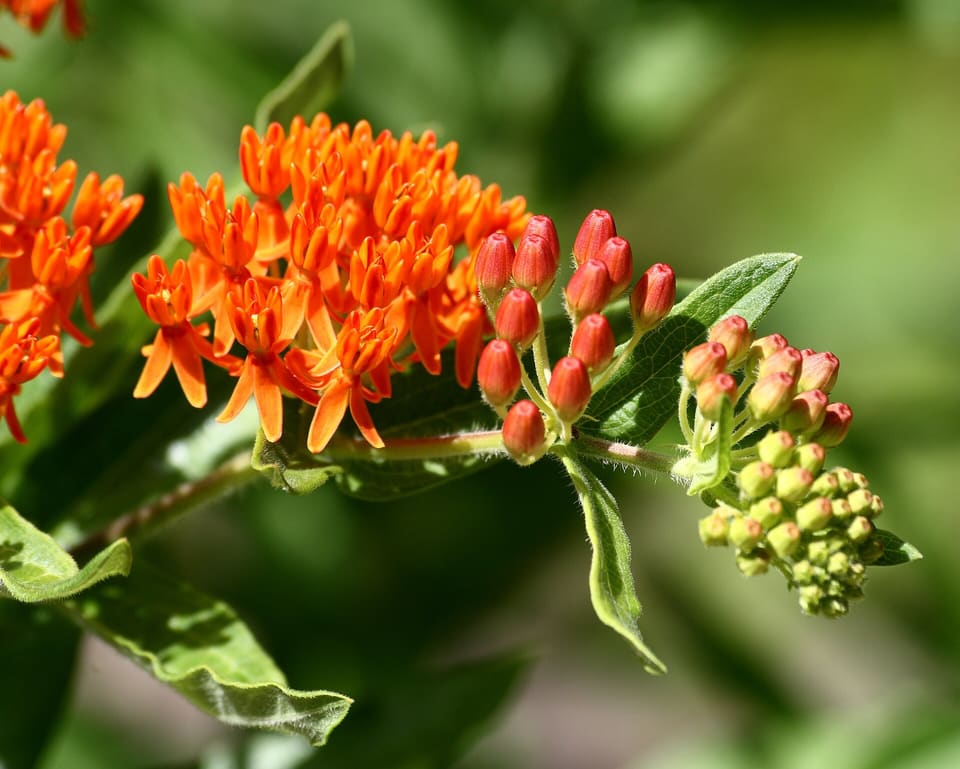

About the plant
What it is and where it grows — not part of any germination protocol.
The plant
- Habit
- Herbaceous Perennial, WildflowerExtension Gardener Plant Toolbox
- Habit
- perennialPlants of the World Online
- Height
- 1-2 ft30-60 cmExtension Gardener Plant Toolbox
- Spread
- 1-1.5 ft30-45 cmExtension Gardener Plant Toolbox
- Flower
- Gold/Yellow, Orange, Red/BurgundyExtension Gardener Plant Toolbox
- Blooms
- Spring, SummerExtension Gardener Plant Toolbox
- Native range
- Canada, lower 48 statesPLANTS Database
- Hardiness zones
- 3-9Extension Gardener Plant Toolbox
Growing conditions
- Sun
- Full sun; Partial ShadeExtension Gardener Plant Toolbox
- Soil
- Clay, Loam (Silt), Sand, Shallow RockyExtension Gardener Plant Toolbox
- Soil pH
- 4.8-6.8PLANTS Database
- Moisture
- Good Drainage, Moist, Occasionally DryExtension Gardener Plant Toolbox
- Watering
- Drought tolerance: HighPLANTS Database
Toxicity is noted only where a source states it. No note here is not a finding of safety.
Sources: Extension Gardener Plant Toolbox — NC State Extension; Plants of the World Online — Royal Botanic Gardens, Kew; PLANTS Database — USDA NRCS.
Worth knowing
- The genus is named for Asklepios, the Greek god of medicine; tuberosa refers to its knobby, swollen roots. US Forest Service: Butterfly Milkweed
- Under the name pleurisy root, it was listed in the American Pharmacopoeia and the National Formulary until 1936. US Forest Service: Butterfly Milkweed
- Unlike other milkweeds, it has no thick milky sap. US Forest Service: Butterfly Milkweed
This source reports three treatments. All are shown.
Protocol 1
DerivedN. C. Deno, 1993Difficulty Moderate
Start around December 29, 2026 for a May 3 last frost.
Cold moist stratification
Duration: 90 daysTemperature: 40°F 4°C Light: either
Warm moist stratification
Duration: 90 daysTemperature: 70°F 21°C Light: either
about 3 months from start to step 2. Germination happens during step 2, in 7 days.
100% germination in 2–7 days.
Protocol 2
DerivedN. C. Deno, 1993Difficulty Low
Sow outdoors and leave it
Up in March.
No stated waiting before sowing.
100% germination.
This source doesn't state how long step 1 lasts.
Protocol 3
DerivedN. C. Deno, 1993Difficulty Moderate
Start around September 17, 2027 for a May 3 last frost. Too late for spring 2027 — that needed starting on September 16, 2026.
Warm moist stratification
Duration: 90 daysTemperature: 70°F 21°C Light: either
Cold moist stratification
Duration: 90 daysTemperature: 40°F 4°C Light: either
Warm moist stratification
Duration: 90 daysTemperature: 70°F 21°C Light: either
about 6 months from start to step 3. Germination happens during step 3; time not stated, 21 days assumed.
75% germination.
How each step is done, in Deno’s words, and what Verified and Derived mean.
Germination trials
Readers’ own records of sowing this species, published after review. Share your trial · All trials
No trials shared for this species yet.