+ Add to My Garden
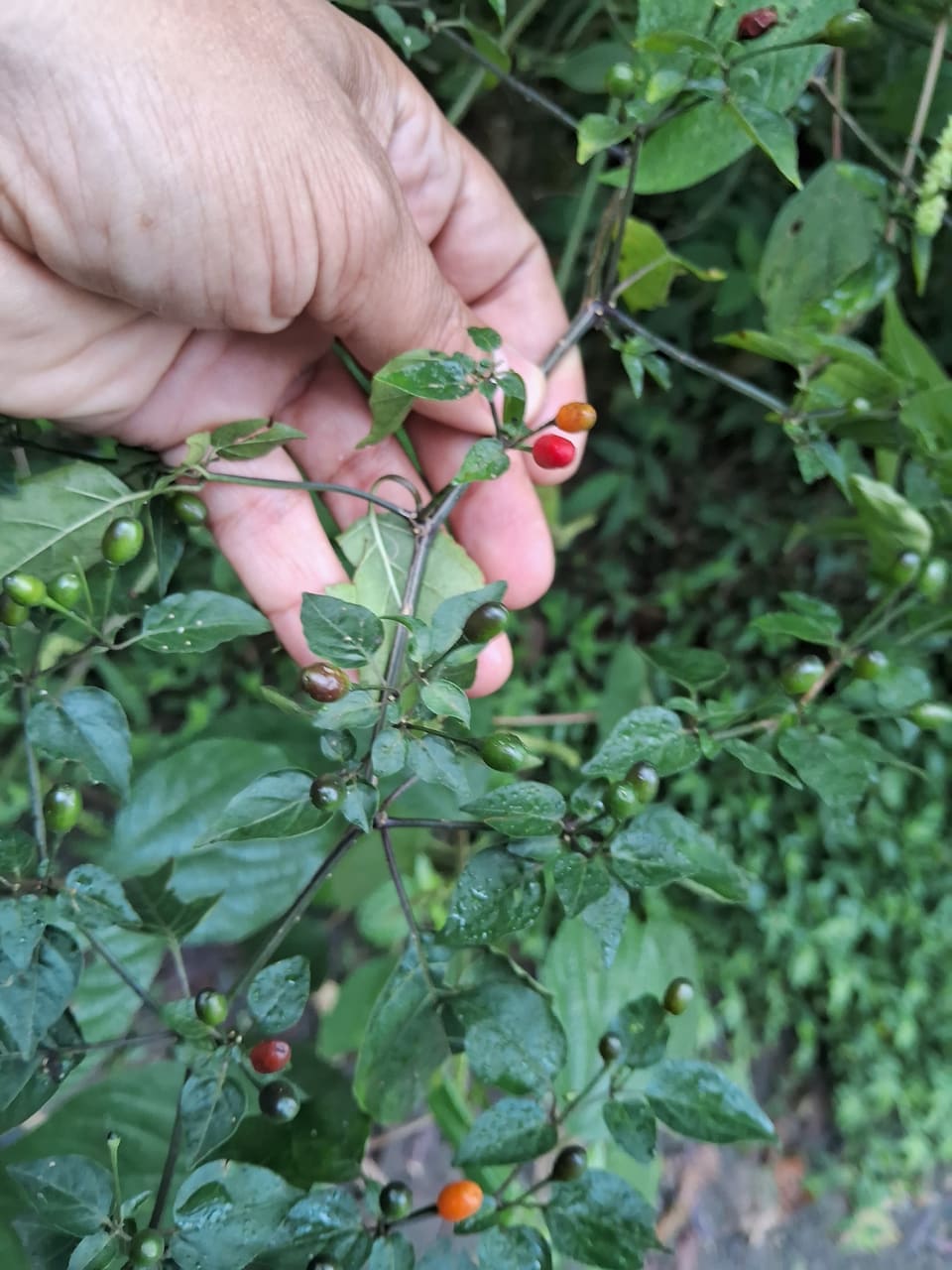
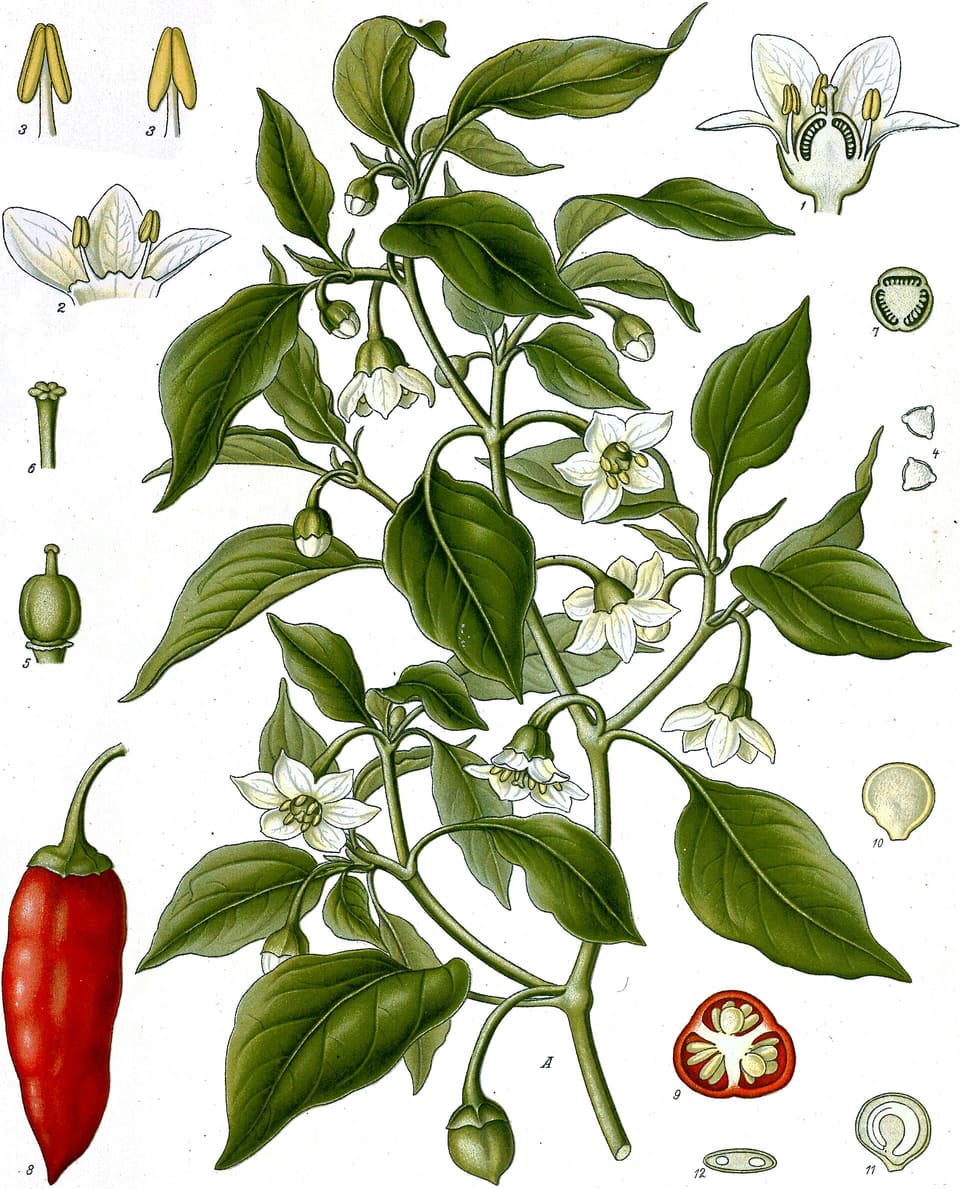
Fruit GERMAN LEONEL SARMIENTO CRUZ CC BY 4.0 Illustration Franz Eugen Köhler, Köhler's Medizinal-Pflanzen Public domain About the plant What it is and where it grows — not part of any germination protocol.
The plant
Habit Annual, Houseplant, Vegetable, Warm Season Vegetable Extension Gardener Plant Toolbox
Habit annual, subshrub or shrub Plants of the World Online
Height 1-3.7 ft 0.3-1.1 m Extension Gardener Plant Toolbox
Spread 0.5-1 ft 15-30 cm Extension Gardener Plant Toolbox
Flower Purple/Lavender, White Extension Gardener Plant Toolbox
Blooms Summer Extension Gardener Plant Toolbox
Native range Alabama, Arizona, Bahamas, Belize, Bolivia, Brazil North and elsewhere GBIF Backbone Taxonomy
Hardiness zones 4-11 Extension Gardener Plant Toolbox Growing conditions
Sun Full sun Extension Gardener Plant Toolbox
Soil Clay, High Organic Matter, Loam (Silt), Sand Extension Gardener Plant Toolbox
Soil pH Acid (<6.0), Alkaline (>8.0), Neutral (6.0-8.0) Extension Gardener Plant Toolbox
Moisture Good Drainage Extension Gardener Plant Toolbox Toxicity is noted only where a source states it. No note here is not a finding of safety.
Sources: Extension Gardener Plant Toolbox — NC State Extension; Plants of the World Online — Royal Botanic Gardens, Kew; GBIF Backbone Taxonomy — Global Biodiversity Information Facility.
Worth knowing One of the oldest cultivated crops, domesticated in Mexico about 6,000 years ago. Capsicum may come from the Latin capto, to seize, for the heat of the fruit. Wikipedia: Capsicum annuum Two sources report three treatments between them. All are shown.
Protocol 1 N. C. Deno, 1998 Difficulty Low Rated by us, not by the source.
Start around March 9, 2027 for a May 3 last frost. Too late for spring 2027 — that needed starting on March 8, 2024.
1 Dry storage
Duration: 1095 days · Temperature: 70°F 21°C
2 Sow and cover
Temperature: 70°F 21°C · Light: dark
about 3 years from start to sowing. Then 28 days to germinate.
90% germination in 28 days.
Seed Germination Theory and Practice, 2nd Supplement — N. C. Deno, 1998 · 2nd Supplement, Capsicum p. 22Public domain Show the original text Capsicum (Solanaceae). C. annuum seeds DS 3 y germ. 70D(90% in 4th w). In the 1st Suppl. it had been reported that seeds DS 1 y germ. only 29%. The problem is that many of the seed coats areempty, and these are not readily distinguished from viable sèeds. The final conclusion to date is that the seeds show no signs of dying in up to 3 y of DS. Seed Germination Theory and Practice, 2nd Supplement, 2nd Supplement, Capsicum p. 22. Quoted exactly. Every value on this card comes from this record, except the difficulty rating, which is ours; the step names come from a fixed list. Protocol 2 N. C. Deno, 1996 Difficulty Low Rated by us, not by the source.
Start around March 22, 2027 for a May 3 last frost.
1 Sow and cover
Temperature: 70°F 21°C · Light: light
No stated waiting before sowing. Then 14 days to germinate.
100% germination in 14 days.
Seed Germination Theory and Practice, 1st Supplement — N. C. Deno, 1996 · 1st Supplement, Capsicum p. 28Public domain Show the original text Capsicum (Solanaceae). It was reported in the 2nd Ed. that seeds of the green, yellow, and red forms all germ. in 9-11 d after removing from the fruit and after a WC as brief as 2 hours. It was proposed that possibly a germination inhibitor was somehow being transmitted into the seed inside the fruit. This has now been shown to be incorrect. What happens is that the fruit simply blocks access of oxygen to the seed. Thus the seed germ. 100% in 2-8 d in 70D with all three forms after removing from the fruit and placing in the moist paper towels. It made no difference whether the seeds were taken directly or WC for various times up to 8 d. In fact the seeds germ. under water in the WC treatment almost as fast as when in the more aerated paper towels. This result is in contrast to the behavior of the Casaba melon (cucumis melo) where seeds totally fail to germinate under water. The difference is attributed to the melon seeds requiring large amounts of oxygen whereas the Capsicum seeds are smaller and require less oxygen and are able to extract the needed oxygen from the water. Seeds of the yellow form showed no significant deterioration after 2 y DS. C. annuum germ. 70L(100% in 2nd w) and 70D(70% in 2nd w). GA-3 had no effect. Presumably germination is prevented inside the fruit by blocking access to oxygen as described above for Seed Germination Theory and Practice, 1st Supplement, 1st Supplement, Capsicum p. 28. Quoted exactly. Every value on this card comes from this record, except the difficulty rating, which is ours; the step names come from a fixed list. Protocol 3 N. C. Deno, 1996 Difficulty Low Rated by us, not by the source.
Start around March 22, 2027 for a May 3 last frost.
1 Sow and cover
Temperature: 70°F 21°C · Light: dark
No stated waiting before sowing. Then 14 days to germinate.
70% germination in 14 days.
Seed Germination Theory and Practice, 1st Supplement — N. C. Deno, 1996 · 1st Supplement, Capsicum p. 28Public domain Show the original text Capsicum (Solanaceae). It was reported in the 2nd Ed. that seeds of the green, yellow, and red forms all germ. in 9-11 d after removing from the fruit and after a WC as brief as 2 hours. It was proposed that possibly a germination inhibitor was somehow being transmitted into the seed inside the fruit. This has now been shown to be incorrect. What happens is that the fruit simply blocks access of oxygen to the seed. Thus the seed germ. 100% in 2-8 d in 70D with all three forms after removing from the fruit and placing in the moist paper towels. It made no difference whether the seeds were taken directly or WC for various times up to 8 d. In fact the seeds germ. under water in the WC treatment almost as fast as when in the more aerated paper towels. This result is in contrast to the behavior of the Casaba melon (cucumis melo) where seeds totally fail to germinate under water. The difference is attributed to the melon seeds requiring large amounts of oxygen whereas the Capsicum seeds are smaller and require less oxygen and are able to extract the needed oxygen from the water. Seeds of the yellow form showed no significant deterioration after 2 y DS. C. annuum germ. 70L(100% in 2nd w) and 70D(70% in 2nd w). GA-3 had no effect. Presumably germination is prevented inside the fruit by blocking access to oxygen as described above for Seed Germination Theory and Practice, 1st Supplement, 1st Supplement, Capsicum p. 28. Quoted exactly. Every value on this card comes from this record, except the difficulty rating, which is ours; the step names come from a fixed list. How each step is done , in Deno’s words, and what Verified and Derived mean.
Germination trials Readers’ own records of sowing this species, published after review. Share your trial · All trials
No trials shared for this species yet.