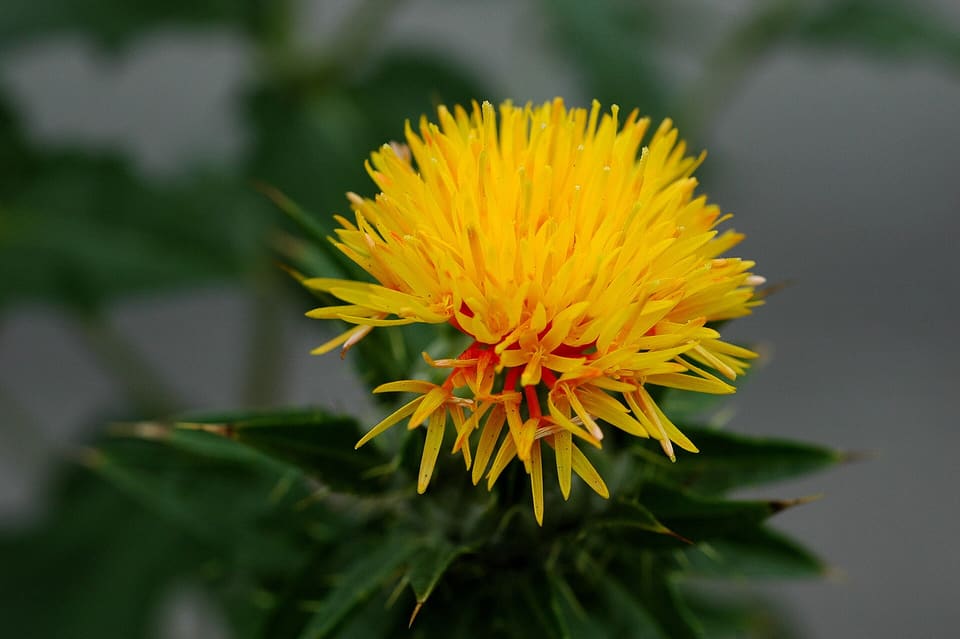
Carthamus tinctorius
Dyer's-saffron · False Saffron · Safflower

About the plant
What it is and where it grows — not part of any germination protocol.
- Habit
- annualPlants of the World Online
- Habit
- Annual, Forb/herbPLANTS Database
- Flower
- Yellow, redFlora of North America
- Native range
- IranGBIF Backbone Taxonomy
Toxicity is noted only where a source states it. No note here is not a finding of safety.
Sources: Plants of the World Online — Royal Botanic Gardens, Kew; PLANTS Database — USDA NRCS; Flora of North America — Flora of North America Editorial Committee; GBIF Backbone Taxonomy — Global Biodiversity Information Facility.
Worth knowing
- One of humanity's oldest crops, first grown in Mesopotamia. Ancient Egyptian textiles were dyed with it, and garlands of safflowers were found in Tutankhamun's tomb. Wikipedia: Safflower
- Also called false saffron, for petals that resemble saffron. It is grown commercially for the oil in its seeds. Wikipedia: Safflower
Protocol
DerivedN. C. Deno, 1993Difficulty Moderate
Cold moist stratification
Temperature: 40°F 4°C
Germination happens during step 1, in 28 days.
67% germination in 28 days.
How each step is done, in Deno’s words, and what Verified and Derived mean.
Germination trials
Readers’ own records of sowing this species, published after review. Share your trial · All trials
No trials shared for this species yet.