Deno’s GardenMy Garden

Cerastium fontanum

Common Chickweed · Common Mouse-ear · Common Mouse-ear Chickweed

Family CaryophyllaceaeGenus Cerastium

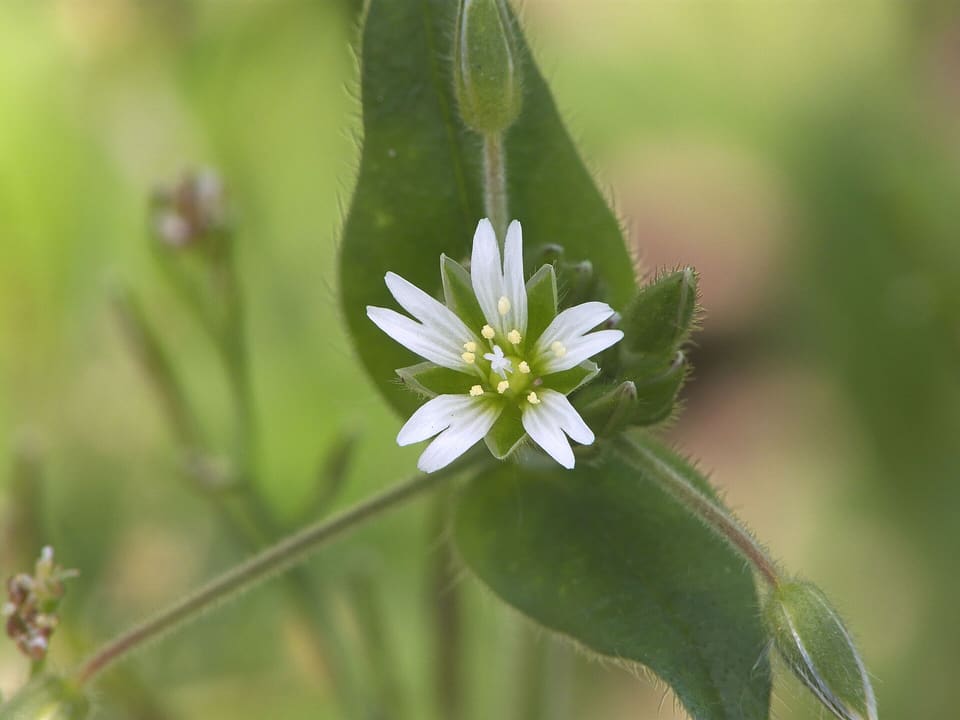
A single white flower with five deeply notched petals and yellow anthers, on a hairy stem with pointed leaves
FlowerRasbakCC BY-SA 3.0

About the plant

What it is and where it grows — not part of any germination protocol.

Habit
biennial or subshrubPlants of the World Online
Habit
Biennial, Perennial, Forb/herbPLANTS Database
Flower
WhiteWikipedia
Native range
Austria, Baltic States, Bulgaria, Corse, Czechia-Slovakia, East Himalaya and elsewhereGBIF Backbone Taxonomy

Toxicity is noted only where a source states it. No note here is not a finding of safety.

Sources: Plants of the World Online — Royal Botanic Gardens, Kew; PLANTS Database — USDA NRCS; Wikipedia — Wikipedia contributors; GBIF Backbone Taxonomy — Global Biodiversity Information Facility.

Worth knowing

  • Cerastium comes from the Greek for "horned", after the shape of its seed capsule, and fontanum means "of springs" or "of fast-running streams". Mouse-ear chickweed spreads by rooting wherever its stems touch the ground. Wikipedia: Cerastium fontanum

This source reports 4 treatments. All are shown.

Protocol 1

DerivedN. C. Deno, 1996

Difficulty Low Rated by us, not by the source.

Start around September 17, 2027 for a May 3 last frost. Too late for spring 2027 — that needed starting on September 16, 2026.

  1. Dry storage

    Duration: 180 daysTemperature: 70°F 21°C

  2. Sow and cover

    Temperature: 70°F 21°C Light: light

about 6 months from start to sowing. Then 21 days to germinate.

100% germination in 7–21 days.

Seed Germination Theory and Practice, 1st Supplement — N. C. Deno, 1996 · 1st Supplement, Cerastium p. 30Public domain
Show the original text
Cerastium (Caryophyllaceae). C. fontanum germ. 70L{90% in 1-9 w) and 70D(15% in 1-9 w)-40-70D(54% in 4-8 d). DS not only increased the rate of germination, but it also decreased the effect of light. Seed DS 6 m at 70 germ. 70L(100% in 1-3 w) and 70D(79% in 2nd w), and seed DS 1 y germ. 70D(88% in 2nd w). However, seeds DS 2 y germ. 70D{32% in 3rd w) showing significant dying. The five species studied previously germ. in 70D, but it is possible that the seeds had extensive DS which had removed the light requirement. Ceratotheca (?).
Seed Germination Theory and Practice, 1st Supplement, 1st Supplement, Cerastium p. 30. Quoted exactly. Every value on this card comes from this record, except the difficulty rating, which is ours; the step names come from a fixed list.

Protocol 2

DerivedN. C. Deno, 1996

Difficulty Low Rated by us, not by the source.

Start around September 24, 2027 for a May 3 last frost. Too late for spring 2027 — that needed starting on September 23, 2026.

  1. Dry storage

    Duration: 180 daysTemperature: 70°F 21°C

  2. Sow and cover

    Temperature: 70°F 21°C Light: dark

about 6 months from start to sowing. Then 14 days to germinate.

88% germination in 14 days.

Seed Germination Theory and Practice, 1st Supplement — N. C. Deno, 1996 · 1st Supplement, Cerastium p. 30Public domain
Show the original text
Cerastium (Caryophyllaceae). C. fontanum germ. 70L{90% in 1-9 w) and 70D(15% in 1-9 w)-40-70D(54% in 4-8 d). DS not only increased the rate of germination, but it also decreased the effect of light. Seed DS 6 m at 70 germ. 70L(100% in 1-3 w) and 70D(79% in 2nd w), and seed DS 1 y germ. 70D(88% in 2nd w). However, seeds DS 2 y germ. 70D{32% in 3rd w) showing significant dying. The five species studied previously germ. in 70D, but it is possible that the seeds had extensive DS which had removed the light requirement. Ceratotheca (?).
Seed Germination Theory and Practice, 1st Supplement, 1st Supplement, Cerastium p. 30. Quoted exactly. Every value on this card comes from this record, except the difficulty rating, which is ours; the step names come from a fixed list.

Protocol 3

DerivedN. C. Deno, 1996

Difficulty Low Rated by us, not by the source.

Start around September 24, 2027 for a May 3 last frost. Too late for spring 2027 — that needed starting on September 23, 2026.

  1. Dry storage

    Duration: 180 daysTemperature: 70°F 21°C

  2. Sow and cover

    Temperature: 70°F 21°C Light: dark

about 6 months from start to sowing. Then 14 days to germinate.

79% germination in 14 days.

Seed Germination Theory and Practice, 1st Supplement — N. C. Deno, 1996 · 1st Supplement, Cerastium p. 30Public domain
Show the original text
Cerastium (Caryophyllaceae). C. fontanum germ. 70L{90% in 1-9 w) and 70D(15% in 1-9 w)-40-70D(54% in 4-8 d). DS not only increased the rate of germination, but it also decreased the effect of light. Seed DS 6 m at 70 germ. 70L(100% in 1-3 w) and 70D(79% in 2nd w), and seed DS 1 y germ. 70D(88% in 2nd w). However, seeds DS 2 y germ. 70D{32% in 3rd w) showing significant dying. The five species studied previously germ. in 70D, but it is possible that the seeds had extensive DS which had removed the light requirement. Ceratotheca (?).
Seed Germination Theory and Practice, 1st Supplement, 1st Supplement, Cerastium p. 30. Quoted exactly. Every value on this card comes from this record, except the difficulty rating, which is ours; the step names come from a fixed list.

Protocol 4

DerivedN. C. Deno, 1996

Difficulty High Rated by us, not by the source.

Start around September 30, 2027 for a May 3 last frost. Too late for spring 2027 — that needed starting on September 29, 2026.

  1. Warm moist stratification

    Duration: 90 daysTemperature: 70°F 21°C Light: dark

    15 germinated in this phase.

  2. Cold moist stratification

    Duration: 90 daysTemperature: 40°F 4°C

  3. Warm moist stratification

    Duration: 90 daysTemperature: 70°F 21°C Light: dark

about 6 months from start to step 3. Germination happens during step 3, in 8 days.
54% germination in 4–8 days.

Seed Germination Theory and Practice, 1st Supplement — N. C. Deno, 1996 · 1st Supplement, Cerastium p. 30Public domain
Show the original text
Cerastium (Caryophyllaceae). C. fontanum germ. 70L{90% in 1-9 w) and 70D(15% in 1-9 w)-40-70D(54% in 4-8 d). DS not only increased the rate of germination, but it also decreased the effect of light. Seed DS 6 m at 70 germ. 70L(100% in 1-3 w) and 70D(79% in 2nd w), and seed DS 1 y germ. 70D(88% in 2nd w). However, seeds DS 2 y germ. 70D{32% in 3rd w) showing significant dying. The five species studied previously germ. in 70D, but it is possible that the seeds had extensive DS which had removed the light requirement. Ceratotheca (?).
Seed Germination Theory and Practice, 1st Supplement, 1st Supplement, Cerastium p. 30. Quoted exactly. Every value on this card comes from this record, except the difficulty rating, which is ours; the step names come from a fixed list.

Germination trials

Readers’ own records of sowing this species, published after review. Share your trial · All trials

Add to My Garden

View species page