+ Add to My Garden
About the plant What it is and where it grows — not part of any germination protocol.
Habit perennial Plants of the World Online
Habit Perennial, Forb/herb PLANTS Database
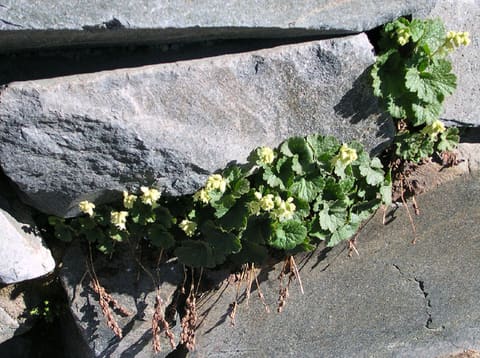
Flower Cream Read from the photograph on this page
Native range British Columbia, Oregon, Washington GBIF Backbone Taxonomy Toxicity is noted only where a source states it. No note here is not a finding of safety.
Sources: Plants of the World Online — Royal Botanic Gardens, Kew; PLANTS Database — USDA NRCS; Read from the photograph on this page — Deno's Garden; GBIF Backbone Taxonomy — Global Biodiversity Information Facility.
Worth knowing Elmera racemosa is the only species in its genus, named in honor of the American botanist and plant collector Adolph Daniel Edward Elmer. Racemosa comes from racemus, "cluster". Wikipedia: Elmera This source reports 5 treatments. All are shown.
Protocol 1 N. C. Deno, 1993 Difficulty Low Rated by us, not by the source.
Start around March 16, 2027 for a May 3 last frost. Too late for spring 2027 — that needed starting on March 15, 2025.
1 Dry storage
Duration: 730 days · Temperature: 70°F 21°C
2 Sow and cover
Temperature: 70°F 21°C · Light: dark
about 2 years from start to sowing. Then 21 days to germinate.
100% germination in 21 days.
Seed Germination Theory and Practice, 2nd ed. — N. C. Deno, 1993 · Ch. 20, Elmera p. 138Public domain Show the original text Elmera (Saxlfragaceae). E. racemosa germ. only in light as shown by 70L(93% in 4-8 w) and none in 70D. A preliminary cold period is fatal and none germ. in 40-70L, 40-70D, or outdoor treatment. The above data are for seeds received in midwinter which had been DS about 6 m at 70. Experiments were conducted on this same seed that had been DS for an additional 18 m making a total of 2 y. This seed germ. 70L(3% in 3-5 w), 70D(none), and 70D(100% in 3rd w) if treated with GA-3. The seedlings from the GA-3 treatment appeared to be healthy. It is remarkable that the GA-3 gave 100% germination on the seeds DS 2 y when this long DS period drastically reduced the germination in 70L. To be certain that the seeds subjected to 70L were viable, the sample was treated with GA-3 after 6 w whereupon 70% germ. in 4-12 d. Seed Germination Theory and Practice, 2nd ed., Ch. 20, Elmera p. 138. Quoted exactly. Every value on this card comes from this record, except the difficulty rating, which is ours; the step names come from a fixed list. Protocol 2 N. C. Deno, 1993 Difficulty Low Rated by us, not by the source.
Start around February 8, 2027 for a May 3 last frost.
1 Sow and cover
Temperature: 70°F 21°C · Light: light
No stated waiting before sowing. Then 56 days to germinate.
93% germination in 28–56 days.
Seed Germination Theory and Practice, 2nd ed. — N. C. Deno, 1993 · Ch. 20, Elmera p. 138Public domain Show the original text Elmera (Saxlfragaceae). E. racemosa germ. only in light as shown by 70L(93% in 4-8 w) and none in 70D. A preliminary cold period is fatal and none germ. in 40-70L, 40-70D, or outdoor treatment. The above data are for seeds received in midwinter which had been DS about 6 m at 70. Experiments were conducted on this same seed that had been DS for an additional 18 m making a total of 2 y. This seed germ. 70L(3% in 3-5 w), 70D(none), and 70D(100% in 3rd w) if treated with GA-3. The seedlings from the GA-3 treatment appeared to be healthy. It is remarkable that the GA-3 gave 100% germination on the seeds DS 2 y when this long DS period drastically reduced the germination in 70L. To be certain that the seeds subjected to 70L were viable, the sample was treated with GA-3 after 6 w whereupon 70% germ. in 4-12 d. Seed Germination Theory and Practice, 2nd ed., Ch. 20, Elmera p. 138. Quoted exactly. Every value on this card comes from this record, except the difficulty rating, which is ours; the step names come from a fixed list. Protocol 3 N. C. Deno, 1993 Difficulty Very high Rated by us, not by the source.
Start around March 2, 2027 for a May 3 last frost. Too late for spring 2027 — that needed starting on March 1, 2025.
1 Dry storage
Duration: 730 days · Temperature: 70°F 21°C
2 Sow and cover
Temperature: 70°F 21°C · Light: light
about 2 years from start to sowing. Then 35 days to germinate.
3% germination in 21–35 days.
Seed Germination Theory and Practice, 2nd ed. — N. C. Deno, 1993 · Ch. 20, Elmera p. 138Public domain Show the original text Elmera (Saxlfragaceae). E. racemosa germ. only in light as shown by 70L(93% in 4-8 w) and none in 70D. A preliminary cold period is fatal and none germ. in 40-70L, 40-70D, or outdoor treatment. The above data are for seeds received in midwinter which had been DS about 6 m at 70. Experiments were conducted on this same seed that had been DS for an additional 18 m making a total of 2 y. This seed germ. 70L(3% in 3-5 w), 70D(none), and 70D(100% in 3rd w) if treated with GA-3. The seedlings from the GA-3 treatment appeared to be healthy. It is remarkable that the GA-3 gave 100% germination on the seeds DS 2 y when this long DS period drastically reduced the germination in 70L. To be certain that the seeds subjected to 70L were viable, the sample was treated with GA-3 after 6 w whereupon 70% germ. in 4-12 d. Seed Germination Theory and Practice, 2nd ed., Ch. 20, Elmera p. 138. Quoted exactly. Every value on this card comes from this record, except the difficulty rating, which is ours; the step names come from a fixed list. Protocol 4 N. C. Deno, 1993 1 Sow and cover
Temperature: 70°F 21°C · Light: dark
No stated waiting before sowing.
0% germination.
Nothing germinated at 70.
Seed Germination Theory and Practice, 2nd ed. — N. C. Deno, 1993 · Ch. 20, Elmera p. 138Public domain Show the original text Elmera (Saxlfragaceae). E. racemosa germ. only in light as shown by 70L(93% in 4-8 w) and none in 70D. A preliminary cold period is fatal and none germ. in 40-70L, 40-70D, or outdoor treatment. The above data are for seeds received in midwinter which had been DS about 6 m at 70. Experiments were conducted on this same seed that had been DS for an additional 18 m making a total of 2 y. This seed germ. 70L(3% in 3-5 w), 70D(none), and 70D(100% in 3rd w) if treated with GA-3. The seedlings from the GA-3 treatment appeared to be healthy. It is remarkable that the GA-3 gave 100% germination on the seeds DS 2 y when this long DS period drastically reduced the germination in 70L. To be certain that the seeds subjected to 70L were viable, the sample was treated with GA-3 after 6 w whereupon 70% germ. in 4-12 d. Seed Germination Theory and Practice, 2nd ed., Ch. 20, Elmera p. 138. Quoted exactly. Every value on this card comes from this record; the step names come from a fixed list. Protocol 5 N. C. Deno, 1993 Difficulty Very high Rated by us, not by the source.
1 Sow outdoors and leave it
Nothing germinated outdoors.
No stated waiting before sowing.
0% germination.
This source doesn't state how long step 1 lasts.
Seed Germination Theory and Practice, 2nd ed. — N. C. Deno, 1993 · Ch. 20, Elmera p. 138Public domain Show the original text Elmera (Saxlfragaceae). E. racemosa germ. only in light as shown by 70L(93% in 4-8 w) and none in 70D. A preliminary cold period is fatal and none germ. in 40-70L, 40-70D, or outdoor treatment. The above data are for seeds received in midwinter which had been DS about 6 m at 70. Experiments were conducted on this same seed that had been DS for an additional 18 m making a total of 2 y. This seed germ. 70L(3% in 3-5 w), 70D(none), and 70D(100% in 3rd w) if treated with GA-3. The seedlings from the GA-3 treatment appeared to be healthy. It is remarkable that the GA-3 gave 100% germination on the seeds DS 2 y when this long DS period drastically reduced the germination in 70L. To be certain that the seeds subjected to 70L were viable, the sample was treated with GA-3 after 6 w whereupon 70% germ. in 4-12 d. Seed Germination Theory and Practice, 2nd ed., Ch. 20, Elmera p. 138. Quoted exactly. Every value on this card comes from this record, except the difficulty rating, which is ours; the step names come from a fixed list. How each step is done , in Deno’s words, and what Verified and Derived mean.
Germination trials Readers’ own records of sowing this species, published after review. Share your trial · All trials
No trials shared for this species yet.