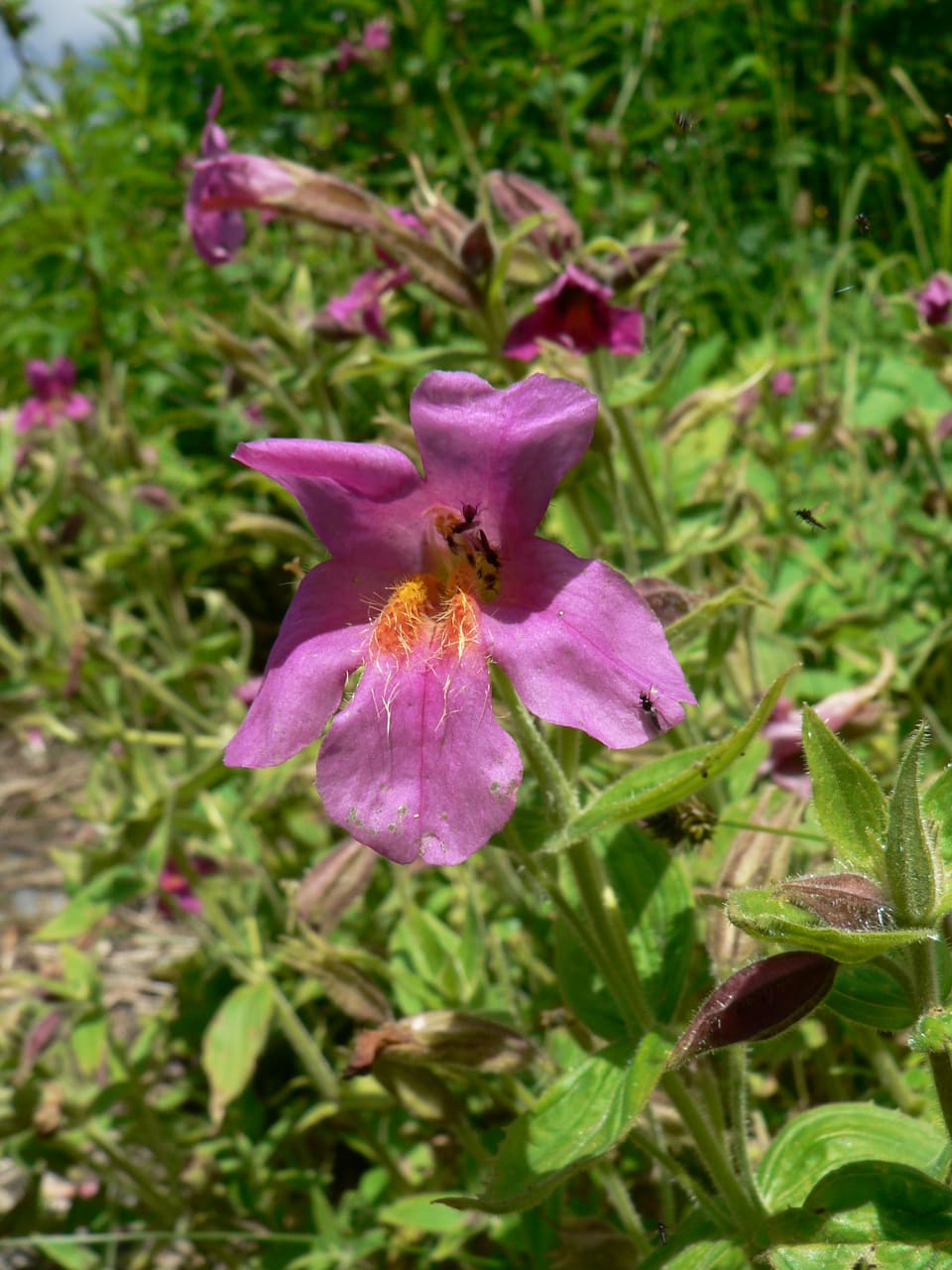
Erythranthe lewisii
Lewis' Monkeyflower · Lewis's Monkey-flower · Great Purple Monkeyflower

About the plant
What it is and where it grows — not part of any germination protocol.
- Habit
- perennial or rhizomatous geophytePlants of the World Online
- Flower
- Pale pink, dark magentaWikipedia
- Native range
- Alaska, Alberta, British Columbia, California, Colorado, Idaho and elsewhereGBIF Backbone Taxonomy
Toxicity is noted only where a source states it. No note here is not a finding of safety.
Sources: Plants of the World Online — Royal Botanic Gardens, Kew; Wikipedia — Wikipedia contributors; GBIF Backbone Taxonomy — Global Biodiversity Information Facility.
Worth knowing
- Named for Meriwether Lewis. It can cross freely with its sister, E. cardinalis, but the two do not interbreed in the wild, chiefly because bees pollinate it and hummingbirds pollinate the other. Wikipedia: Erythranthe lewisii
This source reports two treatments. Both are shown.
Protocol 1
DerivedN. C. Deno, 1993Difficulty Low
Start around March 26, 2027 for a May 3 last frost.
Sow and cover
Temperature: 70°F 21°C Light: either
No stated waiting before sowing. Then 10 days to germinate.
100% germination in 8–10 days.
Protocol 2
DerivedN. C. Deno, 1993Difficulty Moderate
Start around December 24, 2026 for a May 3 last frost.
Cold moist stratification
Duration: 90 daysTemperature: 40°F 4°C Light: either
Warm moist stratification
Duration: 90 daysTemperature: 70°F 21°C Light: either
about 3 months from start to step 2. Germination happens during step 2, in 12 days.
100% germination in 4–12 days.
How each step is done, in Deno’s words, and what Verified and Derived mean.
Germination trials
Readers’ own records of sowing this species, published after review. Share your trial · All trials
No trials shared for this species yet.