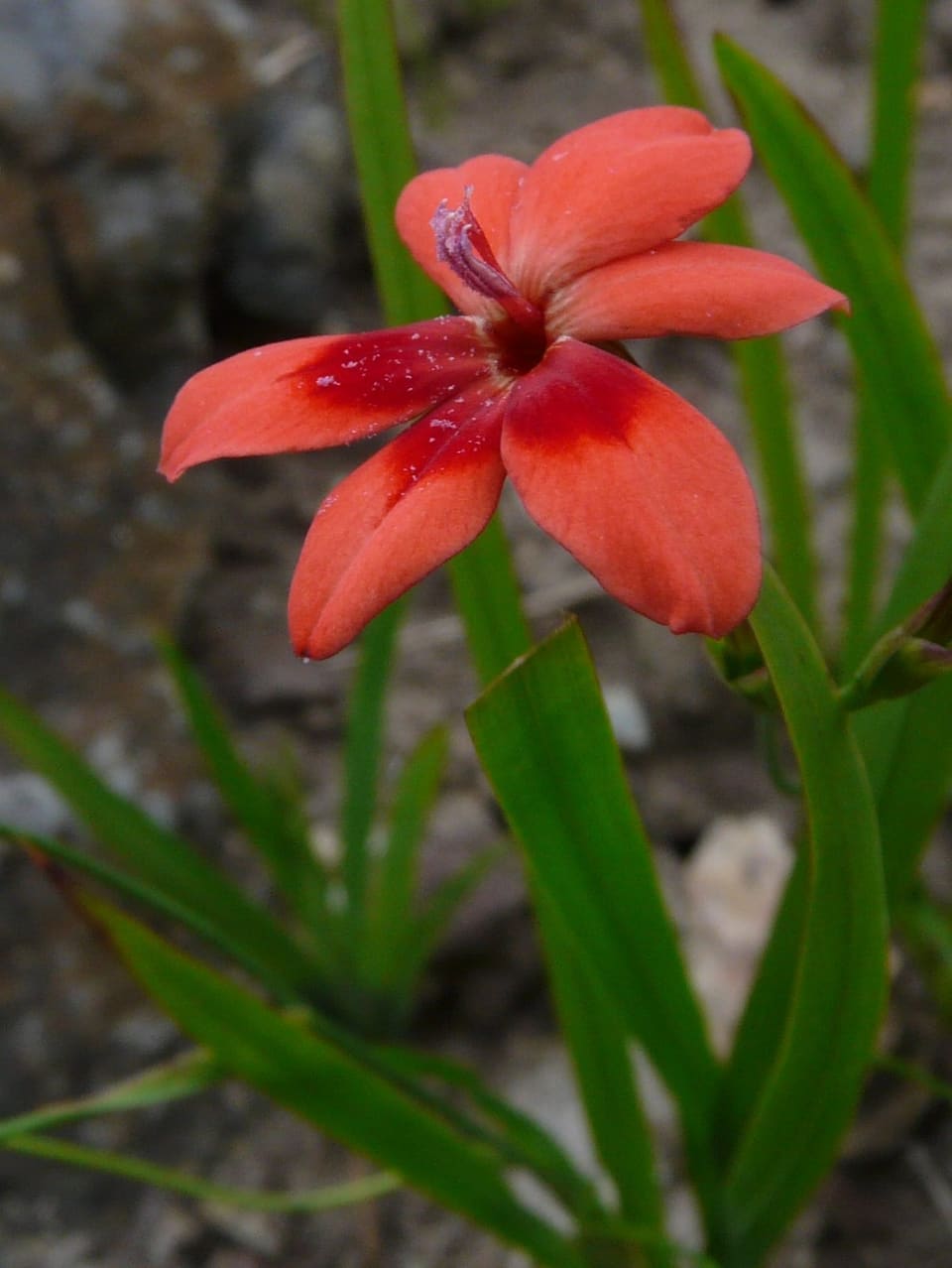
Freesia laxa
False Freesia · Scarlet Freesia · Scarlet Kammetjie · Anomatheca
Also published as Anomatheca laxa, Lapeirousia laxa, Anomatheca laxa alba, Lapeirousia laxa alba. You are in the right place.

About the plant
What it is and where it grows — not part of any germination protocol.
The plant
- Habit
- BulbPlant Finder
- Habit
- tuberous subshrubPlants of the World Online
- Height
- 0.75-1 ft25-30 cmPlant Finder
- Spread
- 0.5-0.75 ft15-25 cmPlant Finder
- Flower
- Showy; redPlant Finder
- Blooms
- May to JunePlant Finder
- Native range
- Southern Africa, MozambiquePlant Finder
- Hardiness zones
- 8-10Plant Finder
- Note
- Corms are not reliably hardy north of zone 8; lift them or grow as an annual.Plant Finder
Growing conditions
- Sun
- Full sunPlant Finder
- Watering
- MediumPlant Finder
Toxicity is noted only where a source states it. No note here is not a finding of safety.
Sources: Plant Finder — Missouri Botanical Garden; Plants of the World Online — Royal Botanic Gardens, Kew.
Worth knowing
- Hardy enough to grow outdoors in all but the coldest parts of the British Isles, in light soil and sun. It went through several genera before settling as Freesia laxa in 1995. Wikipedia: Freesia laxa
This source reports 6 treatments. All are shown.
Protocol 1
DerivedN. C. Deno, 1993Difficulty Low
Start around February 22, 2027 for a May 3 last frost.
Sow on the surface — do not cover
Temperature: 70°F 21°C Light: light
No stated waiting before sowing. Then 42 days to germinate.
90% germination in 28–42 days.
Light more than doubles it: 90% against 40% in the dark.
Protocol 2
DerivedN. C. Deno, 1993Difficulty Moderate
Start around December 30, 2026 for a May 3 last frost.
Cold moist stratification
Duration: 90 daysTemperature: 40°F 4°C
Deno's white-flowered form. Deno gives no length for this period; three months is his standard cycle.
Warm moist stratification
Temperature: 70°F 21°C
Five seeds of eight, four to six days after the move.
about 3 months from start to step 2. Germination happens during step 2, in 6 days.
62% germination in 4–6 days.
Deno's white form. Cold first, and then it is up in under a week.
Protocol 3
DerivedN. C. Deno, 1993Difficulty Moderate
Start around January 18, 2027 for a May 3 last frost.
Cold moist stratification
Temperature: 40°F 4°C
Germination happens during step 1, in 77 days.
45% germination in 77 days.
Cold works, slowly, and gives up half the packet against light at 70.
Protocol 4
DerivedN. C. Deno, 1993Difficulty Moderate
Start around February 15, 2027 for a May 3 last frost.
Sow and cover
Temperature: 70°F 21°C Light: dark
No stated waiting before sowing. Then 49 days to germinate.
40% germination in 14–49 days.
Faster than in light, but at less than half the yield.
Protocol 5
DerivedN. C. Deno, 1993Difficulty High
Start around February 22, 2027 for a May 3 last frost.
Sow and cover
Temperature: 70°F 21°C Light: dark
Deno's white-flowered form.
No stated waiting before sowing. Then 42 days to germinate.
29% germination in 42 days.
Deno's white form, "L. laxa alba". Two seeds of seven in the dark.
Protocol 6
DerivedN. C. Deno, 1993Difficulty High
Start around March 8, 2027 for a May 3 last frost.
Gibberellic acid soak
Sow and cover
Temperature: 70°F 21°C Light: dark
No stated waiting before sowing. Then 28 days to germinate.
20% germination in 28 days.
GA-3 halves the dark result. It is the one thing in this entry that makes it worse.
How each step is done, in Deno’s words, and what Verified and Derived mean.
Germination trials
Readers’ own records of sowing this species, published after review. Share your trial · All trials
No trials shared for this species yet.