Kirengeshoma palmata
Yellow Waxbells · Yellow Wax Bells
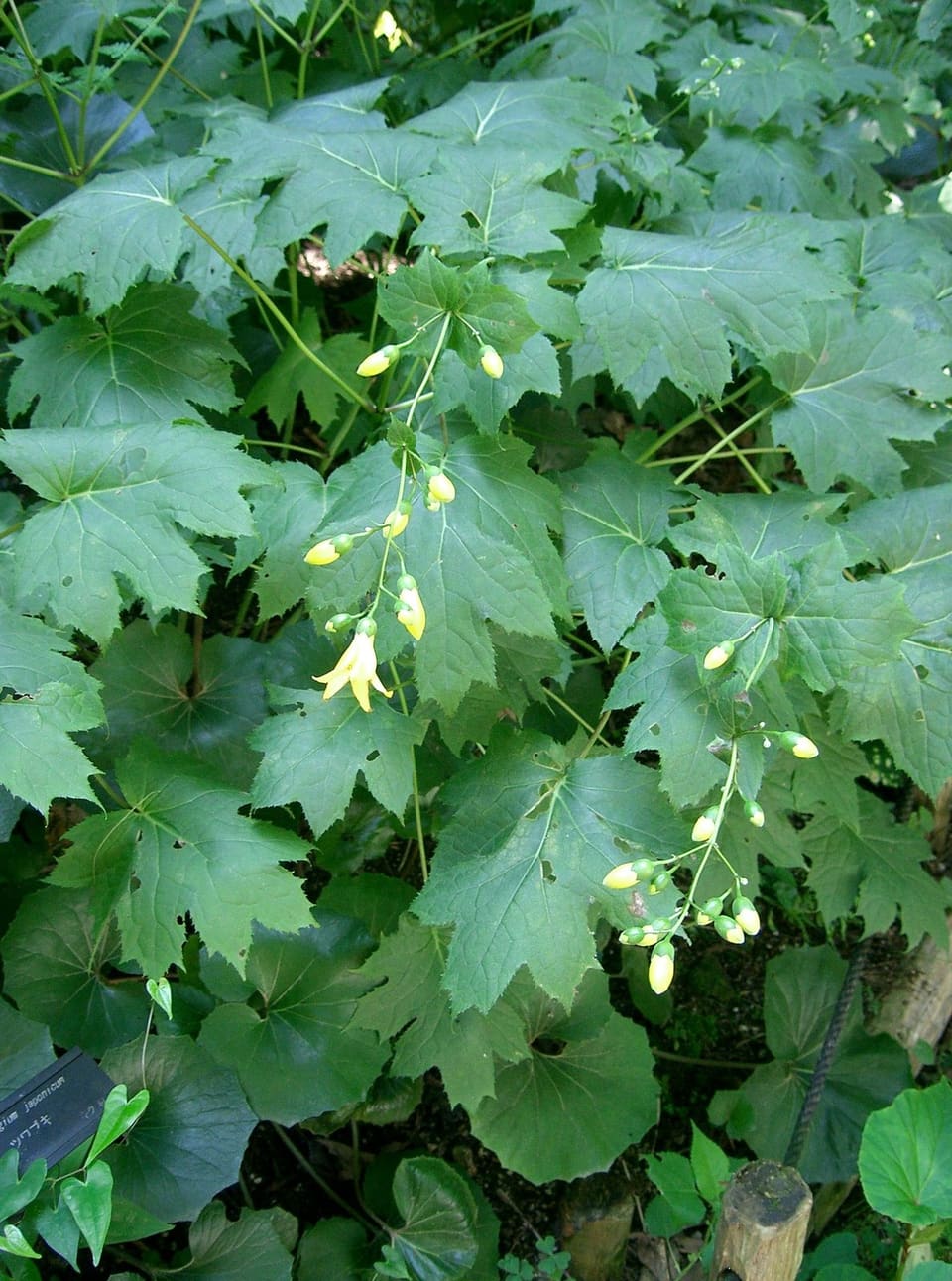

About the plant
What it is and where it grows — not part of any germination protocol.
The plant
- Habit
- Herbaceous perennialPlant Finder
- Habit
- perennialPlants of the World Online
- Height
- 3-4 ft0.9-1.2 mPlant Finder
- Spread
- 2-3 ft60-90 cmPlant Finder
- Flower
- Showy; yellowPlant Finder
- Blooms
- June to JulyPlant Finder
- Native range
- China, Japan, KoreaPlant Finder
- Hardiness zones
- 5-8Plant Finder
- Note
- The cotyledons open about a week after the radicle appears.Seed Germination Theory and Practice, 2nd ed.
Growing conditions
- Sun
- Part shade to full shadePlant Finder
- Soil
- Moist, acidic, humusy, well-drainedPlant Finder
- Watering
- MediumPlant Finder
Toxicity is noted only where a source states it. No note here is not a finding of safety.
Sources: Plant Finder — Missouri Botanical Garden; Plants of the World Online — Royal Botanic Gardens, Kew; Seed Germination Theory and Practice, 2nd ed. — N. C. Deno.
Worth knowing
- Yellow wax-bells, from Japan and eastern China, has sycamore-like leaves and fleshy pale yellow flowers on slender maroon stems in late summer. It needs acid soil, and its Koreana Group holds the RHS Award of Garden Merit. Wikipedia: Kirengeshoma palmata
Protocol
DerivedN. C. Deno, 1993Difficulty Low
Cold moist stratification
Temperature: 40°F 4°C
Deno writes "abundantly" rather than a figure.
Germination happens during step 1, in 120 days.
Germinates in 120 days.
Seed collected in November still looked green and unripe, and germinated anyway.
How each step is done, in Deno’s words, and what Verified and Derived mean.
Germination trials
Readers’ own records of sowing this species, published after review. Share your trial · All trials
No trials shared for this species yet.