Deno’s GardenMy Garden

Kunzea ericifolia

Spearwood · Yellow Kunzea

Family MyrtaceaeGenus Kunzea

Also published as Kunzea vestita. You are in the right place.

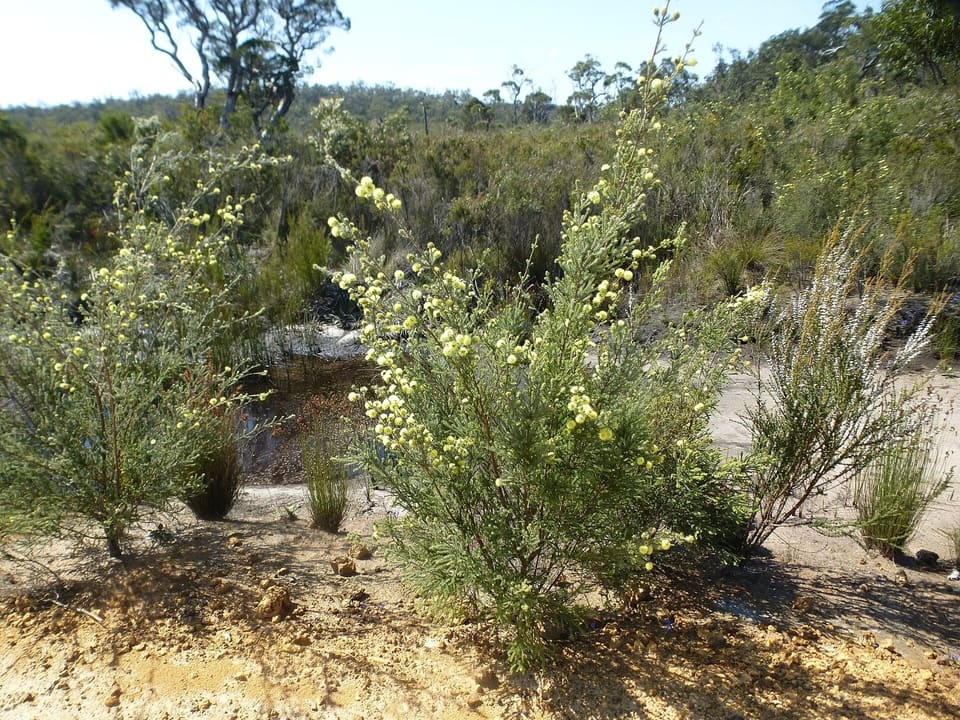
An open shrub of fine foliage bearing cream flowers on sandy ground
The whole plantGeoff DerrinCC BY-SA 4.0

About the plant

What it is and where it grows — not part of any germination protocol.

Habit
shrubPlants of the World Online
Flower
Yellow, cream, whiteWikipedia
Native range
Western AustraliaGBIF Backbone Taxonomy

Toxicity is noted only where a source states it. No note here is not a finding of safety.

Sources: Plants of the World Online — Royal Botanic Gardens, Kew; Wikipedia — Wikipedia contributors; GBIF Backbone Taxonomy — Global Biodiversity Information Facility.

Worth knowing

  • The Noongar people call this shrub kitja boorn, poorndil or condil. Bushfire destroys its thickets, but seedlings quickly repopulate the ground afterwards, which is why its stands are often made up of plants of similar age and size. Wikipedia: Kunzea ericifolia

This source reports 5 treatments. All are shown.

Protocol 1

DerivedN. C. Deno, 1993

Difficulty Low Rated by us, not by the source.

Start around March 15, 2027 for a May 3 last frost.

  1. Gibberellic acid soak

  2. Sow and cover

    Temperature: 70°F 21°C Light: dark

No stated waiting before sowing. Then 21 days to germinate.

72% germination in 7–21 days.

GA-3 substitutes for light, and slightly beats it.

Seed Germination Theory and Practice, 2nd ed. — N. C. Deno, 1993 · Ch. 20, KunzeaPublic domain
Show the original text
Kunzea (Myrtaceae). Starting at 70 was better than starting at 40. The result that K. vestita required GA-3 or light while K. Baxteri did not requires checking. K. vestita germ. 70L(66% in 1-3 w), 70D GA-3(72% in 1-3 w), 70D(none), 40(10% in 7--12 w), and 12% in October from seed placed outdoors in late Sept.
Seed Germination Theory and Practice, 2nd ed., Ch. 20, Kunzea. Quoted exactly. Every value on this card comes from this record, except the difficulty rating, which is ours; the step names come from a fixed list.

Protocol 2

DerivedN. C. Deno, 1993

Difficulty Low Rated by us, not by the source.

Start around March 15, 2027 for a May 3 last frost.

  1. Sow on the surface — do not cover

    Temperature: 70°F 21°C Light: light

No stated waiting before sowing. Then 21 days to germinate.

66% germination in 7–21 days.

This one does need light -- in the dark without GA-3 it gives nothing.

Seed Germination Theory and Practice, 2nd ed. — N. C. Deno, 1993 · Ch. 20, KunzeaPublic domain
Show the original text
Kunzea (Myrtaceae). Starting at 70 was better than starting at 40. The result that K. vestita required GA-3 or light while K. Baxteri did not requires checking. K. vestita germ. 70L(66% in 1-3 w), 70D GA-3(72% in 1-3 w), 70D(none), 40(10% in 7--12 w), and 12% in October from seed placed outdoors in late Sept.
Seed Germination Theory and Practice, 2nd ed., Ch. 20, Kunzea. Quoted exactly. Every value on this card comes from this record, except the difficulty rating, which is ours; the step names come from a fixed list.

Protocol 3

DerivedN. C. Deno, 1993

Difficulty High Rated by us, not by the source.

Sow around September 2027 — a date the source gives, not one counted back from a May 3 last frost. Too late for spring 2027 — that needed starting on September 2026.

  1. Sow outdoors and leave it

    Put out in late September; up in October.

No stated waiting before sowing. Germination time not stated; 21 days assumed.

12% germination.

A quarter of what K. baxteri gives from the same September sowing.

Seed Germination Theory and Practice, 2nd ed. — N. C. Deno, 1993 · Ch. 20, KunzeaPublic domain
Show the original text
Kunzea (Myrtaceae). Starting at 70 was better than starting at 40. The result that K. vestita required GA-3 or light while K. Baxteri did not requires checking. K. vestita germ. 70L(66% in 1-3 w), 70D GA-3(72% in 1-3 w), 70D(none), 40(10% in 7--12 w), and 12% in October from seed placed outdoors in late Sept.
Seed Germination Theory and Practice, 2nd ed., Ch. 20, Kunzea. Quoted exactly. Every value on this card comes from this record, except the difficulty rating, which is ours; the step names come from a fixed list.

Protocol 4

DerivedN. C. Deno, 1993

Difficulty High Rated by us, not by the source.

Start around January 11, 2027 for a May 3 last frost.

  1. Cold moist stratification

    Temperature: 40°F 4°C

Germination happens during step 1, in 84 days.

10% germination in 49–84 days.

Deno's genus note: starting at 70 beat starting at 40, and here it is.

Seed Germination Theory and Practice, 2nd ed. — N. C. Deno, 1993 · Ch. 20, KunzeaPublic domain
Show the original text
Kunzea (Myrtaceae). Starting at 70 was better than starting at 40. The result that K. vestita required GA-3 or light while K. Baxteri did not requires checking. K. vestita germ. 70L(66% in 1-3 w), 70D GA-3(72% in 1-3 w), 70D(none), 40(10% in 7--12 w), and 12% in October from seed placed outdoors in late Sept.
Seed Germination Theory and Practice, 2nd ed., Ch. 20, Kunzea. Quoted exactly. Every value on this card comes from this record, except the difficulty rating, which is ours; the step names come from a fixed list.

Protocol 5

DerivedN. C. Deno, 1993
  1. Sow and cover

    Temperature: 70°F 21°C Light: dark

No stated waiting before sowing.

0% germination.

Dark and no GA-3 is the one combination that fails outright.
Seed Germination Theory and Practice, 2nd ed. — N. C. Deno, 1993 · Ch. 20, KunzeaPublic domain
Show the original text
Kunzea (Myrtaceae). Starting at 70 was better than starting at 40. The result that K. vestita required GA-3 or light while K. Baxteri did not requires checking. K. vestita germ. 70L(66% in 1-3 w), 70D GA-3(72% in 1-3 w), 70D(none), 40(10% in 7--12 w), and 12% in October from seed placed outdoors in late Sept.
Seed Germination Theory and Practice, 2nd ed., Ch. 20, Kunzea. Quoted exactly. Every value on this card comes from this record; the step names come from a fixed list.

Germination trials

Readers’ own records of sowing this species, published after review. Share your trial · All trials

Add to My Garden

View species page