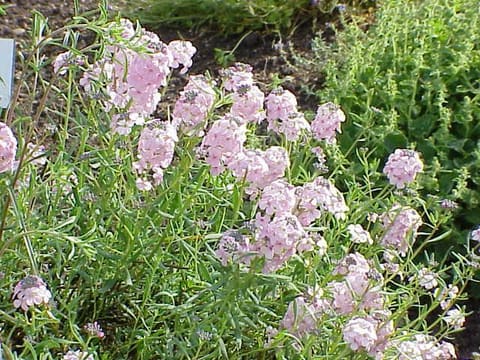
Aethionema grandiflorum
Persian Candytuft · Persian Stonecress

About the plant
What it is and where it grows — not part of any germination protocol.
- Habit
- subshrubPlants of the World Online
- Flower
- Pink, lilacWikipedia
- Native range
- Iran, Iraq, Transcaucasus, TürkiyeGBIF Backbone Taxonomy
Toxicity is noted only where a source states it. No note here is not a finding of safety.
Sources: Plants of the World Online — Royal Botanic Gardens, Kew; Wikipedia — Wikipedia contributors; GBIF Backbone Taxonomy — Global Biodiversity Information Facility.
Worth knowing
- Persian stonecress grows on limestone slopes at 750 to 2,600 m from eastern Turkey to northern Iran. It holds the RHS Award of Garden Merit. Wikipedia: Aethionema grandiflorum
This source reports 4 treatments. All are shown.
Protocol 1
DerivedN. C. Deno, 1993Difficulty Low
Start around September 29, 2027 for a May 3 last frost. Too late for spring 2027 — that needed starting on September 28, 2026.
Dry storage
Duration: 180 daysTemperature: 70°F 21°C
Cold moist stratification
Temperature: 40°F 4°C
about 6 months from start to step 2. Germination happens during step 2, in 9 days.
92% germination — first up on day 7, then 50% a day.
Faster at 70, but far more of the seed comes up at 40. Deno prefers the cold route.
Protocol 2
DerivedN. C. Deno, 1993Difficulty Moderate
Start around September 17, 2027 for a May 3 last frost. Too late for spring 2027 — that needed starting on September 16, 2026.
Warm moist stratification
Duration: 90 daysTemperature: 70°F 21°C
45% germinated in the first cycle at 70.
Cold moist stratification
Duration: 90 daysTemperature: 40°F 4°C
Warm moist stratification
Duration: 90 daysTemperature: 70°F 21°C
about 6 months from start to step 3. Germination happens during step 3; time not stated, 21 days assumed.
54% germination.
Fresh seed germinates over a long stretch: 45% in the first cycle at 70, 1% at 40, then 54% in the second cycle at 70.
Protocol 3
DerivedN. C. Deno, 1993Difficulty Moderate
Start around October 5, 2027 for a May 3 last frost. Too late for spring 2027 — that needed starting on October 4, 2026.
Dry storage
Duration: 180 daysTemperature: 70°F 21°C
Sow and cover
Temperature: 70°F 21°C
about 6 months from start to sowing. Then 3 days to germinate.
40% germination — first up on day 2, then 100% a day.
Much faster than the cold route but about half the seed.
Protocol 4
DerivedN. C. Deno, 1993Difficulty High
Start around March 15, 2027 for a May 3 last frost.
Cold moist stratification
Duration: 90 daysTemperature: 40°F 4°C
Warm moist stratification
Duration: 90 daysTemperature: 70°F 21°C
A further 15% germinated here.
Steps after step 1 run on after germination.
Germination happens during step 1; time not stated, 21 days assumed.
23% germination.
A further 15% germinated after the shift to 70.
How each step is done, in Deno’s words, and what Verified and Derived mean.
Germination trials
Readers’ own records of sowing this species, published after review. Share your trial · All trials
No trials shared for this species yet.