Deno’s GardenMy Garden

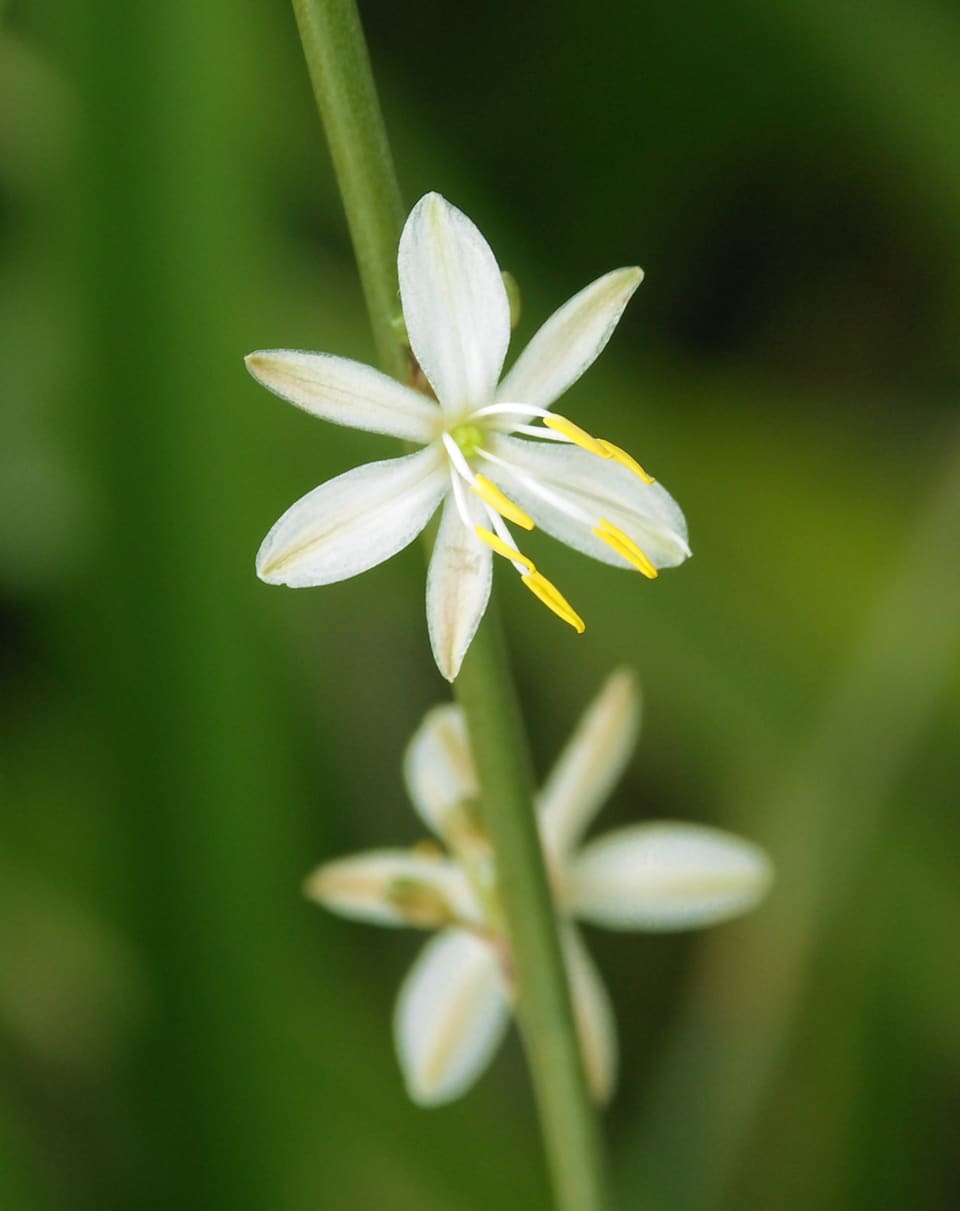
Anthericum liliago

St. Bernard's Lily

Family AsparagaceaeGenus Anthericum

A white six-petalled star flower with yellow anthers on curved white filaments, beside a second flower on a thin green stem.
FlowerAlvesgasparCC BY 2.5

About the plant

What it is and where it grows — not part of any germination protocol.

The plant

Habit
BulbExtension Gardener Plant Toolbox
Habit
perennialPlants of the World Online
Height
1.5-2 ft45-60 cmExtension Gardener Plant Toolbox
Spread
1-1.5 ft30-45 cmExtension Gardener Plant Toolbox
Flower
WhiteExtension Gardener Plant Toolbox
Blooms
Spring, SummerExtension Gardener Plant Toolbox
Native range
Albania, Austria, Belgium, Bulgaria, Czechia-Slovakia, Denmark and elsewhereGBIF Backbone Taxonomy
Hardiness zones
4-9Extension Gardener Plant Toolbox

Growing conditions

Sun
Full sunExtension Gardener Plant Toolbox
Moisture
Good Drainage, MoistExtension Gardener Plant Toolbox

Toxicity is noted only where a source states it. No note here is not a finding of safety.

Sources: Extension Gardener Plant Toolbox — NC State Extension; Plants of the World Online — Royal Botanic Gardens, Kew; GBIF Backbone Taxonomy — Global Biodiversity Information Facility.

Worth knowing

  • Liliago means "lily-like", but like many plants called lilies, St Bernard's lily is not closely related to the true lilies. In Sweden its northernmost stable populations grow on the rocky shores of Lake Sommen. Wikipedia: Anthericum liliago

This source reports 5 treatments. All are shown.

Protocol 1

DerivedN. C. Deno, 1993

Difficulty High Rated by us, not by the source.

Start around June 12, 2027 for a May 3 last frost. Too late for spring 2027 — that needed starting on June 11, 2026.

  1. Dry storage

    Duration: 180 daysTemperature: 70°F 21°C

  2. Cold moist stratification

    Duration: 90 daysTemperature: 40°F 4°C

  3. Warm moist stratification

    Duration: 90 daysTemperature: 70°F 21°C

about 9 months from start to step 3. Germination happens during step 3, in 28 days.

12% germination in 7–28 days.

Seed Germination Theory and Practice, 2nd ed. — N. C. Deno, 1993 · Ch. 20, Anthericum p. 97Public domain
Show the original text
Anthericum (Liliaceae). The very low germinations are a puzzle, particularly because both A. liliago and A.racèmosum self sow here. A. liliago germ. erratically and in low percentage. Seed collected in August germ. 70-40-70(nbne), 40(3%)-70(4%), and 5% in April in outdoor treatment. When this seed was DS for 6 m at 70 it germ. 70(3%)-40(3%), 40-70(12% in 1-4 w), and 4% in April in outdoor treatment. Germination is hypogeal, and the seedlings developed normally despite the low percent germination. Two other samples gave the same low and erratic germinations. Treatment with GA-3 had no effect.
Seed Germination Theory and Practice, 2nd ed., Ch. 20, Anthericum p. 97. Quoted exactly. Every value on this card comes from this record, except the difficulty rating, which is ours; the step names come from a fixed list.

Protocol 2

DerivedN. C. Deno, 1993

Difficulty Very high Rated by us, not by the source.

  1. Sow outdoors and leave it

    Up in April.

No stated waiting before sowing.

5% germination.

This source doesn't state how long step 1 lasts.

Seed Germination Theory and Practice, 2nd ed. — N. C. Deno, 1993 · Ch. 20, Anthericum p. 97Public domain
Show the original text
Anthericum (Liliaceae). The very low germinations are a puzzle, particularly because both A. liliago and A.racèmosum self sow here. A. liliago germ. erratically and in low percentage. Seed collected in August germ. 70-40-70(nbne), 40(3%)-70(4%), and 5% in April in outdoor treatment. When this seed was DS for 6 m at 70 it germ. 70(3%)-40(3%), 40-70(12% in 1-4 w), and 4% in April in outdoor treatment. Germination is hypogeal, and the seedlings developed normally despite the low percent germination. Two other samples gave the same low and erratic germinations. Treatment with GA-3 had no effect.
Seed Germination Theory and Practice, 2nd ed., Ch. 20, Anthericum p. 97. Quoted exactly. Every value on this card comes from this record, except the difficulty rating, which is ours; the step names come from a fixed list.

Protocol 3

DerivedN. C. Deno, 1993

Difficulty Very high Rated by us, not by the source.

Start around December 15, 2026 for a May 3 last frost.

  1. Cold moist stratification

    Duration: 90 daysTemperature: 40°F 4°C

    3 germinated in this phase.

  2. Warm moist stratification

    Duration: 90 daysTemperature: 70°F 21°C

about 3 months from start to step 2. Germination happens during step 2; time not stated, 21 days assumed.

4% germination.

Seed Germination Theory and Practice, 2nd ed. — N. C. Deno, 1993 · Ch. 20, Anthericum p. 97Public domain
Show the original text
Anthericum (Liliaceae). The very low germinations are a puzzle, particularly because both A. liliago and A.racèmosum self sow here. A. liliago germ. erratically and in low percentage. Seed collected in August germ. 70-40-70(nbne), 40(3%)-70(4%), and 5% in April in outdoor treatment. When this seed was DS for 6 m at 70 it germ. 70(3%)-40(3%), 40-70(12% in 1-4 w), and 4% in April in outdoor treatment. Germination is hypogeal, and the seedlings developed normally despite the low percent germination. Two other samples gave the same low and erratic germinations. Treatment with GA-3 had no effect.
Seed Germination Theory and Practice, 2nd ed., Ch. 20, Anthericum p. 97. Quoted exactly. Every value on this card comes from this record, except the difficulty rating, which is ours; the step names come from a fixed list.

Protocol 4

DerivedN. C. Deno, 1993

Difficulty Very high Rated by us, not by the source.

  1. Dry storage

    Duration: 180 daysTemperature: 70°F 21°C

  2. Sow outdoors and leave it

    Up in April.

about 6 months from start to sowing.

4% germination.

This source doesn't state how long step 2 lasts.

Seed Germination Theory and Practice, 2nd ed. — N. C. Deno, 1993 · Ch. 20, Anthericum p. 97Public domain
Show the original text
Anthericum (Liliaceae). The very low germinations are a puzzle, particularly because both A. liliago and A.racèmosum self sow here. A. liliago germ. erratically and in low percentage. Seed collected in August germ. 70-40-70(nbne), 40(3%)-70(4%), and 5% in April in outdoor treatment. When this seed was DS for 6 m at 70 it germ. 70(3%)-40(3%), 40-70(12% in 1-4 w), and 4% in April in outdoor treatment. Germination is hypogeal, and the seedlings developed normally despite the low percent germination. Two other samples gave the same low and erratic germinations. Treatment with GA-3 had no effect.
Seed Germination Theory and Practice, 2nd ed., Ch. 20, Anthericum p. 97. Quoted exactly. Every value on this card comes from this record, except the difficulty rating, which is ours; the step names come from a fixed list.

Protocol 5

DerivedN. C. Deno, 1993

Difficulty Very high Rated by us, not by the source.

Start around September 17, 2027 for a May 3 last frost. Too late for spring 2027 — that needed starting on September 16, 2026.

  1. Dry storage

    Duration: 180 daysTemperature: 70°F 21°C

  2. Warm moist stratification

    Duration: 90 daysTemperature: 70°F 21°C

  3. Cold moist stratification

    Duration: 90 daysTemperature: 40°F 4°C

    3 germinated in this phase.

Steps after step 2 run on after germination.

about 6 months from start to step 2. Germination happens during step 2; time not stated, 21 days assumed.
3% germination.

Seed Germination Theory and Practice, 2nd ed. — N. C. Deno, 1993 · Ch. 20, Anthericum p. 97Public domain
Show the original text
Anthericum (Liliaceae). The very low germinations are a puzzle, particularly because both A. liliago and A.racèmosum self sow here. A. liliago germ. erratically and in low percentage. Seed collected in August germ. 70-40-70(nbne), 40(3%)-70(4%), and 5% in April in outdoor treatment. When this seed was DS for 6 m at 70 it germ. 70(3%)-40(3%), 40-70(12% in 1-4 w), and 4% in April in outdoor treatment. Germination is hypogeal, and the seedlings developed normally despite the low percent germination. Two other samples gave the same low and erratic germinations. Treatment with GA-3 had no effect.
Seed Germination Theory and Practice, 2nd ed., Ch. 20, Anthericum p. 97. Quoted exactly. Every value on this card comes from this record, except the difficulty rating, which is ours; the step names come from a fixed list.

Germination trials

Readers’ own records of sowing this species, published after review. Share your trial · All trials

Add to My Garden

View species page