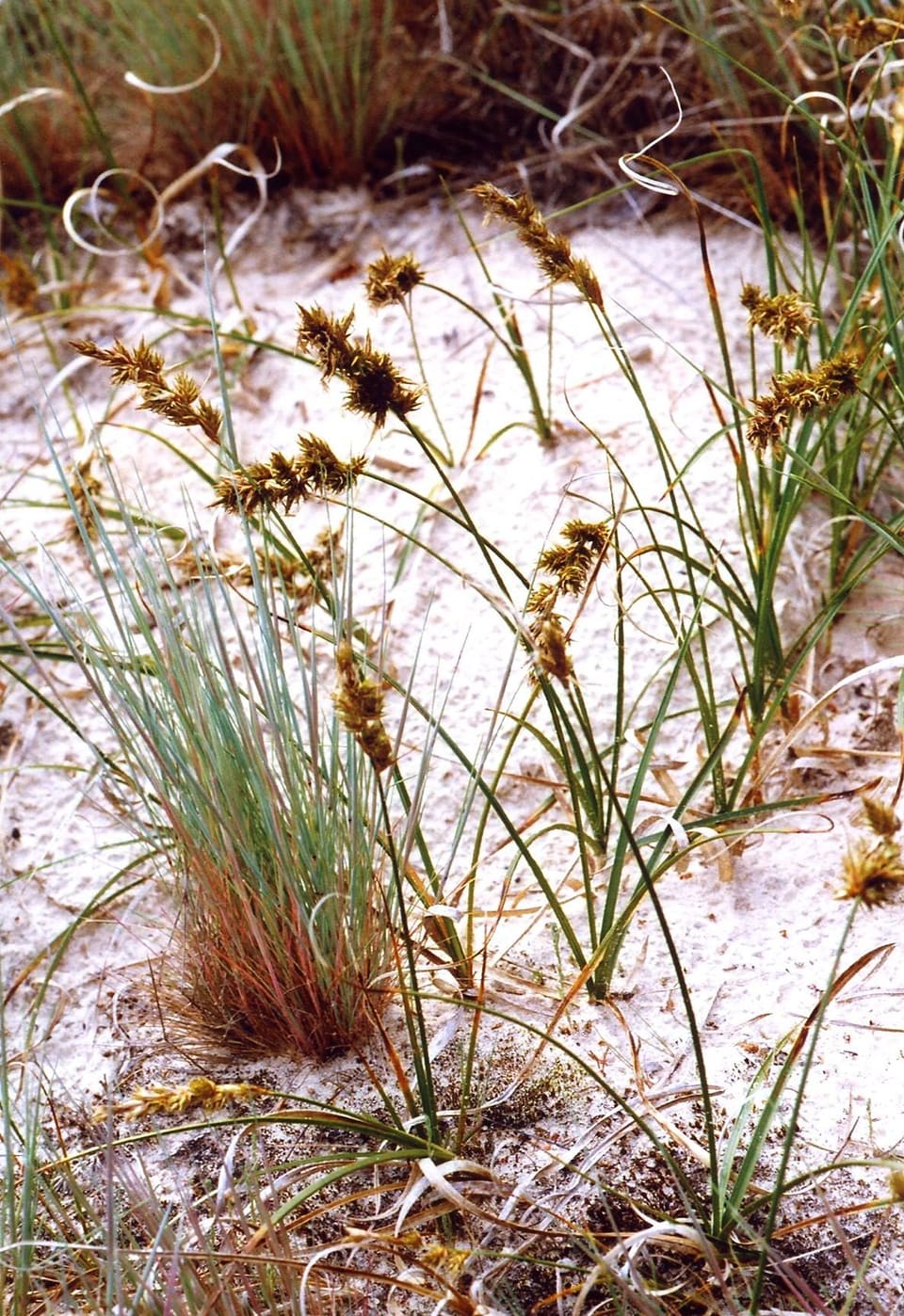
Carex arenaria
German-sarsaparilla · Sand Sedge

About the plant
What it is and where it grows — not part of any germination protocol.
- Habit
- perennial or rhizomatous geophytePlants of the World Online
- Habit
- Perennial, GraminoidPLANTS Database
- Native range
- Baltic States, Belgium, Denmark, Finland, France, Germany and elsewhereGBIF Backbone Taxonomy
Toxicity is noted only where a source states it. No note here is not a finding of safety.
Sources: Plants of the World Online — Royal Botanic Gardens, Kew; PLANTS Database — USDA NRCS; GBIF Backbone Taxonomy — Global Biodiversity Information Facility.
Worth knowing
- As arenaria, Latin for "sandy", suggests, sand sedge grows in dunes and other sandy places, spreading by long runners under the surface. Wikipedia: Carex arenaria
This source reports two treatments. Both are shown.
Protocol 1
DerivedN. C. Deno, 1996Difficulty Low
Start around March 1, 2027 for a May 3 last frost.
Sow and cover
Temperature: 70°F 21°C Light: light
No stated waiting before sowing. Then 35 days to germinate.
100% germination in 7–35 days.
Protocol 2
DerivedN. C. Deno, 1996Difficulty Very high
Start around March 9, 2027 for a May 3 last frost. Too late for spring 2027 — that needed starting on March 8, 2025.
Dry storage
Duration: 730 daysTemperature: 70°F 21°C
Sow and cover
Temperature: 70°F 21°C Light: dark
about 2 years from start to sowing. Then 28 days to germinate.
9% germination in 14–28 days.
How each step is done, in Deno’s words, and what Verified and Derived mean.
Germination trials
Readers’ own records of sowing this species, published after review. Share your trial · All trials
No trials shared for this species yet.