Oenothera gaura
Biennial Evening-primrose · Biennial Bee-blossom · Biennial Gaura · Biennial Beeblossom
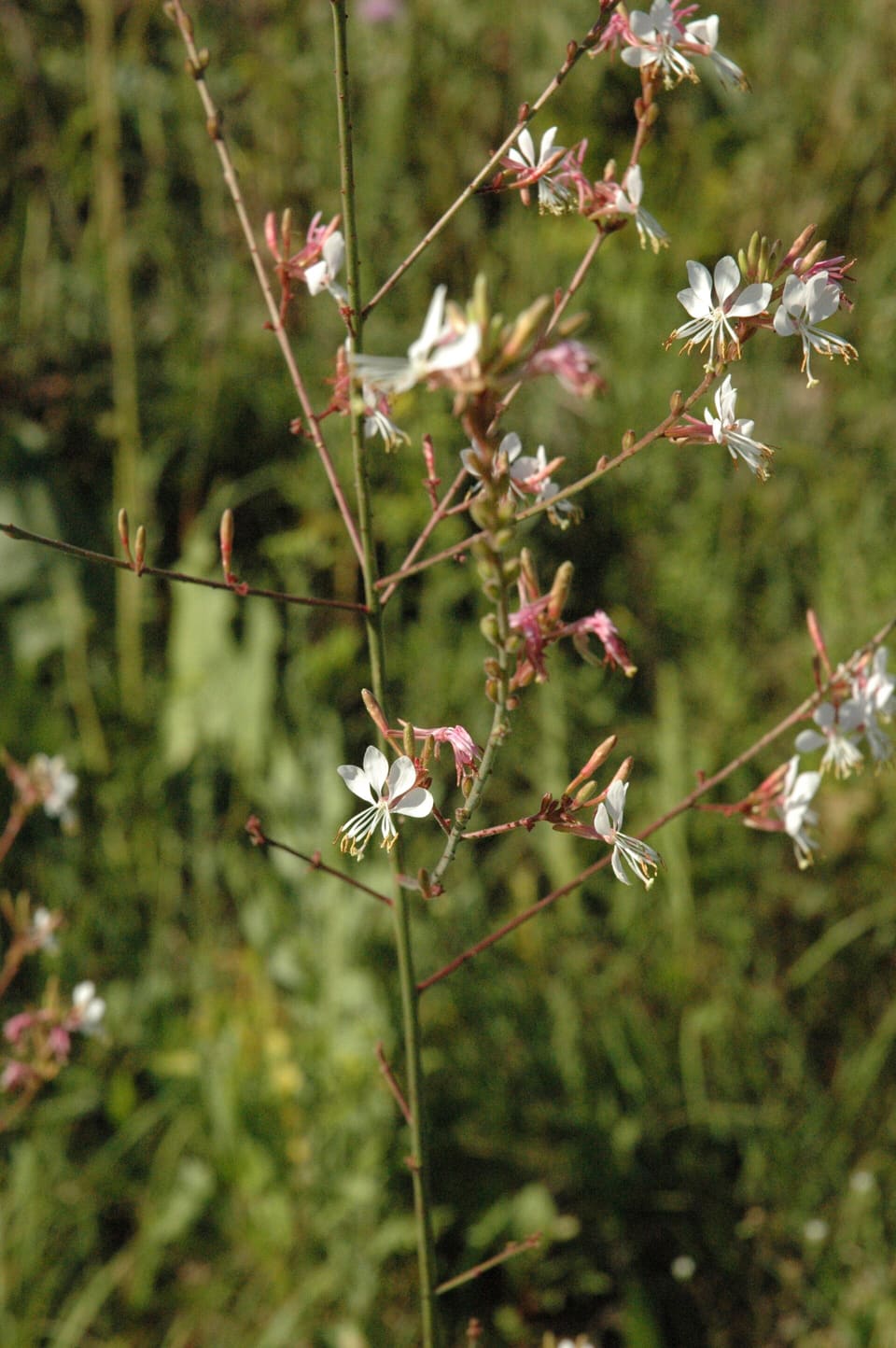

About the plant
What it is and where it grows — not part of any germination protocol.
The plant
- Habit
- WildflowerExtension Gardener Plant Toolbox
- Habit
- annual or biennialPlants of the World Online
- Flower
- Pink, WhiteExtension Gardener Plant Toolbox
- Blooms
- Fall, SummerExtension Gardener Plant Toolbox
- Native range
- Canada, lower 48 statesPLANTS Database
- Hardiness zones
- 5-9Extension Gardener Plant Toolbox
Growing conditions
- Sun
- Full sunExtension Gardener Plant Toolbox
- Soil
- Clay, Loam (Silt), Sand, Shallow RockyExtension Gardener Plant Toolbox
- Moisture
- Good Drainage, Moist, Occasionally DryExtension Gardener Plant Toolbox
Toxicity is noted only where a source states it. No note here is not a finding of safety.
Sources: Extension Gardener Plant Toolbox — NC State Extension; Plants of the World Online — Royal Botanic Gardens, Kew; PLANTS Database — USDA NRCS.
Worth knowing
- Biennial gaura, formerly Gaura biennis, can reach 1.8 m. Its light pink flowers turn a vivid red-pink in late summer, attracting butterflies and bees just before many autumn plants begin to bloom. Wikipedia: Oenothera gaura
This source reports two treatments. Both are shown.
Protocol 1
DerivedN. C. Deno, 1993Difficulty High
Start around March 15, 2027 for a May 3 last frost.
Gibberellic acid soak
Sow and cover
Temperature: 70°F 21°C Light: dark
No stated waiting before sowing. Then 21 days to germinate.
26% germination in 21 days.
Protocol 2
DerivedN. C. Deno, 1993Difficulty High
Start around March 15, 2027 for a May 3 last frost.
Sow and cover
Temperature: 70°F 21°C Light: light
No stated waiting before sowing. Germination time not stated; 21 days assumed.
10% germination.
How each step is done, in Deno’s words, and what Verified and Derived mean.
Germination trials
Readers’ own records of sowing this species, published after review. Share your trial · All trials
No trials shared for this species yet.