Oenothera pallida
Pale Evening Primrose

About the plant
What it is and where it grows — not part of any germination protocol.
The plant
- Habit
- geophytePlants of the World Online
- Habit
- Biennial, Perennial, Forb/herbPLANTS Database
- Height
- 2.0 ft60 cmPLANTS Database
- Flower
- WhitePLANTS Database
- Blooms
- Late SpringPLANTS Database
- Native range
- Arizona, British Columbia, Colorado, Idaho, Kansas, Mexico Northeast and elsewhereGBIF Backbone Taxonomy
Growing conditions
- Sun
- Shade tolerance: HighPLANTS Database
- Soil
- Adapted to coarse, medium textured soilsPLANTS Database
- Soil pH
- 6.0-8.0PLANTS Database
- Moisture
- Moisture use: LowPLANTS Database
- Watering
- Drought tolerance: HighPLANTS Database
Toxicity is noted only where a source states it. No note here is not a finding of safety.
Sources: Plants of the World Online — Royal Botanic Gardens, Kew; PLANTS Database — USDA NRCS; GBIF Backbone Taxonomy — Global Biodiversity Information Facility.
Worth knowing
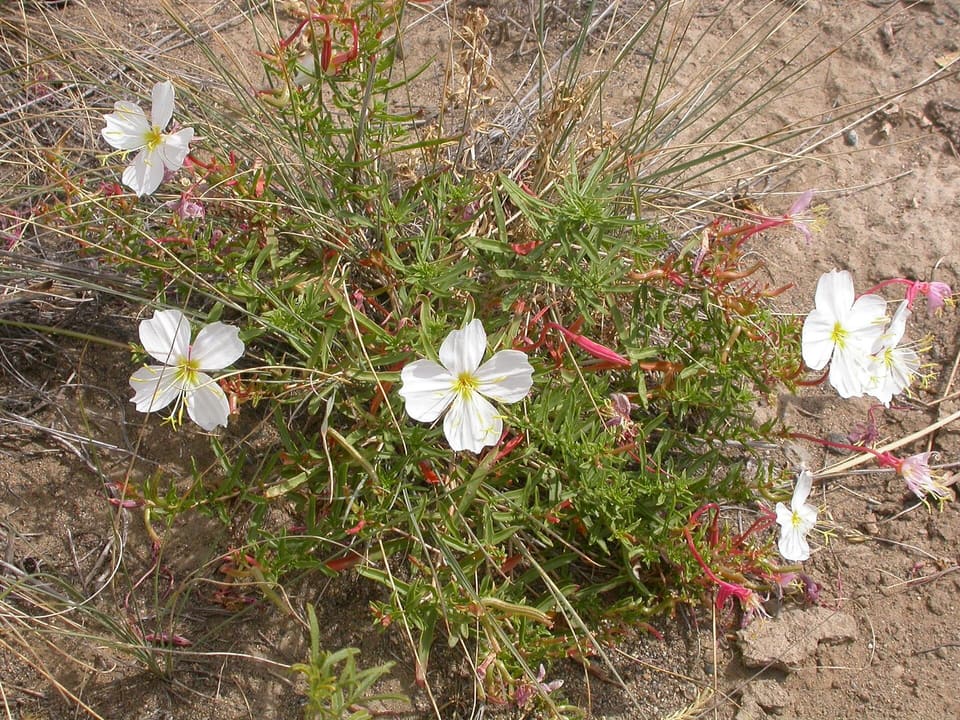
- The pale evening-primrose's flowers open white and fade to pink. Wikipedia: Oenothera pallida
Protocol
DerivedN. C. Deno, 1993Difficulty Low
Sow and cover
Temperature: 70°F 21°C
No stated waiting before sowing. Then 21 days to germinate.
Germinates in 21 days.
Deno says well. No count.
How each step is done, in Deno’s words, and what Verified and Derived mean.
Germination trials
Readers’ own records of sowing this species, published after review. Share your trial · All trials
No trials shared for this species yet.