Oenothera speciosa
Mexican Evening Primrose · Pink Buttercups · Pink Evening Primrose · Showy Evening Primrose · Pinkladies
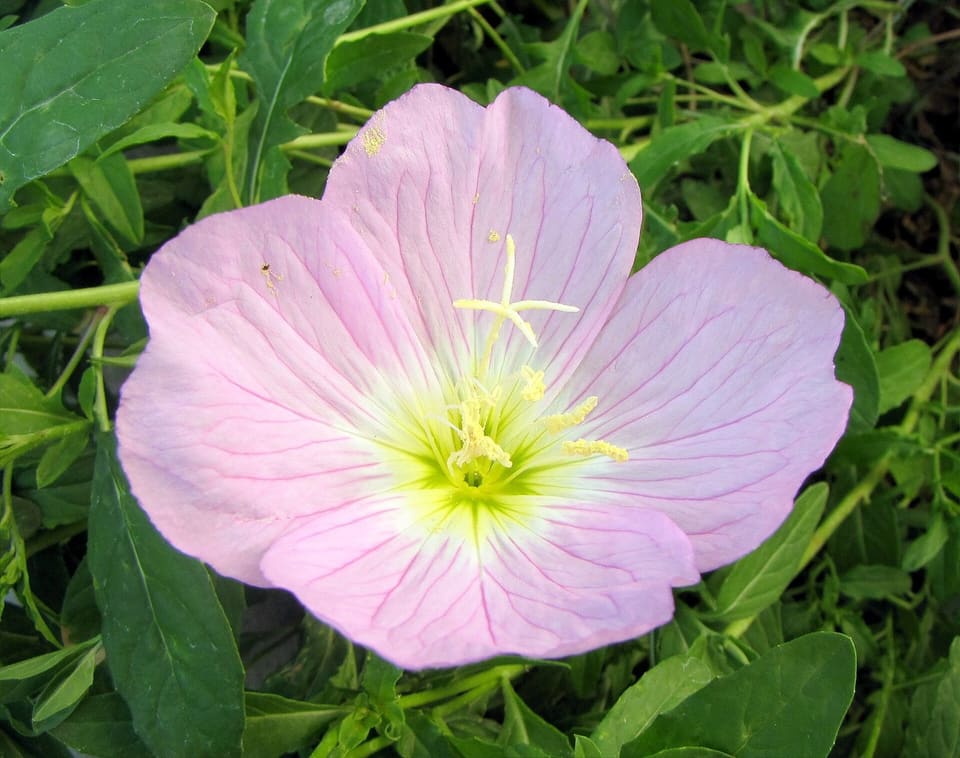

About the plant
What it is and where it grows — not part of any germination protocol.
The plant
- Habit
- Herbaceous perennialPlant Finder
- Habit
- perennial or rhizomatous geophytePlants of the World Online
- Height
- 0.75-2 ft25-60 cmPlant Finder
- Spread
- 1-1.5 ft30-45 cmPlant Finder
- Flower
- Showy; white maturing to rosy pinkPlant Finder
- Blooms
- May to JulyPlant Finder
- Native range
- Southwestern United States to MexicoPlant Finder
- Hardiness zones
- 4-9Plant Finder
- Note
- Tolerates drought. Spreads freely where it is happy.Plant Finder
Growing conditions
- Sun
- Full sunPlant Finder
- Soil
- Average, dry to medium, well-drainedPlant Finder
- Soil pH
- Alkaline (>8.0), Neutral (6.0-8.0)Extension Gardener Plant Toolbox
- Moisture
- Dry to mediumPlant Finder
- Watering
- Dry to mediumPlant Finder
Toxicity is noted only where a source states it. No note here is not a finding of safety.
Sources: Plant Finder — Missouri Botanical Garden; Plants of the World Online — Royal Botanic Gardens, Kew; Extension Gardener Plant Toolbox — NC State Extension.
Worth knowing
- Most evening primroses open at evening and close by morning, but in the south of its range this one does the opposite, opening in the morning and closing at night. Lady Bird Johnson Wildflower Center: Oenothera speciosa
- Some of its relatives open so fast in the evening that you can almost watch it happen. Lady Bird Johnson Wildflower Center: Oenothera speciosa
Protocol
DerivedN. C. Deno, 1993Difficulty Low
Sow and cover
Temperature: 70°F 21°C
No stated waiting before sowing. Then 21 days to germinate.
Germinates in 7–21 days.
Hardy and floriferous in central Pennsylvania, Deno notes, despite its southern origin.
How each step is done, in Deno’s words, and what Verified and Derived mean.
Germination trials
Readers’ own records of sowing this species, published after review. Share your trial · All trials
No trials shared for this species yet.