Deno’s GardenMy Garden

Quercus rubra

Northern Red Oak · Red Oak · Champion Oak

Family FagaceaeGenus Quercus

Also published as Quercus borealis. You are in the right place.
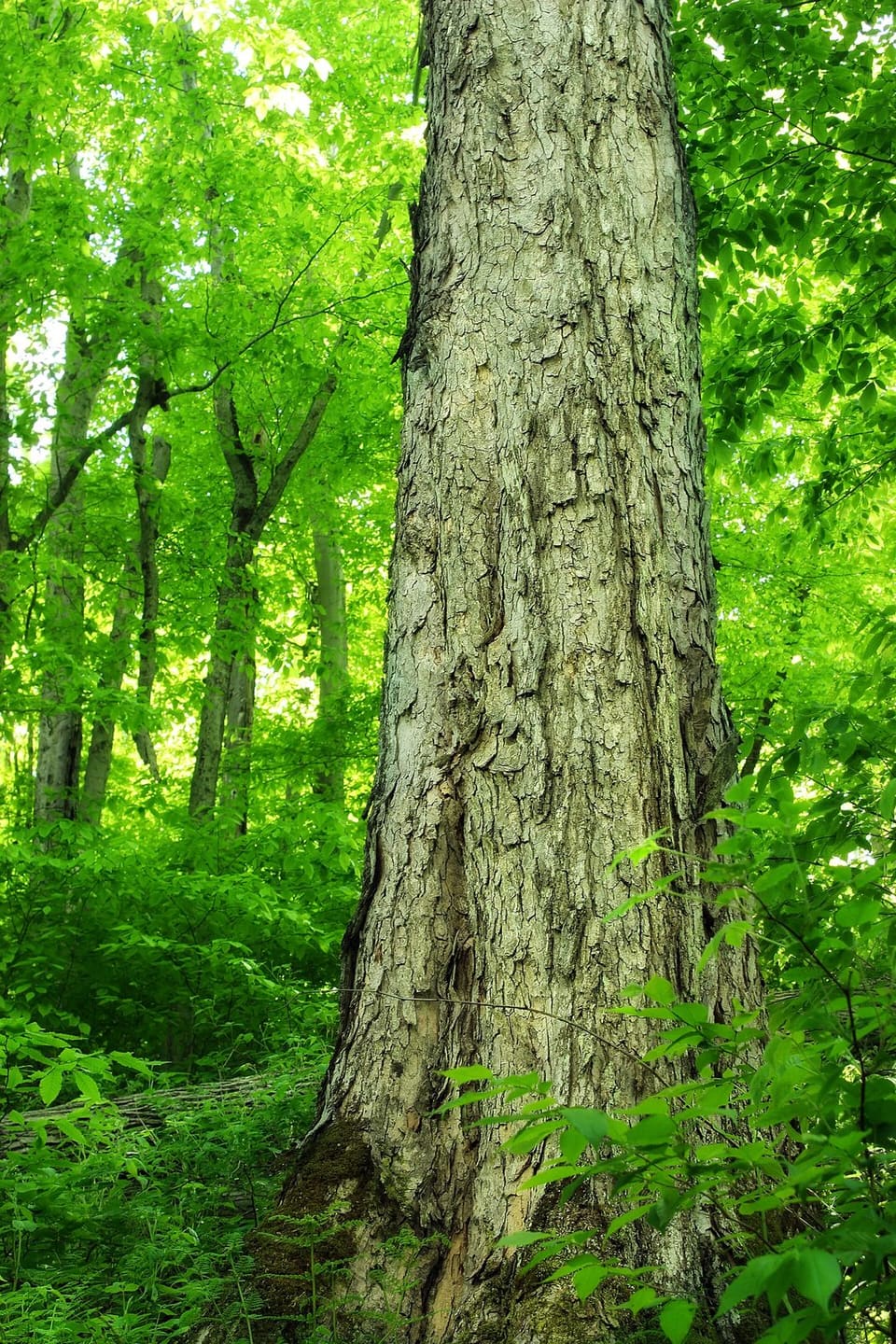
A ridged gray-brown trunk rising through bright green woodland
BarkNicholas A. Tonelli from Northeast Pennsylvania, USACC BY 2.0

About the plant

What it is and where it grows — not part of any germination protocol.

Safety

Toxicity
Poisonous to horse, cattle. Acorns, young leaves. Gallotannins, quercitrin, and quercitin. Stated for Quercus spp.Plants Poisonous to Livestock
Toxicity
Low severity. Leaves, Seeds. Gallotannins, quercitrin, and quercitin.Extension Gardener Plant Toolbox

The plant

Habit
TreePlant Finder
Habit
treePlants of the World Online
Height
50-75 ft15-23 mPlant Finder
Spread
50-75 ft15-23 mPlant Finder
Flower
Insignificant; yellowish-greenPlant Finder
Blooms
MayPlant Finder
Native range
Eastern North AmericaPlant Finder
Hardiness zones
4-8Plant Finder
Note
Failures were mostly grub damage, not dormancy. Soaking, holing or peeling the coat changed little.Seed Germination Theory and Practice, 2nd ed.

Growing conditions

Sun
Full sunPlant Finder
Soil
Average, dry to medium, acidicPlant Finder
Soil pH
Acid (<6.0), Neutral (6.0-8.0)Extension Gardener Plant Toolbox
Moisture
Dry to mediumPlant Finder
Watering
Dry to mediumPlant Finder

Toxicity is noted only where a source states it. No note here is not a finding of safety.

Sources: Plant Finder — Missouri Botanical Garden; Plants of the World Online — Royal Botanic Gardens, Kew; Extension Gardener Plant Toolbox — NC State Extension; Plants Poisonous to Livestock — Cornell University Department of Animal Science; Seed Germination Theory and Practice, 2nd ed. — N. C. Deno.

Worth knowing

This source reports 5 treatments. All are shown.

Protocol 1

DerivedN. C. Deno, 1993

Difficulty Low Rated by us, not by the source.

Start around December 15, 2026 for a May 3 last frost.

  1. Cold moist stratification

    Duration: 90 daysTemperature: 40°F 4°C

    Deno gives no length for this period; three months is his standard cycle.

  2. Warm moist stratification

    Temperature: 70°F 21°C

    No induction time at all; half the packet up every 2.5 days. A stem with true leaves follows within a month or two. Germination is hypogeal.

about 3 months from start to step 2. Germination happens during step 2; time not stated, 21 days assumed.

100% germination.

Every acorn. Induction time zero -- it starts the moment it reaches 70. Deno's clean lot, not the grub-damaged one.

Seed Germination Theory and Practice, 2nd ed. — N. C. Deno, 1993 · Ch. 20, QuercusPublic domain
Show the original text
Quercus (Fagaceae). Q. borealis, macrocarpa, and velutina were reported to be 40-70 germinators (ref. 28, Ch. 10). In the present work 0. borealis germ. 70(4/13 in 3-7 w)-40(1/13)-70(2/13), 40-70(33% in 2nd w) i and 20% in March in outdoor treatment. The seeds that failed to germinate were found to have been largely destroyed by grubs. A stem with true leaves develops within 1-2 m after germination. Q. borealis germ. 40-70(100%, i. t zero, first order rate, half life 2.5 d) and 70(10%)-40(80% in 8-10 w). The seedlings developed a 4-6 inch radicle followed by a stem with true leaves (hypogeal) all within a month. Soaking the seedé for a week, making a hole in the seed coats, or removing the seed coats had little effect. Unfortunately the outdoor experiments were terminated by mice eating the acorns.
Seed Germination Theory and Practice, 2nd ed., Ch. 20, Quercus. Quoted exactly. Every value on this card comes from this record, except the difficulty rating, which is ours; the step names come from a fixed list.

Protocol 2

DerivedN. C. Deno, 1993

Difficulty Low Rated by us, not by the source.

Start around October 28, 2027 for a May 3 last frost. Too late for spring 2027 — that needed starting on October 27, 2026.

  1. Warm moist stratification

    Duration: 90 daysTemperature: 70°F 21°C

    10% here. Deno gives no length for this period; three months is his standard cycle.

  2. Cold moist stratification

    Temperature: 40°F 4°C

    80% over 8-10 weeks. A stem with true leaves follows within a month or two. Germination is hypogeal.

about 3 months from start to step 2. Germination happens during step 2, in 70 days.

80% germination in 56–70 days.

10% comes up warm, then 80% in the cold. Starting cold is still better. Deno's clean lot, not the grub-damaged one.

Seed Germination Theory and Practice, 2nd ed. — N. C. Deno, 1993 · Ch. 20, QuercusPublic domain
Show the original text
Quercus (Fagaceae). Q. borealis, macrocarpa, and velutina were reported to be 40-70 germinators (ref. 28, Ch. 10). In the present work 0. borealis germ. 70(4/13 in 3-7 w)-40(1/13)-70(2/13), 40-70(33% in 2nd w) i and 20% in March in outdoor treatment. The seeds that failed to germinate were found to have been largely destroyed by grubs. A stem with true leaves develops within 1-2 m after germination. Q. borealis germ. 40-70(100%, i. t zero, first order rate, half life 2.5 d) and 70(10%)-40(80% in 8-10 w). The seedlings developed a 4-6 inch radicle followed by a stem with true leaves (hypogeal) all within a month. Soaking the seedé for a week, making a hole in the seed coats, or removing the seed coats had little effect. Unfortunately the outdoor experiments were terminated by mice eating the acorns.
Seed Germination Theory and Practice, 2nd ed., Ch. 20, Quercus. Quoted exactly. Every value on this card comes from this record, except the difficulty rating, which is ours; the step names come from a fixed list.

Protocol 3

DerivedN. C. Deno, 1993

Difficulty Moderate Rated by us, not by the source.

Start around December 22, 2026 for a May 3 last frost.

  1. Cold moist stratification

    Duration: 90 daysTemperature: 40°F 4°C

    Deno gives no length for this period; three months is his standard cycle.

  2. Warm moist stratification

    Temperature: 70°F 21°C

    33% in the second week. A stem with true leaves follows within a month or two. Germination is hypogeal.

about 3 months from start to step 2. Germination happens during step 2, in 14 days.

33% germination in 14 days.

The same treatment on a grub-damaged lot: 33% rather than 100%.

Seed Germination Theory and Practice, 2nd ed. — N. C. Deno, 1993 · Ch. 20, QuercusPublic domain
Show the original text
Quercus (Fagaceae). Q. borealis, macrocarpa, and velutina were reported to be 40-70 germinators (ref. 28, Ch. 10). In the present work 0. borealis germ. 70(4/13 in 3-7 w)-40(1/13)-70(2/13), 40-70(33% in 2nd w) i and 20% in March in outdoor treatment. The seeds that failed to germinate were found to have been largely destroyed by grubs. A stem with true leaves develops within 1-2 m after germination. Q. borealis germ. 40-70(100%, i. t zero, first order rate, half life 2.5 d) and 70(10%)-40(80% in 8-10 w). The seedlings developed a 4-6 inch radicle followed by a stem with true leaves (hypogeal) all within a month. Soaking the seedé for a week, making a hole in the seed coats, or removing the seed coats had little effect. Unfortunately the outdoor experiments were terminated by mice eating the acorns.
Seed Germination Theory and Practice, 2nd ed., Ch. 20, Quercus. Quoted exactly. Every value on this card comes from this record, except the difficulty rating, which is ours; the step names come from a fixed list.

Protocol 4

DerivedN. C. Deno, 1993

Difficulty High Rated by us, not by the source.

Start around November 17, 2026 for a May 3 last frost.

  1. Warm moist stratification

    Temperature: 70°F 21°C

    Four of thirteen, over 3-7 weeks. A stem with true leaves follows within a month or two. Germination is hypogeal.

  2. Cold moist stratification

    Duration: 90 daysTemperature: 40°F 4°C

    One more of thirteen.

  3. Warm moist stratification

    Temperature: 70°F 21°C

    Two more of thirteen.

about 3 months from start to step 3. Germination happens during step 3, in 49 days.

31% germination in 21–49 days.

Four acorns of thirteen, then one, then two. Most of the rest had been eaten by grubs.

This source doesn't state how long step 1 lasts.

Seed Germination Theory and Practice, 2nd ed. — N. C. Deno, 1993 · Ch. 20, QuercusPublic domain
Show the original text
Quercus (Fagaceae). Q. borealis, macrocarpa, and velutina were reported to be 40-70 germinators (ref. 28, Ch. 10). In the present work 0. borealis germ. 70(4/13 in 3-7 w)-40(1/13)-70(2/13), 40-70(33% in 2nd w) i and 20% in March in outdoor treatment. The seeds that failed to germinate were found to have been largely destroyed by grubs. A stem with true leaves develops within 1-2 m after germination. Q. borealis germ. 40-70(100%, i. t zero, first order rate, half life 2.5 d) and 70(10%)-40(80% in 8-10 w). The seedlings developed a 4-6 inch radicle followed by a stem with true leaves (hypogeal) all within a month. Soaking the seedé for a week, making a hole in the seed coats, or removing the seed coats had little effect. Unfortunately the outdoor experiments were terminated by mice eating the acorns.
Seed Germination Theory and Practice, 2nd ed., Ch. 20, Quercus. Quoted exactly. Every value on this card comes from this record, except the difficulty rating, which is ours; the step names come from a fixed list.

Protocol 5

DerivedN. C. Deno, 1993

Difficulty Moderate Rated by us, not by the source.

  1. Sow outdoors and leave it

    Up in March.

No stated waiting before sowing.

20% germination.

20%, up in March -- and Deno's other outdoor run ended when mice ate the acorns.

This source doesn't state how long step 1 lasts.

Seed Germination Theory and Practice, 2nd ed. — N. C. Deno, 1993 · Ch. 20, QuercusPublic domain
Show the original text
Quercus (Fagaceae). Q. borealis, macrocarpa, and velutina were reported to be 40-70 germinators (ref. 28, Ch. 10). In the present work 0. borealis germ. 70(4/13 in 3-7 w)-40(1/13)-70(2/13), 40-70(33% in 2nd w) i and 20% in March in outdoor treatment. The seeds that failed to germinate were found to have been largely destroyed by grubs. A stem with true leaves develops within 1-2 m after germination. Q. borealis germ. 40-70(100%, i. t zero, first order rate, half life 2.5 d) and 70(10%)-40(80% in 8-10 w). The seedlings developed a 4-6 inch radicle followed by a stem with true leaves (hypogeal) all within a month. Soaking the seedé for a week, making a hole in the seed coats, or removing the seed coats had little effect. Unfortunately the outdoor experiments were terminated by mice eating the acorns.
Seed Germination Theory and Practice, 2nd ed., Ch. 20, Quercus. Quoted exactly. Every value on this card comes from this record, except the difficulty rating, which is ours; the step names come from a fixed list.

Germination trials

Readers’ own records of sowing this species, published after review. Share your trial · All trials

Add to My Garden

View species page