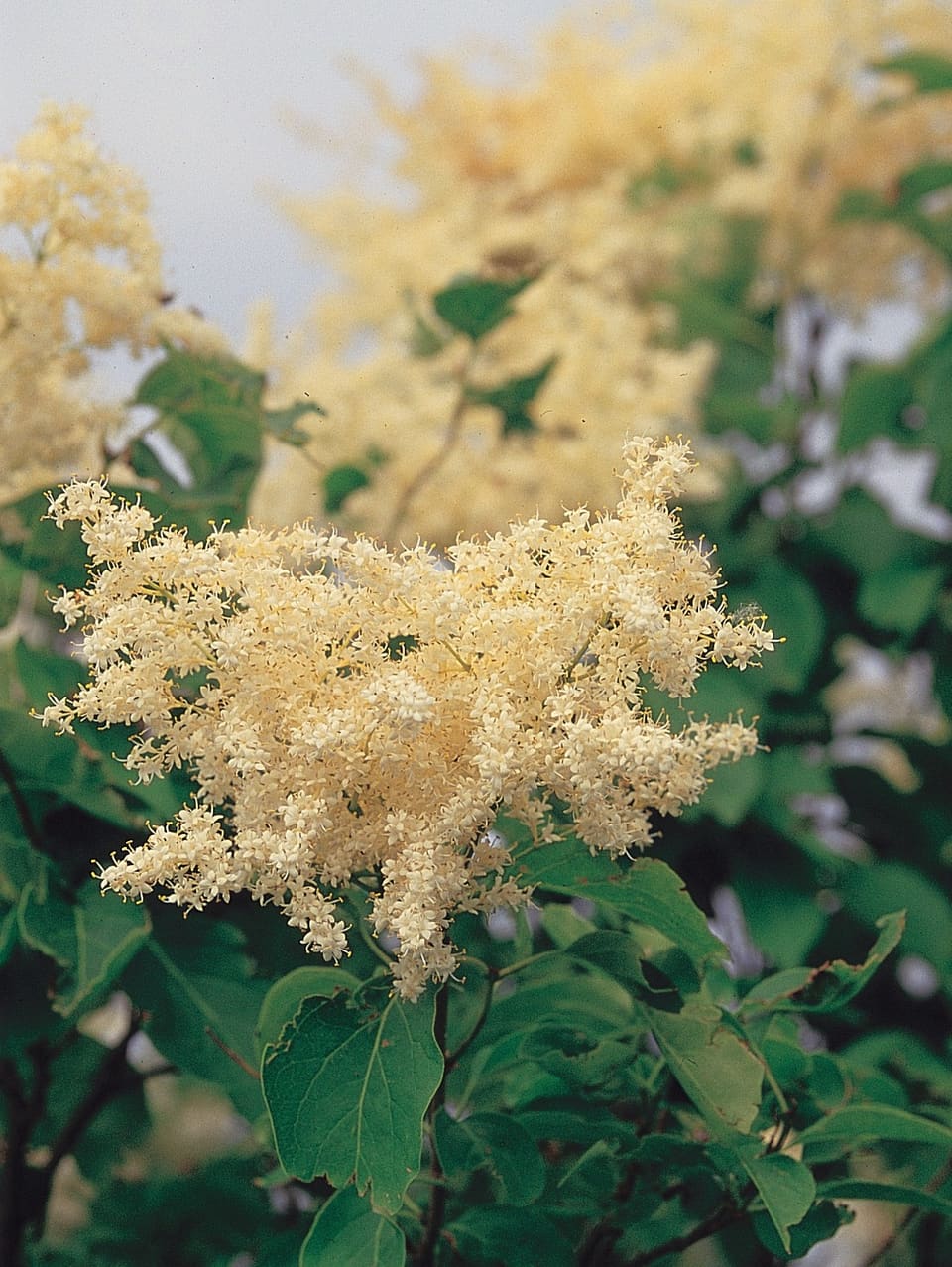
Syringa reticulata
Japanese Tree Lilac · Tree Lilac

About the plant
What it is and where it grows — not part of any germination protocol.
The plant
- Habit
- shrub or treePlants of the World Online
- Habit
- Perennial, Shrub, TreePLANTS Database
- Height
- 25-30 ft7.6-9.1 mExtension Gardener Plant Toolbox
- Spread
- 15-20 ft4.6-6.1 mExtension Gardener Plant Toolbox
- Flower
- Cream/Tan, WhiteExtension Gardener Plant Toolbox
- Blooms
- SummerExtension Gardener Plant Toolbox
- Native range
- Amur, China North-Central, China South-Central, China Southeast, Inner Mongolia, Japan and elsewhereGBIF Backbone Taxonomy
- Hardiness zones
- 3-7Extension Gardener Plant Toolbox
Growing conditions
- Sun
- Full sunExtension Gardener Plant Toolbox
- Soil
- Clay, High Organic Matter, Loam (Silt), SandExtension Gardener Plant Toolbox
- Soil pH
- Acid (<6.0), Neutral (6.0-8.0)Extension Gardener Plant Toolbox
- Moisture
- Good Drainage, MoistExtension Gardener Plant Toolbox
Toxicity is noted only where a source states it. No note here is not a finding of safety.
Sources: Plants of the World Online — Royal Botanic Gardens, Kew; PLANTS Database — USDA NRCS; Extension Gardener Plant Toolbox — NC State Extension; GBIF Backbone Taxonomy — Global Biodiversity Information Facility.
Worth knowing
- The Japanese tree lilac comes from eastern Asia and is grown as an ornamental in Europe and North America. Reticulata means "netted". Wikipedia: Syringa reticulata
This source reports three treatments. All are shown.
Protocol 1
DerivedN. C. Deno, 1993Difficulty Moderate
Start around January 18, 2027 for a May 3 last frost.
Cold moist stratification
Temperature: 40°F 4°C
Germination happens during step 1, in 77 days.
69% germination in 56–77 days.
Protocol 2
DerivedN. C. Deno, 1993Difficulty Moderate
Start around March 24, 2027 for a May 3 last frost.
Sow and cover
Temperature: 70°F 21°C
No stated waiting before sowing. Then 12 days to germinate.
65% germination in 6–12 days.
Protocol 3
DerivedN. C. Deno, 1993Difficulty High
Start around December 15, 2026 for a May 3 last frost.
Cold moist stratification
Duration: 90 daysTemperature: 40°F 4°C
Warm moist stratification
Duration: 90 daysTemperature: 70°F 21°C
about 3 months from start to step 2. Germination happens during step 2; time not stated, 21 days assumed.
25% germination.
How each step is done, in Deno’s words, and what Verified and Derived mean.
Germination trials
Readers’ own records of sowing this species, published after review. Share your trial · All trials
No trials shared for this species yet.