Deno’s GardenMy Garden

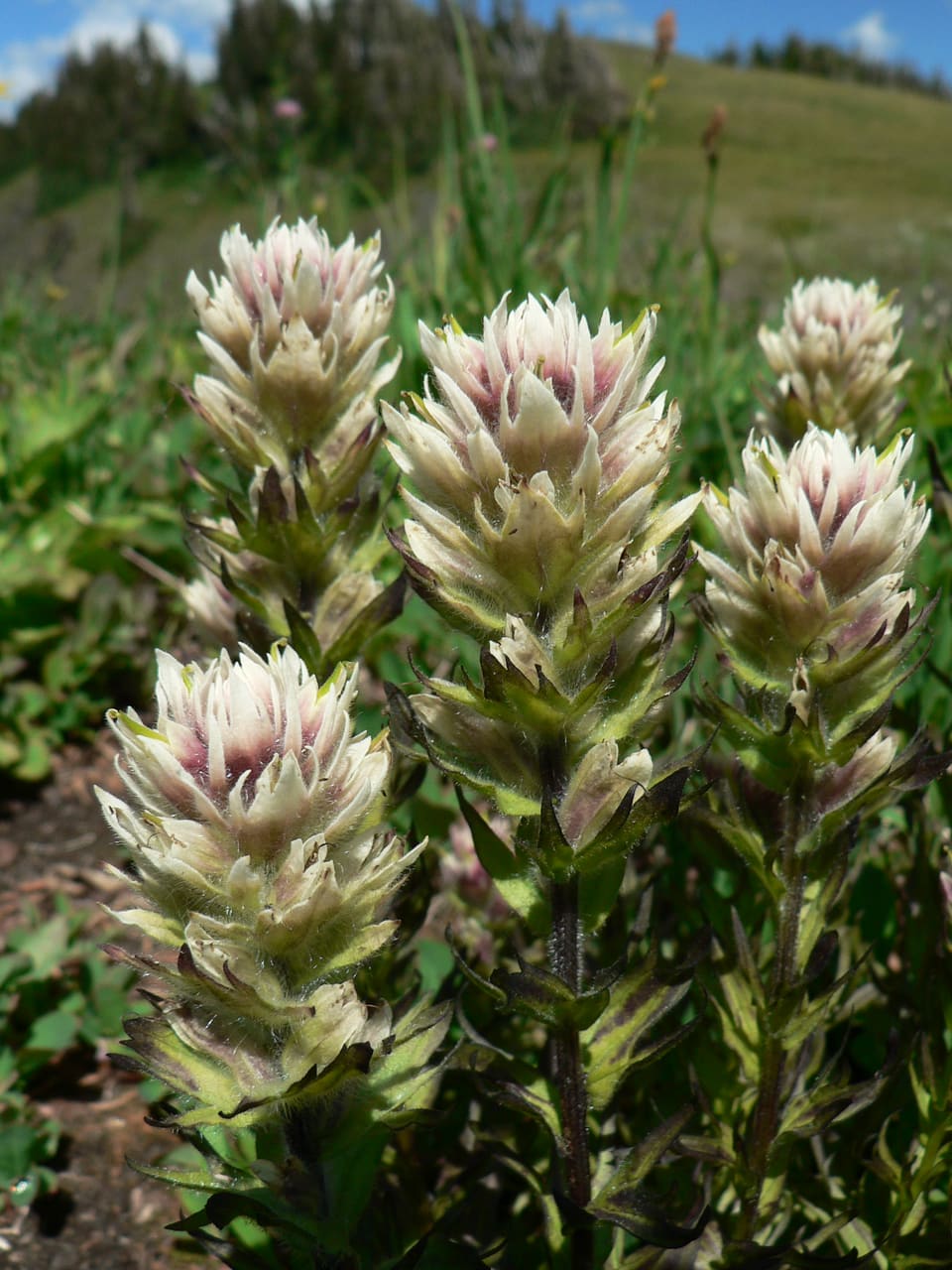
Castilleja parviflora

Mountain Indian Paintbrush · Mountain Paintbrush · Rosy Paintbrush

Family OrobanchaceaeGenus Castilleja

Upright heads of cream bracts tipped rose-pink, crowded on dark purple stems, on an open alpine slope.
FlowerWalter Siegmund (talk)CC BY 2.5

About the plant

What it is and where it grows — not part of any germination protocol.

Habit
perennialPlants of the World Online
Habit
Perennial, Forb/herb, SubshrubPLANTS Database
Flower
Yellow-greenWikipedia
Native range
Alaska, Canada, lower 48 statesPLANTS Database

Toxicity is noted only where a source states it. No note here is not a finding of safety.

Sources: Plants of the World Online — Royal Botanic Gardens, Kew; PLANTS Database — USDA NRCS; Wikipedia — Wikipedia contributors.

This source reports two treatments. Both are shown.

Protocol 1

DerivedN. C. Deno, 1993

Difficulty High Rated by us, not by the source.

Start around March 1, 2027 for a May 3 last frost.

  1. Sow and cover

    Temperature: 70°F 21°C Light: dark

No stated waiting before sowing. Then 35 days to germinate.

15% germination in 7–35 days.

Seed Germination Theory and Practice, 2nd ed. — N. C. Deno, 1993 · Ch. 20, Castilleja p. 113Public domain
Show the original text
Castilleja (Scrophulanlaceae). There have been suggestions that Castilleja seed is difficult to germinate and that chemical exudate from the roots of host species (Castilleja are parasitic). are needed to induce germination. None of this is in accord with the results herein, and patterns were found that gave excellent germination without the addition of any exogenous chemical. Most of the species germinate largely at 40. The seedlings grow vigorously until the stem has elongated to the point of producing 5-10 true leaves. Then the seedlings lose vigor and die off showing the need for a host plant. These conclusions were based on studies on seventeen samples. No photoeffects were found in five experiments. Although the germination of the seed occurs without any exudate from a host, it is still possible and perhaps probable that an exudate from a host is required for the development of the haustoria. DS is tolerated for a y, but seeds DS for 4 y were all dead. C. parviflora germ. 70D(15% in 1-5w) and 40-70(4%).
Seed Germination Theory and Practice, 2nd ed., Ch. 20, Castilleja p. 113. Quoted exactly. Every value on this card comes from this record, except the difficulty rating, which is ours; the step names come from a fixed list.

Protocol 2

DerivedN. C. Deno, 1993

Difficulty Very high Rated by us, not by the source.

Start around December 15, 2026 for a May 3 last frost.

  1. Cold moist stratification

    Duration: 90 daysTemperature: 40°F 4°C

  2. Warm moist stratification

    Duration: 90 daysTemperature: 70°F 21°C

about 3 months from start to step 2. Germination happens during step 2; time not stated, 21 days assumed.

4% germination.

Seed Germination Theory and Practice, 2nd ed. — N. C. Deno, 1993 · Ch. 20, Castilleja p. 113Public domain
Show the original text
Castilleja (Scrophulanlaceae). There have been suggestions that Castilleja seed is difficult to germinate and that chemical exudate from the roots of host species (Castilleja are parasitic). are needed to induce germination. None of this is in accord with the results herein, and patterns were found that gave excellent germination without the addition of any exogenous chemical. Most of the species germinate largely at 40. The seedlings grow vigorously until the stem has elongated to the point of producing 5-10 true leaves. Then the seedlings lose vigor and die off showing the need for a host plant. These conclusions were based on studies on seventeen samples. No photoeffects were found in five experiments. Although the germination of the seed occurs without any exudate from a host, it is still possible and perhaps probable that an exudate from a host is required for the development of the haustoria. DS is tolerated for a y, but seeds DS for 4 y were all dead. C. parviflora germ. 70D(15% in 1-5w) and 40-70(4%).
Seed Germination Theory and Practice, 2nd ed., Ch. 20, Castilleja p. 113. Quoted exactly. Every value on this card comes from this record, except the difficulty rating, which is ours; the step names come from a fixed list.

Germination trials

Readers’ own records of sowing this species, published after review. Share your trial · All trials

Add to My Garden

View species page