Deno’s GardenMy Garden

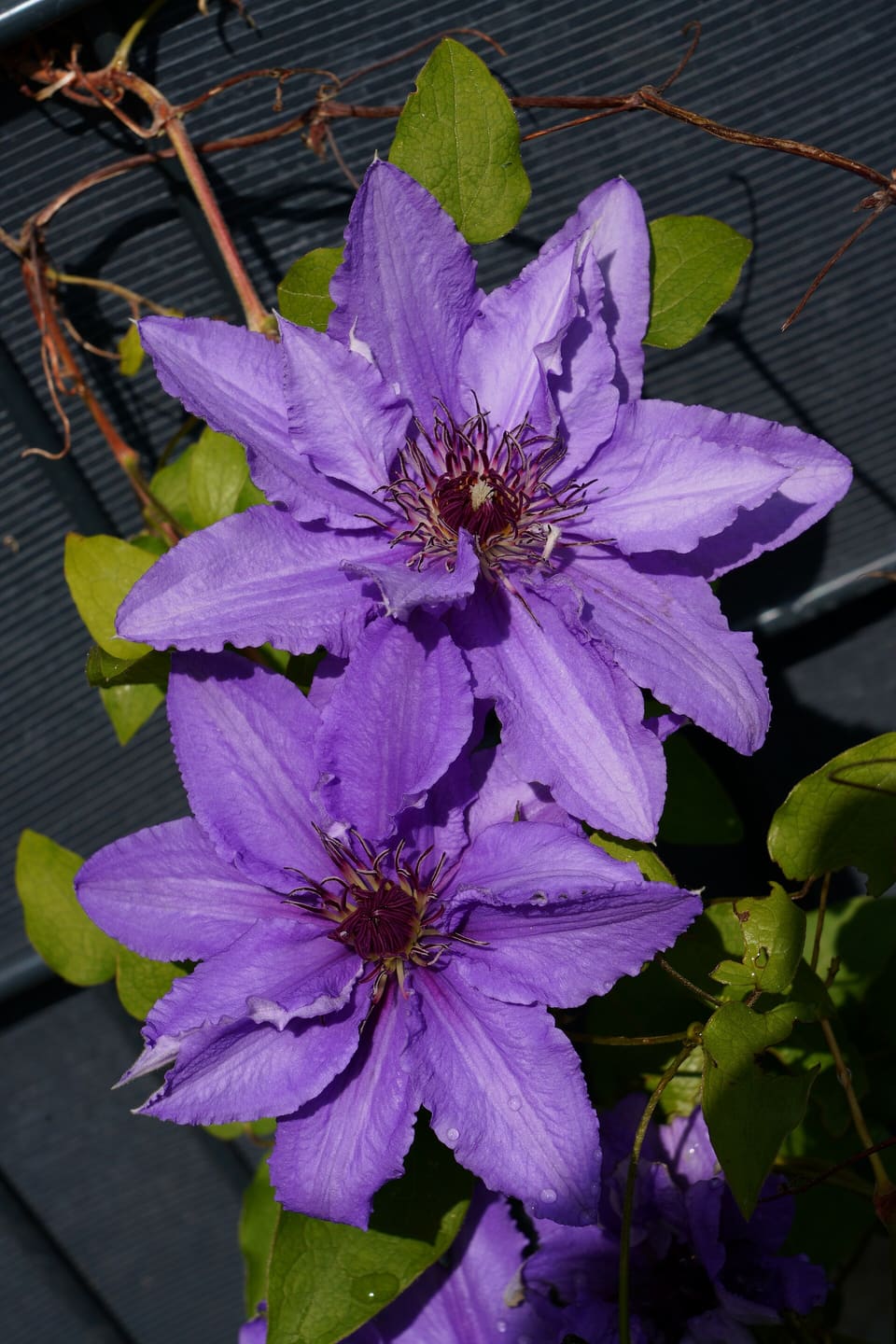
Clematis lanuginosa

Woolly Clematis

Family RanunculaceaeGenus Clematis

Two large violet-blue flowers, each of eight ribbed pointed petals around a dark red center, against gray decking.
FlowerLutz BlohmCC BY-SA 2.0

About the plant

What it is and where it grows — not part of any germination protocol.

Habit
climberPlants of the World Online
Flower
PurplishFlora of China
Native range
China SoutheastGBIF Backbone Taxonomy

Toxicity is noted only where a source states it. No note here is not a finding of safety.

Sources: Plants of the World Online — Royal Botanic Gardens, Kew; Flora of China — Wu Zhengyi, Peter H. Raven and Hong Deyuan (eds.); GBIF Backbone Taxonomy — Global Biodiversity Information Facility.

Worth knowing

  • Robert Fortune found this clematis near Ningbo in 1850 and sent plants back to England. Its hybrids are prized by gardeners. The species itself was lost to cultivation around the First World War and thought extinct, until it was rediscovered in the same area in 2008. Wikipedia: Clematis lanuginosa

This source reports 6 treatments. All are shown.

Protocol 1

DerivedN. C. Deno, 1993

Difficulty Moderate Rated by us, not by the source.

Start around March 21, 2027 for a May 3 last frost. Too late for spring 2027 — that needed starting on March 20, 2026.

  1. Dry storage

    Duration: 180 daysTemperature: 70°F 21°C

  2. Warm moist stratification

    Duration: 90 daysTemperature: 70°F 21°C

  3. Cold moist stratification

    Duration: 90 daysTemperature: 40°F 4°C

  4. Warm moist stratification

    Duration: 90 daysTemperature: 70°F 21°C

about 12 months from start to step 4. Germination happens during step 4; time not stated, 21 days assumed.

95% germination.

Seed Germination Theory and Practice, 2nd ed. — N. C. Deno, 1993 · Ch. 20, Clematis p. 119Public domain
Show the original text
Clematis (Ranunculaceae). Light and/or GA-3 are required for the germination of some species. Although a number of species germ. significantly in the dark, light and GA-3 needs to be tried on all species. Multicycle patterns were common and some species germ. largely at 40. The seeds of all species are designed to be dispersed by wind so that it was presumed that DS would be tolerated. This was supported by the data for seeds DS 6 m, however seeds of C. lanuginosa hybrid seed was collected in October. The plumes are abundant on all seed heads whether or not there is any good seed. The good seed is evident as the seed coat is relatively large being disk shaped and about 8-10 mm. across. Seed germ. in the dark albeit after several cycles. The seedlings show the same behavior as described for Abeliophyllum distichum. The radicle develops to a length of 3-4 inches. Growth ceases for 2-3 m after which stem and leaves form in a hypogeal germ. Chilling or any other treatment does not accelerate this process, and the best treatment is to allow the seedlings to stay in the moist towel at 70 in a vertical position until stem growth starts and then plant. Seed sown when collected germ. 70-40-70-40- 70(88% in 10-14 w) and 40-70-40(4%)-70(85% in 10-14 w). Seed DS 6 m at 70 germ. 70-40(10%)-70(80%) and 40-70-40(3%)-70(76%). Seed DS 6 m at 40 germ. 70-40- 70(95%) and 40-70(30%)-40-70-40(8%). Light and GA-3 need to be tried.
Seed Germination Theory and Practice, 2nd ed., Ch. 20, Clematis p. 119. Quoted exactly. Every value on this card comes from this record, except the difficulty rating, which is ours; the step names come from a fixed list.

Protocol 2

DerivedN. C. Deno, 1993

Difficulty Moderate Rated by us, not by the source.

Start around January 3, 2027 for a May 3 last frost. Too late for spring 2027 — that needed starting on January 2, 2026.

  1. Warm moist stratification

    Duration: 90 daysTemperature: 70°F 21°C

  2. Cold moist stratification

    Duration: 90 daysTemperature: 40°F 4°C

  3. Warm moist stratification

    Duration: 90 daysTemperature: 70°F 21°C

  4. Cold moist stratification

    Duration: 90 daysTemperature: 40°F 4°C

  5. Warm moist stratification

    Duration: 90 daysTemperature: 70°F 21°C

about 12 months from start to step 5. Germination happens during step 5, in 98 days.

88% germination in 70–98 days.

Seed Germination Theory and Practice, 2nd ed. — N. C. Deno, 1993 · Ch. 20, Clematis p. 119Public domain
Show the original text
Clematis (Ranunculaceae). Light and/or GA-3 are required for the germination of some species. Although a number of species germ. significantly in the dark, light and GA-3 needs to be tried on all species. Multicycle patterns were common and some species germ. largely at 40. The seeds of all species are designed to be dispersed by wind so that it was presumed that DS would be tolerated. This was supported by the data for seeds DS 6 m, however seeds of C. lanuginosa hybrid seed was collected in October. The plumes are abundant on all seed heads whether or not there is any good seed. The good seed is evident as the seed coat is relatively large being disk shaped and about 8-10 mm. across. Seed germ. in the dark albeit after several cycles. The seedlings show the same behavior as described for Abeliophyllum distichum. The radicle develops to a length of 3-4 inches. Growth ceases for 2-3 m after which stem and leaves form in a hypogeal germ. Chilling or any other treatment does not accelerate this process, and the best treatment is to allow the seedlings to stay in the moist towel at 70 in a vertical position until stem growth starts and then plant. Seed sown when collected germ. 70-40-70-40- 70(88% in 10-14 w) and 40-70-40(4%)-70(85% in 10-14 w). Seed DS 6 m at 70 germ. 70-40(10%)-70(80%) and 40-70-40(3%)-70(76%). Seed DS 6 m at 40 germ. 70-40- 70(95%) and 40-70(30%)-40-70-40(8%). Light and GA-3 need to be tried.
Seed Germination Theory and Practice, 2nd ed., Ch. 20, Clematis p. 119. Quoted exactly. Every value on this card comes from this record, except the difficulty rating, which is ours; the step names come from a fixed list.

Protocol 3

DerivedN. C. Deno, 1993

Difficulty Moderate Rated by us, not by the source.

Start around April 3, 2027 for a May 3 last frost. Too late for spring 2027 — that needed starting on April 2, 2026.

  1. Cold moist stratification

    Duration: 90 daysTemperature: 40°F 4°C

  2. Warm moist stratification

    Duration: 90 daysTemperature: 70°F 21°C

  3. Cold moist stratification

    Duration: 90 daysTemperature: 40°F 4°C

    4 germinated in this phase.

  4. Warm moist stratification

    Duration: 90 daysTemperature: 70°F 21°C

about 9 months from start to step 4. Germination happens during step 4, in 98 days.

85% germination in 70–98 days.

Seed Germination Theory and Practice, 2nd ed. — N. C. Deno, 1993 · Ch. 20, Clematis p. 119Public domain
Show the original text
Clematis (Ranunculaceae). Light and/or GA-3 are required for the germination of some species. Although a number of species germ. significantly in the dark, light and GA-3 needs to be tried on all species. Multicycle patterns were common and some species germ. largely at 40. The seeds of all species are designed to be dispersed by wind so that it was presumed that DS would be tolerated. This was supported by the data for seeds DS 6 m, however seeds of C. lanuginosa hybrid seed was collected in October. The plumes are abundant on all seed heads whether or not there is any good seed. The good seed is evident as the seed coat is relatively large being disk shaped and about 8-10 mm. across. Seed germ. in the dark albeit after several cycles. The seedlings show the same behavior as described for Abeliophyllum distichum. The radicle develops to a length of 3-4 inches. Growth ceases for 2-3 m after which stem and leaves form in a hypogeal germ. Chilling or any other treatment does not accelerate this process, and the best treatment is to allow the seedlings to stay in the moist towel at 70 in a vertical position until stem growth starts and then plant. Seed sown when collected germ. 70-40-70-40- 70(88% in 10-14 w) and 40-70-40(4%)-70(85% in 10-14 w). Seed DS 6 m at 70 germ. 70-40(10%)-70(80%) and 40-70-40(3%)-70(76%). Seed DS 6 m at 40 germ. 70-40- 70(95%) and 40-70(30%)-40-70-40(8%). Light and GA-3 need to be tried.
Seed Germination Theory and Practice, 2nd ed., Ch. 20, Clematis p. 119. Quoted exactly. Every value on this card comes from this record, except the difficulty rating, which is ours; the step names come from a fixed list.

Protocol 4

DerivedN. C. Deno, 1993

Difficulty Moderate Rated by us, not by the source.

Start around March 21, 2027 for a May 3 last frost. Too late for spring 2027 — that needed starting on March 20, 2026.

  1. Dry storage

    Duration: 180 daysTemperature: 70°F 21°C

  2. Warm moist stratification

    Duration: 90 daysTemperature: 70°F 21°C

  3. Cold moist stratification

    Duration: 90 daysTemperature: 40°F 4°C

    10 germinated in this phase.

  4. Warm moist stratification

    Duration: 90 daysTemperature: 70°F 21°C

about 12 months from start to step 4. Germination happens during step 4; time not stated, 21 days assumed.

80% germination.

Seed Germination Theory and Practice, 2nd ed. — N. C. Deno, 1993 · Ch. 20, Clematis p. 119Public domain
Show the original text
Clematis (Ranunculaceae). Light and/or GA-3 are required for the germination of some species. Although a number of species germ. significantly in the dark, light and GA-3 needs to be tried on all species. Multicycle patterns were common and some species germ. largely at 40. The seeds of all species are designed to be dispersed by wind so that it was presumed that DS would be tolerated. This was supported by the data for seeds DS 6 m, however seeds of C. lanuginosa hybrid seed was collected in October. The plumes are abundant on all seed heads whether or not there is any good seed. The good seed is evident as the seed coat is relatively large being disk shaped and about 8-10 mm. across. Seed germ. in the dark albeit after several cycles. The seedlings show the same behavior as described for Abeliophyllum distichum. The radicle develops to a length of 3-4 inches. Growth ceases for 2-3 m after which stem and leaves form in a hypogeal germ. Chilling or any other treatment does not accelerate this process, and the best treatment is to allow the seedlings to stay in the moist towel at 70 in a vertical position until stem growth starts and then plant. Seed sown when collected germ. 70-40-70-40- 70(88% in 10-14 w) and 40-70-40(4%)-70(85% in 10-14 w). Seed DS 6 m at 70 germ. 70-40(10%)-70(80%) and 40-70-40(3%)-70(76%). Seed DS 6 m at 40 germ. 70-40- 70(95%) and 40-70(30%)-40-70-40(8%). Light and GA-3 need to be tried.
Seed Germination Theory and Practice, 2nd ed., Ch. 20, Clematis p. 119. Quoted exactly. Every value on this card comes from this record, except the difficulty rating, which is ours; the step names come from a fixed list.

Protocol 5

DerivedN. C. Deno, 1993

Difficulty Moderate Rated by us, not by the source.

Start around December 21, 2026 for a May 3 last frost. Too late for spring 2027 — that needed starting on December 20, 2025.

  1. Dry storage

    Duration: 180 daysTemperature: 70°F 21°C

  2. Cold moist stratification

    Duration: 90 daysTemperature: 40°F 4°C

  3. Warm moist stratification

    Duration: 90 daysTemperature: 70°F 21°C

  4. Cold moist stratification

    Duration: 90 daysTemperature: 40°F 4°C

    3 germinated in this phase.

  5. Warm moist stratification

    Duration: 90 daysTemperature: 70°F 21°C

about 15 months from start to step 5. Germination happens during step 5; time not stated, 21 days assumed.

76% germination.

Seed Germination Theory and Practice, 2nd ed. — N. C. Deno, 1993 · Ch. 20, Clematis p. 119Public domain
Show the original text
Clematis (Ranunculaceae). Light and/or GA-3 are required for the germination of some species. Although a number of species germ. significantly in the dark, light and GA-3 needs to be tried on all species. Multicycle patterns were common and some species germ. largely at 40. The seeds of all species are designed to be dispersed by wind so that it was presumed that DS would be tolerated. This was supported by the data for seeds DS 6 m, however seeds of C. lanuginosa hybrid seed was collected in October. The plumes are abundant on all seed heads whether or not there is any good seed. The good seed is evident as the seed coat is relatively large being disk shaped and about 8-10 mm. across. Seed germ. in the dark albeit after several cycles. The seedlings show the same behavior as described for Abeliophyllum distichum. The radicle develops to a length of 3-4 inches. Growth ceases for 2-3 m after which stem and leaves form in a hypogeal germ. Chilling or any other treatment does not accelerate this process, and the best treatment is to allow the seedlings to stay in the moist towel at 70 in a vertical position until stem growth starts and then plant. Seed sown when collected germ. 70-40-70-40- 70(88% in 10-14 w) and 40-70-40(4%)-70(85% in 10-14 w). Seed DS 6 m at 70 germ. 70-40(10%)-70(80%) and 40-70-40(3%)-70(76%). Seed DS 6 m at 40 germ. 70-40- 70(95%) and 40-70(30%)-40-70-40(8%). Light and GA-3 need to be tried.
Seed Germination Theory and Practice, 2nd ed., Ch. 20, Clematis p. 119. Quoted exactly. Every value on this card comes from this record, except the difficulty rating, which is ours; the step names come from a fixed list.

Protocol 6

DerivedN. C. Deno, 1993

Difficulty High Rated by us, not by the source.

Start around June 19, 2027 for a May 3 last frost. Too late for spring 2027 — that needed starting on June 18, 2026.

  1. Dry storage

    Duration: 180 daysTemperature: 70°F 21°C

  2. Cold moist stratification

    Duration: 90 daysTemperature: 40°F 4°C

  3. Warm moist stratification

    Duration: 90 daysTemperature: 70°F 21°C

  4. Cold moist stratification

    Duration: 90 daysTemperature: 40°F 4°C

  5. Warm moist stratification

    Duration: 90 daysTemperature: 70°F 21°C

  6. Cold moist stratification

    Duration: 90 daysTemperature: 40°F 4°C

    8 germinated in this phase.

Steps after step 3 run on after germination.

about 9 months from start to step 3. Germination happens during step 3; time not stated, 21 days assumed.
30% germination.

Seed Germination Theory and Practice, 2nd ed. — N. C. Deno, 1993 · Ch. 20, Clematis p. 119Public domain
Show the original text
Clematis (Ranunculaceae). Light and/or GA-3 are required for the germination of some species. Although a number of species germ. significantly in the dark, light and GA-3 needs to be tried on all species. Multicycle patterns were common and some species germ. largely at 40. The seeds of all species are designed to be dispersed by wind so that it was presumed that DS would be tolerated. This was supported by the data for seeds DS 6 m, however seeds of C. lanuginosa hybrid seed was collected in October. The plumes are abundant on all seed heads whether or not there is any good seed. The good seed is evident as the seed coat is relatively large being disk shaped and about 8-10 mm. across. Seed germ. in the dark albeit after several cycles. The seedlings show the same behavior as described for Abeliophyllum distichum. The radicle develops to a length of 3-4 inches. Growth ceases for 2-3 m after which stem and leaves form in a hypogeal germ. Chilling or any other treatment does not accelerate this process, and the best treatment is to allow the seedlings to stay in the moist towel at 70 in a vertical position until stem growth starts and then plant. Seed sown when collected germ. 70-40-70-40- 70(88% in 10-14 w) and 40-70-40(4%)-70(85% in 10-14 w). Seed DS 6 m at 70 germ. 70-40(10%)-70(80%) and 40-70-40(3%)-70(76%). Seed DS 6 m at 40 germ. 70-40- 70(95%) and 40-70(30%)-40-70-40(8%). Light and GA-3 need to be tried.
Seed Germination Theory and Practice, 2nd ed., Ch. 20, Clematis p. 119. Quoted exactly. Every value on this card comes from this record, except the difficulty rating, which is ours; the step names come from a fixed list.

Germination trials

Readers’ own records of sowing this species, published after review. Share your trial · All trials

Add to My Garden

View species page