Deno’s GardenMy Garden

Kalmia hirsuta

Hairy Laurel · Hairy Wicky · Sandhill Laurel

Family EricaceaeGenus Kalmia

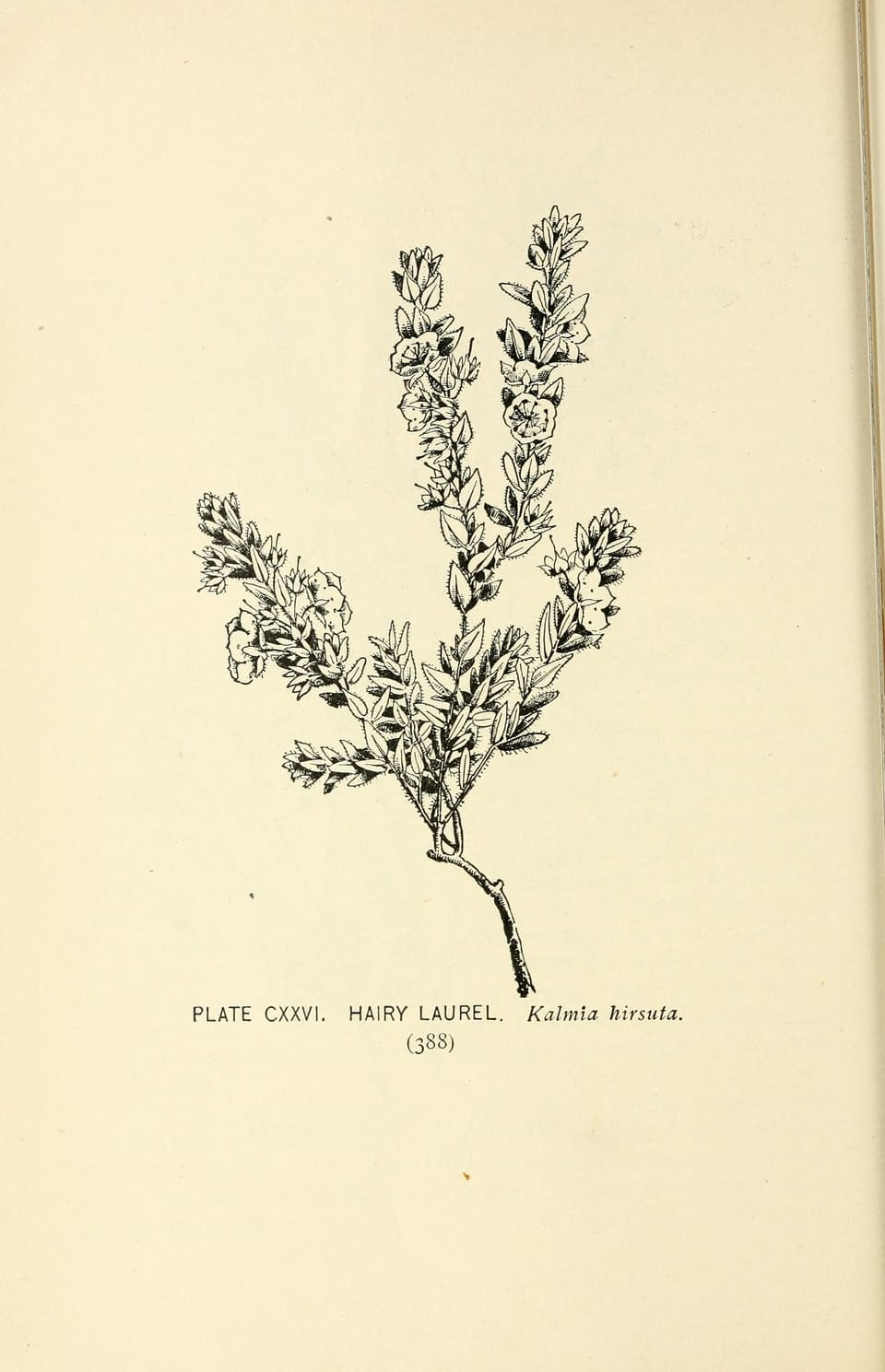
A pale pink, five-angled saucer flower with small red-tipped stamens tucked into pockets, against dark leaves
FlowerAlex AbairCC BY 4.0
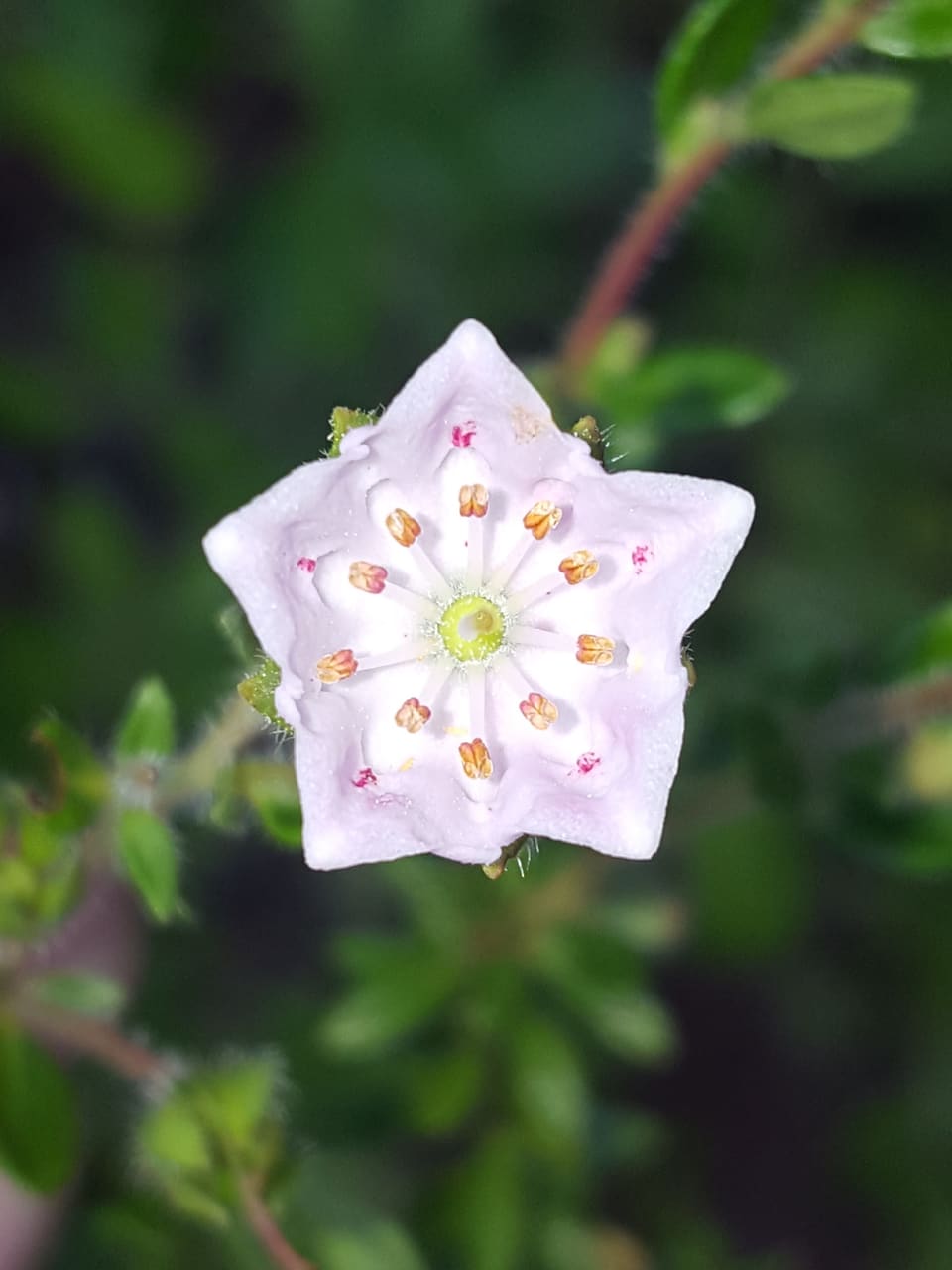
A line drawing of a slender branched shoot set with small overlapping leaves and few flowers
IllustrationLounsberry, Alice.; Rowan, Marian Ellis RyanPublic domain

About the plant

What it is and where it grows — not part of any germination protocol.

Habit
subshrub or shrubPlants of the World Online
Habit
Perennial, ShrubPLANTS Database
Flower
PinkFlora of North America
Native range
Alabama, Florida, Georgia, South CarolinaGBIF Backbone Taxonomy

Toxicity is noted only where a source states it. No note here is not a finding of safety.

Sources: Plants of the World Online — Royal Botanic Gardens, Kew; PLANTS Database — USDA NRCS; Flora of North America — Flora of North America Editorial Committee; GBIF Backbone Taxonomy — Global Biodiversity Information Facility.

Worth knowing

  • Hirsuta means "covered with coarse stiff hairs", and the hairy leaves are one of the main features that tell hairy wicky apart from its relatives. It grows in open, sandy places of the southeastern United States. Wikipedia: Kalmia hirsuta

This source reports two treatments. Both are shown.

Protocol 1

DerivedN. C. Deno, 1993

Difficulty Moderate Rated by us, not by the source.

  1. Separate the seed from its case

    Crush the hard capsule so light can reach the seed.

  2. Hot-water treatment

    Temperature: 194°F 90°C Amount: 2 min

    Two minutes at 90 degrees C.

  3. Sow on the surface — do not cover

    Temperature: 70°F 21°C Light: light

No stated waiting before sowing.

Jaynes's finding as Deno reports it: hot water, then light. No percentage is given.

Seed Germination Theory and Practice, 2nd ed. — N. C. Deno, 1993 · Ch. 20, KalmiaPublic domain
Show the original text
Kalmia (Ericaceae). Kalmia requires light as found by R. Jaynes for K. angustifolia, K. cuneata, K. hirsuta, K. latifolia, K. microphylla, and K. polifolia (ref. 41) and confirmed by myself for K. angustifolia and K. latifolia. The seed is contained in hard spherical capsules. These must be crushed to allow light to reach the seed. The seed is small and hard to separate from the hard capsules so that seed counts and percent germination are inaccurate. K. hirsuta was reported by Jaynes to have germination improved by treatment with very hot water ranging from two minute treatment with water at 90 deg. C to twenty hours treatment with water at 60 deg. C. Light is then required for germination.
Seed Germination Theory and Practice, 2nd ed., Ch. 20, Kalmia. Quoted exactly. Every value on this card comes from this record, except the difficulty rating, which is ours; the step names come from a fixed list.

Protocol 2

DerivedN. C. Deno, 1993

Difficulty Moderate Rated by us, not by the source.

  1. Separate the seed from its case

    Crush the hard capsule so light can reach the seed.

  2. Hot-water treatment

    Duration: 1 dayTemperature: 140°F 60°C

    Twenty hours at 60 degrees C.

  3. Sow on the surface — do not cover

    Temperature: 70°F 21°C Light: light

1 day from start to sowing.

The other end of Jaynes's range: cooler water, very much longer.
Seed Germination Theory and Practice, 2nd ed. — N. C. Deno, 1993 · Ch. 20, KalmiaPublic domain
Show the original text
Kalmia (Ericaceae). Kalmia requires light as found by R. Jaynes for K. angustifolia, K. cuneata, K. hirsuta, K. latifolia, K. microphylla, and K. polifolia (ref. 41) and confirmed by myself for K. angustifolia and K. latifolia. The seed is contained in hard spherical capsules. These must be crushed to allow light to reach the seed. The seed is small and hard to separate from the hard capsules so that seed counts and percent germination are inaccurate. K. hirsuta was reported by Jaynes to have germination improved by treatment with very hot water ranging from two minute treatment with water at 90 deg. C to twenty hours treatment with water at 60 deg. C. Light is then required for germination.
Seed Germination Theory and Practice, 2nd ed., Ch. 20, Kalmia. Quoted exactly. Every value on this card comes from this record, except the difficulty rating, which is ours; the step names come from a fixed list.

Germination trials

Readers’ own records of sowing this species, published after review. Share your trial · All trials

Add to My Garden

View species page