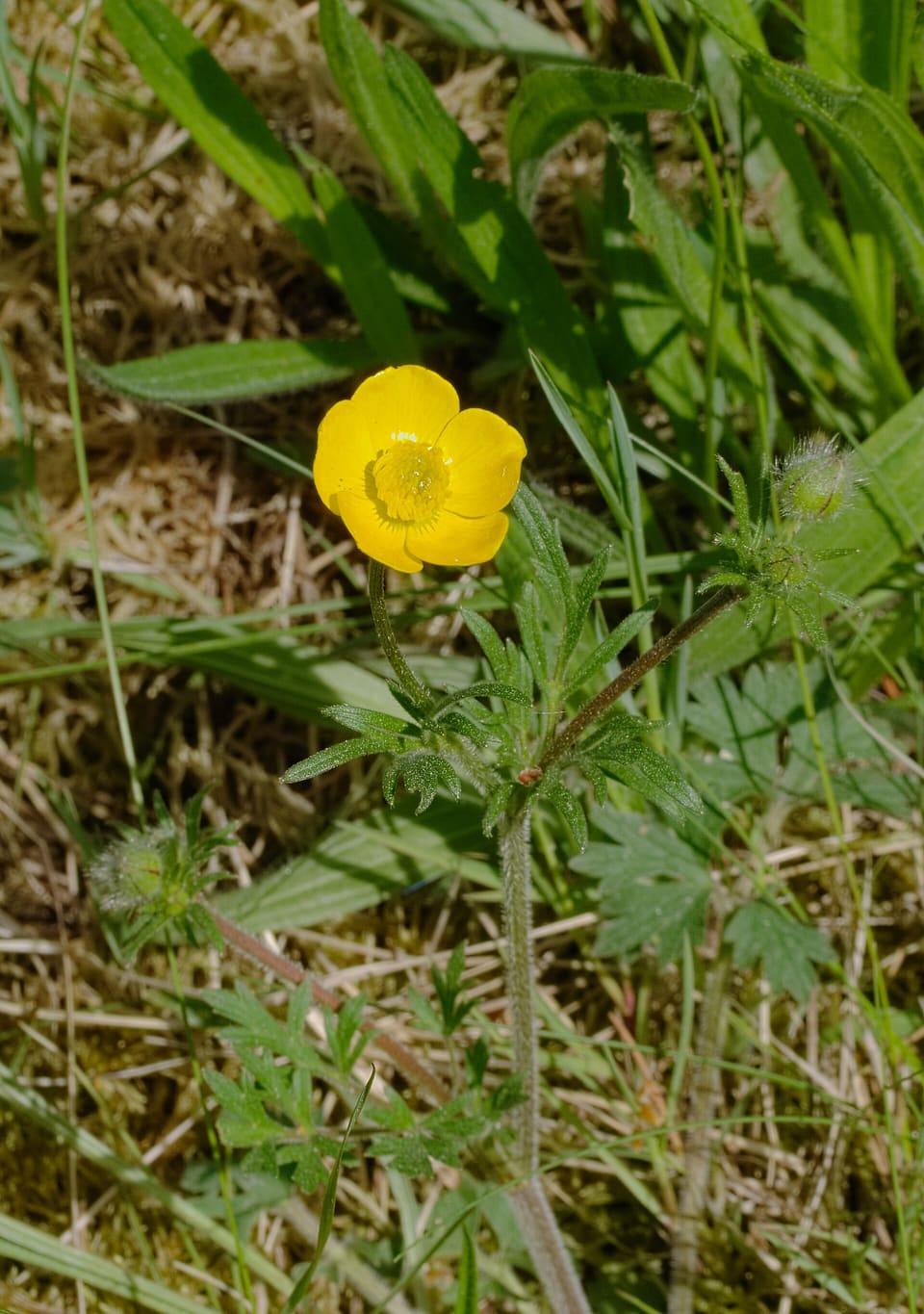
Named for its corm, which sits just below the soil and survives the summer after the plant dies back. Its toxin, ranunculin, tastes so bitter that livestock avoid it fresh, but it is lost when the plant dries.Wikipedia: Ranunculus bulbosus
This source reports 5 treatments. All are shown.
Protocol 1
DerivedN. C. Deno, 1996
Difficulty HighRated by us, not by the source.
Start around January 18, 2027 for a May 3 last frost.
1
Sow and cover
Temperature: 70°F 21°C · Light: light
No stated waiting before sowing. Then 77 days to germinate.
13% germination in 49–77 days.
Protocol 2
DerivedN. C. Deno, 1996
Difficulty HighRated by us, not by the source.
Start around January 11, 2027 for a May 3 last frost.
1
Alternating temperatures
Temperature: 40–70°F 4–21°C
Germination happens during step 1, in 84 days.
10% germination in 49–84 days.
Protocol 3
DerivedN. C. Deno, 1996
Difficulty Very highRated by us, not by the source.
Start around January 18, 2027 for a May 3 last frost.
1
Sow and cover
Temperature: 70°F 21°C · Light: dark
No stated waiting before sowing. Then 77 days to germinate.
8% germination in 49–77 days.
Protocol 4
DerivedN. C. Deno, 1996
Difficulty Very highRated by us, not by the source.
Start around December 15, 2026 for a May 3 last frost.
1
Cold moist stratification
Duration: 90 days · Temperature: 40°F 4°C
2
Warm moist stratification
Duration: 90 days · Temperature: 70°F 21°C
about 3 months from start to step 2. Germination happens during step 2; time not stated, 21 days assumed.
4% germination.
Protocol 5
DerivedN. C. Deno, 1996
Difficulty Very highRated by us, not by the source.