Ranunculus lyallii
Mount Cook Buttercup · Mount Cook Lily · Mountain Lily
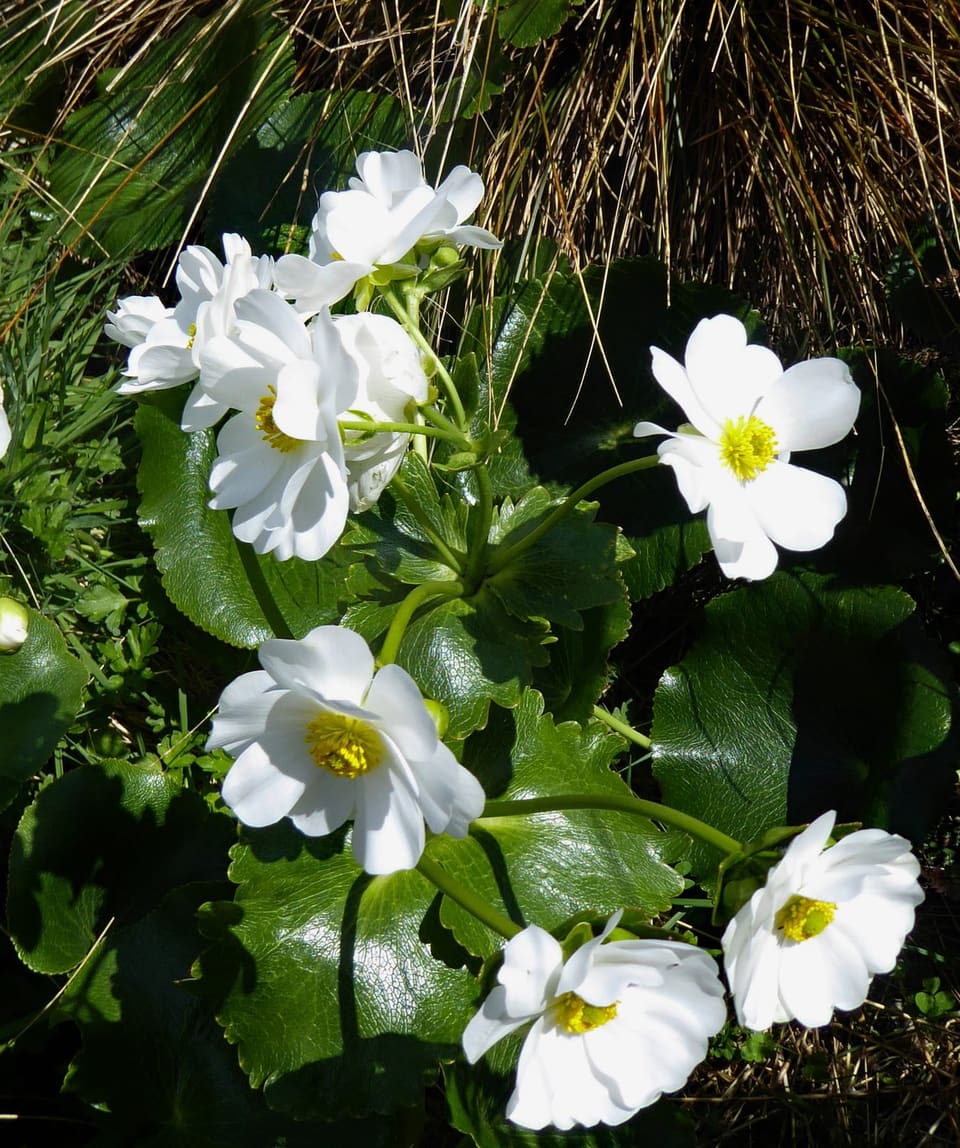

About the plant
What it is and where it grows — not part of any germination protocol.
Safety
- Toxicity
- Poisonous to cattle, goats, horses. All parts. Protoanemonin. Stated for Ranunculus spp.Plants Poisonous to Livestock
The plant
- Habit
- perennialPlants of the World Online
- Flower
- WhiteWikipedia
- Native range
- New Zealand SouthGBIF Backbone Taxonomy
- Note
- Long held to be very hard from seed. Deno's finding is that GA-3 is a requirement, not an aid.Seed Germination Theory and Practice, 2nd ed.
Toxicity is noted only where a source states it. No note here is not a finding of safety.
Sources: Plants of the World Online — Royal Botanic Gardens, Kew; Wikipedia — Wikipedia contributors; GBIF Backbone Taxonomy — Global Biodiversity Information Facility; Plants Poisonous to Livestock — Cornell University Department of Animal Science; Seed Germination Theory and Practice, 2nd ed. — N. C. Deno.
Worth knowing
- The largest species of buttercup, growing over a meter tall, it is endemic to New Zealand. It is often called the Mount Cook lily, though it is not a lily. It was discovered by the Scottish botanist and doctor David Lyall. Wikipedia: Ranunculus lyallii
Protocol
DerivedN. C. Deno, 1993Difficulty Moderate
Gibberellic acid soak
Sow and cover
Temperature: 70°F 21°C
A prior three months at 70 in the dark made no difference.
No stated waiting before sowing. Then 49 days to germinate.
22% germination in 35–49 days.
GA-3 is a requirement here, not an improvement. Without it, nothing.
How each step is done, in Deno’s words, and what Verified and Derived mean.
Germination trials
Readers’ own records of sowing this species, published after review. Share your trial · All trials
No trials shared for this species yet.