Rubus parviflorus
Thimbleberry
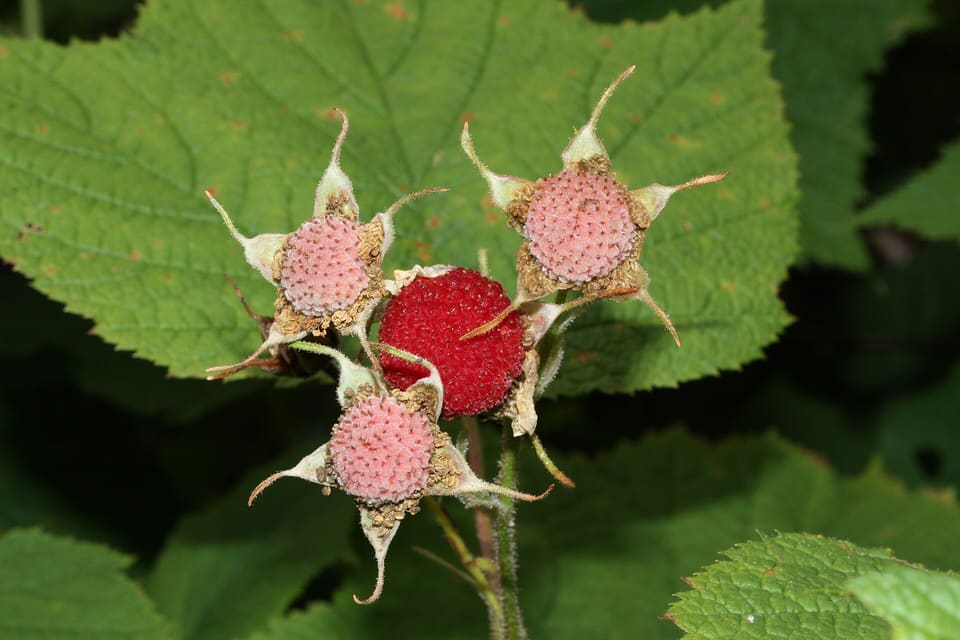

About the plant
What it is and where it grows — not part of any germination protocol.
The plant
- Habit
- subshrubPlants of the World Online
- Habit
- Perennial, SubshrubPLANTS Database
- Height
- 4.0 ft1.2 mPLANTS Database
- Flower
- WhitePLANTS Database
- Blooms
- SpringPLANTS Database
- Native range
- Alaska, Canada, lower 48 statesPLANTS Database
Growing conditions
- Sun
- Shade tolerance: MediumPLANTS Database
- Soil
- Adapted to medium, fine textured soilsPLANTS Database
- Soil pH
- 4.8-7.2PLANTS Database
- Moisture
- Moisture use: HighPLANTS Database
- Watering
- Drought tolerance: MediumPLANTS Database
Toxicity is noted only where a source states it. No note here is not a finding of safety.
Sources: Plants of the World Online — Royal Botanic Gardens, Kew; PLANTS Database — USDA NRCS.
Worth knowing
- Parviflorus means small-flowered, an odd name for a bramble whose flowers are among the largest in the genus. Thimbleberry is for the shape of its fruit. Lady Bird Johnson Wildflower Center: Rubus parviflorus
This source reports two treatments. Both are shown.
Protocol 1
DerivedN. C. Deno, 1993Difficulty High
Start around February 15, 2027 for a May 3 last frost.
Gibberellic acid soak
Sow and cover
Temperature: 70°F 21°C
No stated waiting before sowing. Then 49 days to germinate.
25% germination in 28–49 days.
Protocol 2
DerivedN. C. Deno, 1993Difficulty Very high
Start around December 15, 2026 for a May 3 last frost.
Cold moist stratification
Duration: 90 daysTemperature: 40°F 4°C
Warm moist stratification
Duration: 90 daysTemperature: 70°F 21°C Light: dark
about 3 months from start to step 2. Germination happens during step 2; time not stated, 21 days assumed.
6% germination.
How each step is done, in Deno’s words, and what Verified and Derived mean.
Germination trials
Readers’ own records of sowing this species, published after review. Share your trial · All trials
No trials shared for this species yet.