Rosa virginiana
Virginian Rose · Virginia Rose
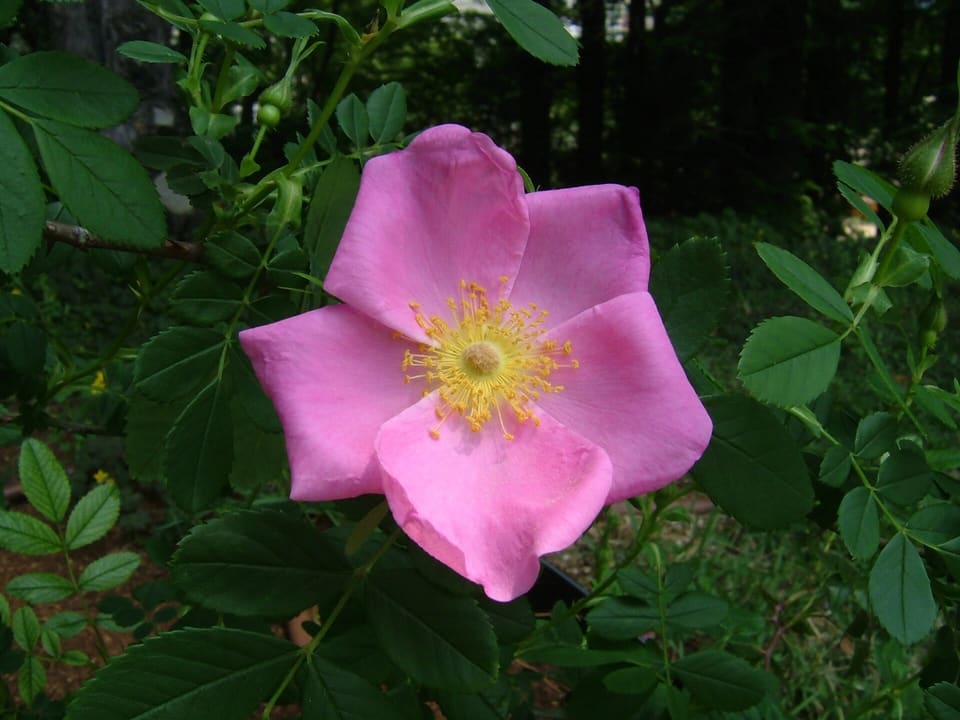

About the plant
What it is and where it grows — not part of any germination protocol.
The plant
- Habit
- Rose, ShrubExtension Gardener Plant Toolbox
- Habit
- shrubPlants of the World Online
- Height
- 6.0 ft1.8 mPLANTS Database
- Flower
- Gold/Yellow, PinkExtension Gardener Plant Toolbox
- Blooms
- SummerExtension Gardener Plant Toolbox
- Native range
- Canada, lower 48 states, St. Pierre and MiquelonPLANTS Database
- Hardiness zones
- 3-8Extension Gardener Plant Toolbox
Growing conditions
- Sun
- Full sun; Partial ShadeExtension Gardener Plant Toolbox
- Soil
- Loam (Silt), SandExtension Gardener Plant Toolbox
- Soil pH
- Acid (<6.0), Neutral (6.0-8.0)Extension Gardener Plant Toolbox
- Moisture
- Good DrainageExtension Gardener Plant Toolbox
- Watering
- Drought tolerance: LowPLANTS Database
Toxicity is noted only where a source states it. No note here is not a finding of safety.
Sources: Extension Gardener Plant Toolbox — NC State Extension; Plants of the World Online — Royal Botanic Gardens, Kew; PLANTS Database — USDA NRCS.
Worth knowing
- The Virginia rose is the most common wild rose of eastern North America. It is noted for its autumn color, the whole plant turning yellow, orange, scarlet, crimson and brown for weeks, and it holds the RHS Award of Garden Merit. Wikipedia: Rosa virginiana
Protocol
DerivedN. C. Deno, 1993Difficulty Moderate
Warm moist stratification
Duration: 90 daysTemperature: 70°F 21°C Light: dark
Cold moist stratification
Duration: 90 daysTemperature: 40°F 4°C
Warm moist stratification
Duration: 90 daysTemperature: 70°F 21°C Light: dark
about 6 months from start to step 3. Germination happens during step 3, in 8 days.
80% germination in 2–8 days.
How each step is done, in Deno’s words, and what Verified and Derived mean.
Germination trials
Readers’ own records of sowing this species, published after review. Share your trial · All trials
No trials shared for this species yet.