Deno’s GardenMy Garden

Iris bucharica

Bukhara Iris

Family IridaceaeGenus Iris

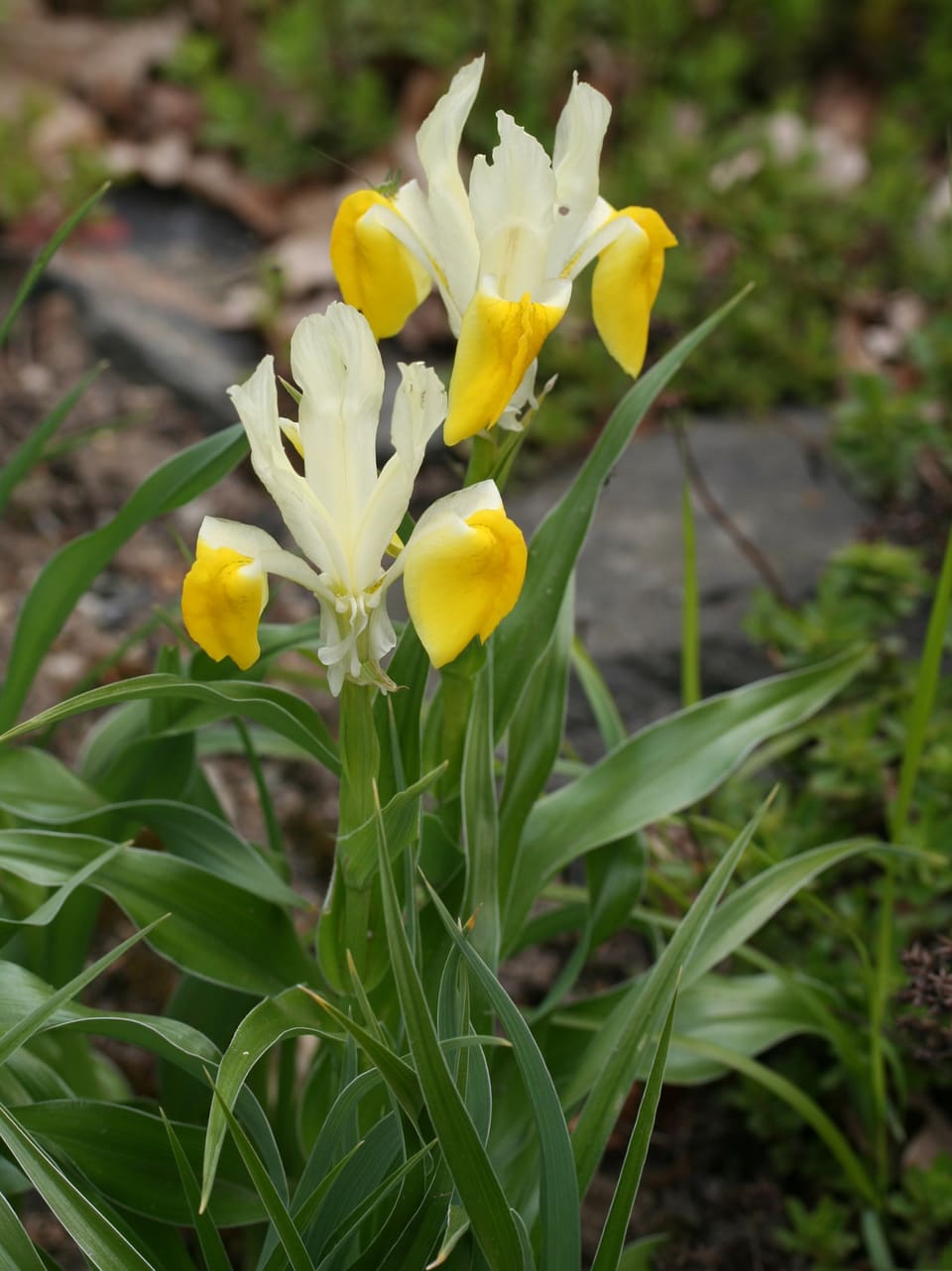
Cream irises with broad bright yellow hanging petals, among glossy strap-shaped leaves
FlowerMichael WolfCC BY-SA 3.0

About the plant

What it is and where it grows — not part of any germination protocol.

Habit
tuberous geophytePlants of the World Online
Flower
White, yellowWikipedia
Native range
Afghanistan, Tadzhikistan, UzbekistanGBIF Backbone Taxonomy

Toxicity is noted only where a source states it. No note here is not a finding of safety.

Sources: Plants of the World Online — Royal Botanic Gardens, Kew; Wikipedia — Wikipedia contributors; GBIF Backbone Taxonomy — Global Biodiversity Information Facility.

Worth knowing

  • Also called the Bukhara, corn leaf or horned iris, it comes from Afghanistan, Tajikistan and Uzbekistan, and has gained the RHS Award of Garden Merit. Wikipedia: Iris bucharica

This source reports 5 treatments. All are shown.

Protocol 1

DerivedN. C. Deno, 1998

Difficulty Low Rated by us, not by the source.

Start around October 27, 2027 for a May 3 last frost. Too late for spring 2027 — that needed starting on October 26, 2026.

  1. Cold moist stratification

    Temperature: 40°F 4°C

Germination happens during step 1, in 161 days.

100% germination in 91–161 days.

Seed Germination Theory and Practice, 2nd Supplement — N. C. Deno, 1998 · 2nd Supplement, Juno p. 41Public domain
Show the original text
Juno (Iridaceae). This genus was discussed in detail in a Chapter devoted to Aril Iris in the 1st Suppl. Four procedures were described for initiating germination. One of these was to collect the seeds as soon as the pod started to turn tan and to place the seeds immediately in moist towels at 40. Note that the seeds must immediately be placed at 40 for this procédure to work best. This procedure can be termed the "green seed" method. This method has now been confirmed with J. bucharica (green seeds) germ. 40(79% in 11-18.w) and'70D-40(44% in 7-10 w) for the first sample and 40(100% in 13-23 w) and 70D-40(92% in 6-10 w) for the second sample. Seeds DS 1 y germ. 70D-40(20% in 2nd w) and 40-70D-40(none) indicating that they were largely dead and seeds DS 2.5 y were dead.
Seed Germination Theory and Practice, 2nd Supplement, 2nd Supplement, Juno p. 41. Quoted exactly. Every value on this card comes from this record, except the difficulty rating, which is ours; the step names come from a fixed list.

Protocol 2

DerivedN. C. Deno, 1998

Difficulty Moderate Rated by us, not by the source.

Start around October 28, 2027 for a May 3 last frost. Too late for spring 2027 — that needed starting on October 27, 2026.

  1. Warm moist stratification

    Duration: 90 daysTemperature: 70°F 21°C Light: dark

  2. Cold moist stratification

    Duration: 90 daysTemperature: 40°F 4°C

about 3 months from start to step 2. Germination happens during step 2, in 70 days.

92% germination in 42–70 days.

Seed Germination Theory and Practice, 2nd Supplement — N. C. Deno, 1998 · 2nd Supplement, Juno p. 41Public domain
Show the original text
Juno (Iridaceae). This genus was discussed in detail in a Chapter devoted to Aril Iris in the 1st Suppl. Four procedures were described for initiating germination. One of these was to collect the seeds as soon as the pod started to turn tan and to place the seeds immediately in moist towels at 40. Note that the seeds must immediately be placed at 40 for this procédure to work best. This procedure can be termed the "green seed" method. This method has now been confirmed with J. bucharica (green seeds) germ. 40(79% in 11-18.w) and'70D-40(44% in 7-10 w) for the first sample and 40(100% in 13-23 w) and 70D-40(92% in 6-10 w) for the second sample. Seeds DS 1 y germ. 70D-40(20% in 2nd w) and 40-70D-40(none) indicating that they were largely dead and seeds DS 2.5 y were dead.
Seed Germination Theory and Practice, 2nd Supplement, 2nd Supplement, Juno p. 41. Quoted exactly. Every value on this card comes from this record, except the difficulty rating, which is ours; the step names come from a fixed list.

Protocol 3

DerivedN. C. Deno, 1998

Difficulty Low Rated by us, not by the source.

Start around March 15, 2027 for a May 3 last frost.

  1. Cold moist stratification

    Temperature: 40°F 4°C

Germination happens during step 1; time not stated, 21 days assumed.

79% germination.

Seed Germination Theory and Practice, 2nd Supplement — N. C. Deno, 1998 · 2nd Supplement, Juno p. 41Public domain
Show the original text
Juno (Iridaceae). This genus was discussed in detail in a Chapter devoted to Aril Iris in the 1st Suppl. Four procedures were described for initiating germination. One of these was to collect the seeds as soon as the pod started to turn tan and to place the seeds immediately in moist towels at 40. Note that the seeds must immediately be placed at 40 for this procédure to work best. This procedure can be termed the "green seed" method. This method has now been confirmed with J. bucharica (green seeds) germ. 40(79% in 11-18.w) and'70D-40(44% in 7-10 w) for the first sample and 40(100% in 13-23 w) and 70D-40(92% in 6-10 w) for the second sample. Seeds DS 1 y germ. 70D-40(20% in 2nd w) and 40-70D-40(none) indicating that they were largely dead and seeds DS 2.5 y were dead.
Seed Germination Theory and Practice, 2nd Supplement, 2nd Supplement, Juno p. 41. Quoted exactly. Every value on this card comes from this record, except the difficulty rating, which is ours; the step names come from a fixed list.

Protocol 4

DerivedN. C. Deno, 1998

Difficulty Moderate Rated by us, not by the source.

Start around October 28, 2027 for a May 3 last frost. Too late for spring 2027 — that needed starting on October 27, 2026.

  1. Warm moist stratification

    Duration: 90 daysTemperature: 70°F 21°C Light: dark

  2. Cold moist stratification

    Duration: 90 daysTemperature: 40°F 4°C

about 3 months from start to step 2. Germination happens during step 2, in 70 days.

44% germination in 49–70 days.

Seed Germination Theory and Practice, 2nd Supplement — N. C. Deno, 1998 · 2nd Supplement, Juno p. 41Public domain
Show the original text
Juno (Iridaceae). This genus was discussed in detail in a Chapter devoted to Aril Iris in the 1st Suppl. Four procedures were described for initiating germination. One of these was to collect the seeds as soon as the pod started to turn tan and to place the seeds immediately in moist towels at 40. Note that the seeds must immediately be placed at 40 for this procédure to work best. This procedure can be termed the "green seed" method. This method has now been confirmed with J. bucharica (green seeds) germ. 40(79% in 11-18.w) and'70D-40(44% in 7-10 w) for the first sample and 40(100% in 13-23 w) and 70D-40(92% in 6-10 w) for the second sample. Seeds DS 1 y germ. 70D-40(20% in 2nd w) and 40-70D-40(none) indicating that they were largely dead and seeds DS 2.5 y were dead.
Seed Germination Theory and Practice, 2nd Supplement, 2nd Supplement, Juno p. 41. Quoted exactly. Every value on this card comes from this record, except the difficulty rating, which is ours; the step names come from a fixed list.

Protocol 5

DerivedN. C. Deno, 1998

Difficulty High Rated by us, not by the source.

Start around December 23, 2026 for a May 3 last frost. Too late for spring 2027 — that needed starting on December 22, 2025.

  1. Dry storage

    Duration: 365 daysTemperature: 70°F 21°C

  2. Warm moist stratification

    Duration: 90 daysTemperature: 70°F 21°C Light: dark

  3. Cold moist stratification

    Duration: 90 daysTemperature: 40°F 4°C

about 15 months from start to step 3. Germination happens during step 3, in 14 days.
20% germination in 14 days.

Seed Germination Theory and Practice, 2nd Supplement — N. C. Deno, 1998 · 2nd Supplement, Juno p. 41Public domain
Show the original text
Juno (Iridaceae). This genus was discussed in detail in a Chapter devoted to Aril Iris in the 1st Suppl. Four procedures were described for initiating germination. One of these was to collect the seeds as soon as the pod started to turn tan and to place the seeds immediately in moist towels at 40. Note that the seeds must immediately be placed at 40 for this procédure to work best. This procedure can be termed the "green seed" method. This method has now been confirmed with J. bucharica (green seeds) germ. 40(79% in 11-18.w) and'70D-40(44% in 7-10 w) for the first sample and 40(100% in 13-23 w) and 70D-40(92% in 6-10 w) for the second sample. Seeds DS 1 y germ. 70D-40(20% in 2nd w) and 40-70D-40(none) indicating that they were largely dead and seeds DS 2.5 y were dead.
Seed Germination Theory and Practice, 2nd Supplement, 2nd Supplement, Juno p. 41. Quoted exactly. Every value on this card comes from this record, except the difficulty rating, which is ours; the step names come from a fixed list.

Germination trials

Readers’ own records of sowing this species, published after review. Share your trial · All trials

Add to My Garden

View species page