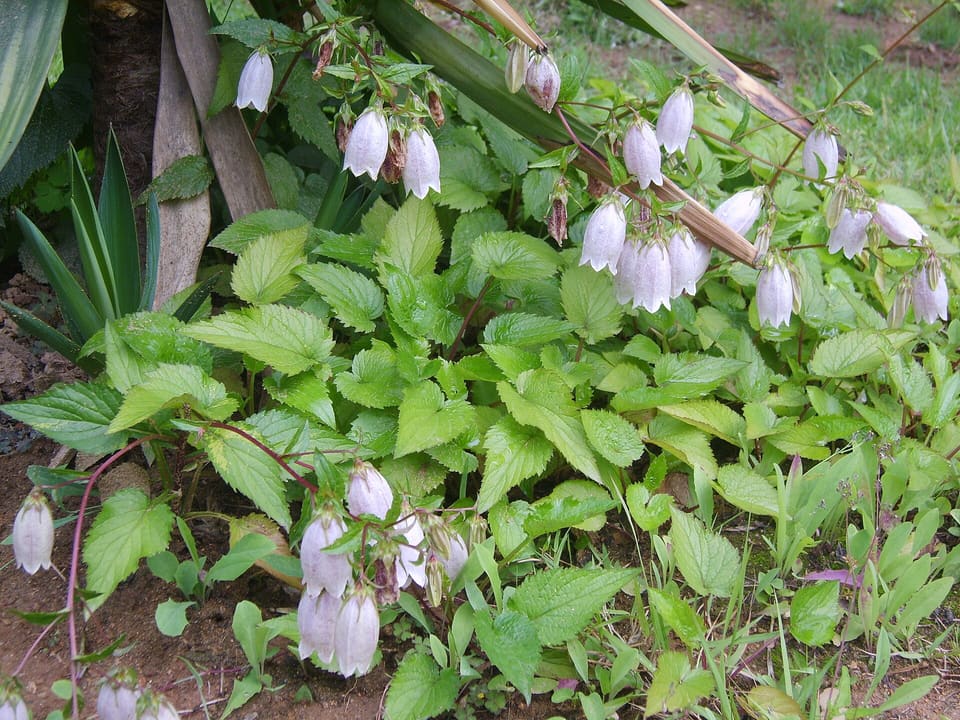
+ Add to My Garden
About the plant What it is and where it grows — not part of any germination protocol.
The plant
Habit Herbaceous Perennial, Perennial Extension Gardener Plant Toolbox
Habit perennial Plants of the World Online
Height 1-2 ft 30-60 cm Extension Gardener Plant Toolbox
Spread 1.5-2.5 ft 45-75 cm Extension Gardener Plant Toolbox
Flower Pink, Purple/Lavender, Red/Burgundy, White Extension Gardener Plant Toolbox
Blooms Spring, Summer Extension Gardener Plant Toolbox
Native range Amur, China North-Central, China South-Central, China Southeast, Chita, Inner Mongolia and elsewhere GBIF Backbone Taxonomy
Hardiness zones 5-9 Extension Gardener Plant Toolbox Growing conditions
Sun Full sun; Partial Shade Extension Gardener Plant Toolbox
Soil Loam (Silt), Sand Extension Gardener Plant Toolbox
Soil pH Alkaline (>8.0), Neutral (6.0-8.0) Extension Gardener Plant Toolbox
Moisture Good Drainage, Moist Extension Gardener Plant Toolbox Toxicity is noted only where a source states it. No note here is not a finding of safety.
Sources: Extension Gardener Plant Toolbox — NC State Extension; Plants of the World Online — Royal Botanic Gardens, Kew; GBIF Backbone Taxonomy — Global Biodiversity Information Facility.
Worth knowing Punctata means "spotted". The spotted bellflower, from Japan, Korea, China and Siberia, has been bred into cultivars such as 'Pantaloons', 'Pink Chimes' and 'Wedding Bells'. Wikipedia: Campanula punctata This source reports 5 treatments. All are shown.
Protocol 1 N. C. Deno, 1993 Difficulty Low Rated by us, not by the source.
Start around March 26, 2027 for a May 3 last frost.
1 Sow and cover
Temperature: 70°F 21°C · Light: light
No stated waiting before sowing. Then 10 days to germinate.
78% germination in 10 days.
Seed Germination Theory and Practice, 2nd ed. — N. C. Deno, 1993 · Ch. 20, Campanula p. 110Public domain Show the original text Campanula (Campanulaceae). Most species are D-70 germinators. There are some that are 40-70 germinators and photorequirers and C. punctata and exhibited a similar disappearance of the photorequirement on DS. Fresh seed germ. 70L(78% in 6 :10 d) and none in 70D, 40-70D, or 40-70L. This failure to germinate in 40-70L shows that an initial 3 m at 40 is fatal. Seed DS 6 m at. 70 germ. 100% in 6-8 d in either 70L or 70D and 40(11% in 3-5 w). Seed Germination Theory and Practice, 2nd ed., Ch. 20, Campanula p. 110. Quoted exactly. Every value on this card comes from this record, except the difficulty rating, which is ours; the step names come from a fixed list. Protocol 2 N. C. Deno, 1993 Difficulty Moderate Rated by us, not by the source.
Start around March 24, 2027 for a May 3 last frost.
1 Sow and cover
Temperature: 70°F 21°C · Light: dark
No stated waiting before sowing. Then 12 days to germinate.
35% germination in 6–12 days.
Seed Germination Theory and Practice, 2nd ed. — N. C. Deno, 1993 · Ch. 20, Campanula p. 110Public domain Show the original text Campanula (Campanulaceae). Most species are D-70 germinators. There are some that are 40-70 germinators and photorequirers and C. punctata germ. best in 70L(80% in 6-12d) and less in 70D(35% in 6-12 d). This photoeffect diminishes on DS, and seed DS 6 m at 70 germ. 80-90% in either 70L or 700. Starting seed at 40 gave less than 10% germination with fresh seed, but the DS seed germ. 40(50% in 3-8 w). - Seed Germination Theory and Practice, 2nd ed., Ch. 20, Campanula p. 110. Quoted exactly. Every value on this card comes from this record, except the difficulty rating, which is ours; the step names come from a fixed list. Protocol 3 N. C. Deno, 1993 Difficulty High Rated by us, not by the source.
Start around September 3, 2027 for a May 3 last frost. Too late for spring 2027 — that needed starting on September 2, 2026.
1 Dry storage
Duration: 180 days · Temperature: 70°F 21°C
2 Cold moist stratification
Temperature: 40°F 4°C
about 6 months from start to step 2. Germination happens during step 2, in 35 days.
11% germination in 21–35 days.
Seed Germination Theory and Practice, 2nd ed. — N. C. Deno, 1993 · Ch. 20, Campanula p. 110Public domain Show the original text Campanula (Campanulaceae). Most species are D-70 germinators. There are some that are 40-70 germinators and photorequirers and C. punctata and exhibited a similar disappearance of the photorequirement on DS. Fresh seed germ. 70L(78% in 6 :10 d) and none in 70D, 40-70D, or 40-70L. This failure to germinate in 40-70L shows that an initial 3 m at 40 is fatal. Seed DS 6 m at. 70 germ. 100% in 6-8 d in either 70L or 70D and 40(11% in 3-5 w). Seed Germination Theory and Practice, 2nd ed., Ch. 20, Campanula p. 110. Quoted exactly. Every value on this card comes from this record, except the difficulty rating, which is ours; the step names come from a fixed list. Protocol 4 N. C. Deno, 1993 Difficulty High Rated by us, not by the source.
Start around March 1, 2027 for a May 3 last frost.
1 Cold moist stratification
Temperature: 40°F 4°C
Germination happens during step 1, in 35 days.
11% germination in 21–35 days.
Seed Germination Theory and Practice, 2nd ed. — N. C. Deno, 1993 · Ch. 20, Campanula p. 110Public domain Show the original text Campanula (Campanulaceae). Most species are D-70 germinators. There are some that are 40-70 germinators and photorequirers and C. punctata and exhibited a similar disappearance of the photorequirement on DS. Fresh seed germ. 70L(78% in 6 :10 d) and none in 70D, 40-70D, or 40-70L. This failure to germinate in 40-70L shows that an initial 3 m at 40 is fatal. Seed DS 6 m at. 70 germ. 100% in 6-8 d in either 70L or 70D and 40(11% in 3-5 w). Seed Germination Theory and Practice, 2nd ed., Ch. 20, Campanula p. 110. Quoted exactly. Every value on this card comes from this record, except the difficulty rating, which is ours; the step names come from a fixed list. Protocol 5 N. C. Deno, 1993 1 Sow and cover
Temperature: 70°F 21°C · Light: dark
No stated waiting before sowing.
0% germination.
Nothing germinated at 70.
Seed Germination Theory and Practice, 2nd ed. — N. C. Deno, 1993 · Ch. 20, Campanula p. 110Public domain Show the original text Campanula (Campanulaceae). Most species are D-70 germinators. There are some that are 40-70 germinators and photorequirers and C. punctata and exhibited a similar disappearance of the photorequirement on DS. Fresh seed germ. 70L(78% in 6 :10 d) and none in 70D, 40-70D, or 40-70L. This failure to germinate in 40-70L shows that an initial 3 m at 40 is fatal. Seed DS 6 m at. 70 germ. 100% in 6-8 d in either 70L or 70D and 40(11% in 3-5 w). Seed Germination Theory and Practice, 2nd ed., Ch. 20, Campanula p. 110. Quoted exactly. Every value on this card comes from this record; the step names come from a fixed list. How each step is done , in Deno’s words, and what Verified and Derived mean.
Germination trials Readers’ own records of sowing this species, published after review. Share your trial · All trials
No trials shared for this species yet.