Deno’s GardenMy Garden

Campanula vidalii

Azores Bellflower

Family CampanulaceaeGenus Campanula

Also published as Azorina vidalii. You are in the right place.
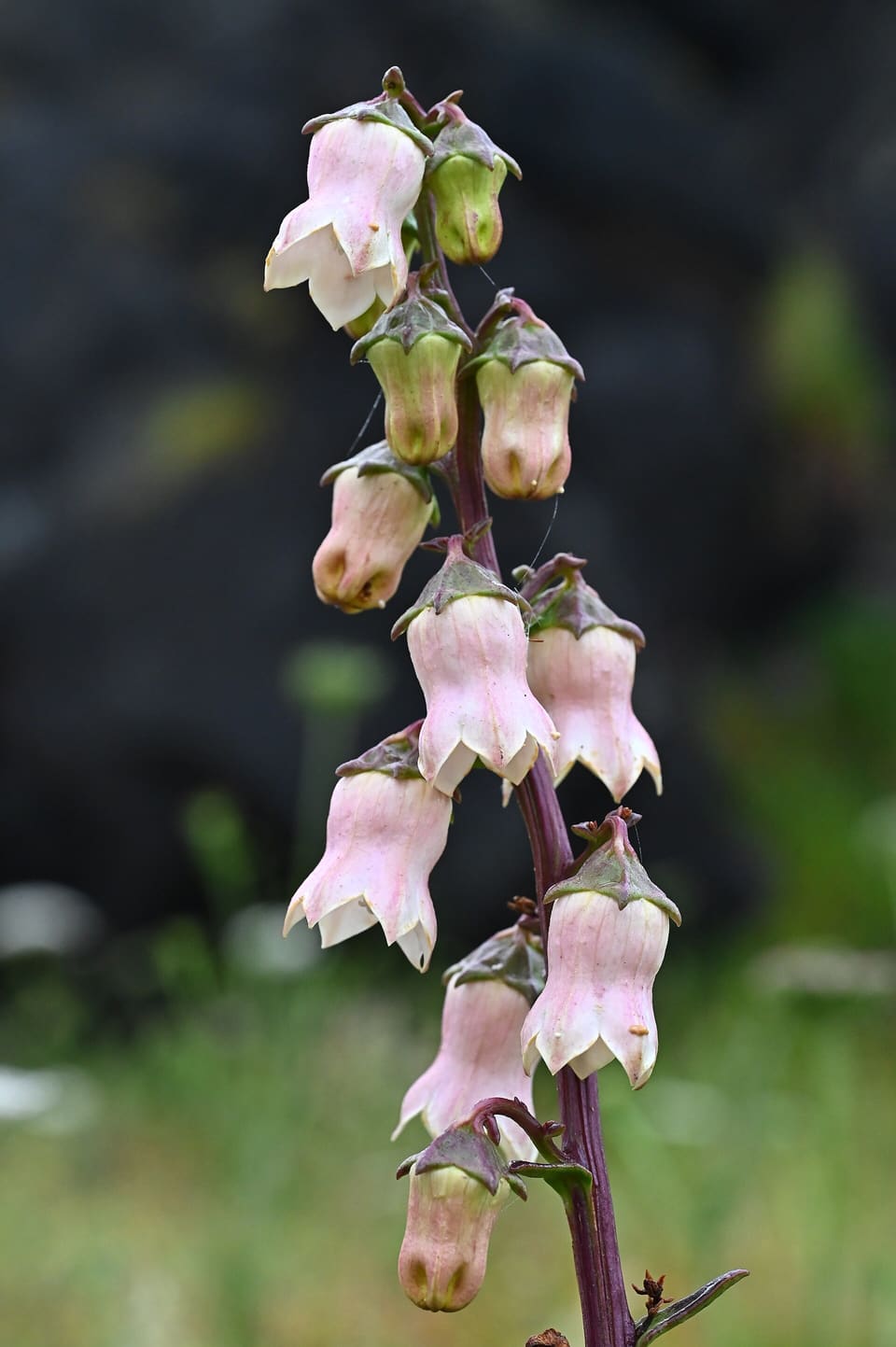
Pale pink waxy bells with reflexed tips, hanging in pairs from a dark red stem, each cupped in a green calyx.
FlowerKrzysztof Ziarnek, KenraizCC BY 4.0

About the plant

What it is and where it grows — not part of any germination protocol.

Habit
shrubPlants of the World Online
Flower
White, pinkishWikipedia
Native range
AzoresGBIF Backbone Taxonomy

Toxicity is noted only where a source states it. No note here is not a finding of safety.

Sources: Plants of the World Online — Royal Botanic Gardens, Kew; Wikipedia — Wikipedia contributors; GBIF Backbone Taxonomy — Global Biodiversity Information Facility.

Worth knowing

  • The Azores bellflower is the only species in its genus and the only member of the bellflower family native to the Azores. Fewer than 1,000 mature plants survive, scattered along the coasts, mainly in crevices of the coastal cliffs. Wikipedia: Azorina

This source reports three treatments. All are shown.

Protocol 1

DerivedN. C. Deno, 1998

Difficulty Low Rated by us, not by the source.

Start around March 28, 2027 for a May 3 last frost.

  1. Sow and cover

    Temperature: 70°F 21°C Light: light

No stated waiting before sowing. Then 8 days to germinate.

100% germination in 8 days.

Seed Germination Theory and Practice, 2nd Supplement — N. C. Deno, 1998 · 2nd Supplement, Azorina p. 17Public domain
Show the original text
Azorina (Campanulaceae). A. vidallii germ. better in light. The data were 70L(100% on 8th d), 70D(55% in 14-17 d), 40-70L(82% in 2nd w), and 40-70D(none). When the sample in 70D was moved to 70L after 3 w, the remaining 45% germ. in the 2nd w.
Seed Germination Theory and Practice, 2nd Supplement, 2nd Supplement, Azorina p. 17. Quoted exactly. Every value on this card comes from this record, except the difficulty rating, which is ours; the step names come from a fixed list.

Protocol 2

DerivedN. C. Deno, 1998

Difficulty Moderate Rated by us, not by the source.

Start around December 22, 2026 for a May 3 last frost.

  1. Cold moist stratification

    Duration: 90 daysTemperature: 40°F 4°C

  2. Warm moist stratification

    Duration: 90 daysTemperature: 70°F 21°C Light: light

about 3 months from start to step 2. Germination happens during step 2, in 14 days.

82% germination in 14 days.

Seed Germination Theory and Practice, 2nd Supplement — N. C. Deno, 1998 · 2nd Supplement, Azorina p. 17Public domain
Show the original text
Azorina (Campanulaceae). A. vidallii germ. better in light. The data were 70L(100% on 8th d), 70D(55% in 14-17 d), 40-70L(82% in 2nd w), and 40-70D(none). When the sample in 70D was moved to 70L after 3 w, the remaining 45% germ. in the 2nd w.
Seed Germination Theory and Practice, 2nd Supplement, 2nd Supplement, Azorina p. 17. Quoted exactly. Every value on this card comes from this record, except the difficulty rating, which is ours; the step names come from a fixed list.

Protocol 3

DerivedN. C. Deno, 1998

Difficulty Moderate Rated by us, not by the source.

Start around March 19, 2027 for a May 3 last frost.

  1. Sow and cover

    Temperature: 70°F 21°C Light: dark

No stated waiting before sowing. Then 17 days to germinate.

55% germination in 14–17 days.

Seed Germination Theory and Practice, 2nd Supplement — N. C. Deno, 1998 · 2nd Supplement, Azorina p. 17Public domain
Show the original text
Azorina (Campanulaceae). A. vidallii germ. better in light. The data were 70L(100% on 8th d), 70D(55% in 14-17 d), 40-70L(82% in 2nd w), and 40-70D(none). When the sample in 70D was moved to 70L after 3 w, the remaining 45% germ. in the 2nd w.
Seed Germination Theory and Practice, 2nd Supplement, 2nd Supplement, Azorina p. 17. Quoted exactly. Every value on this card comes from this record, except the difficulty rating, which is ours; the step names come from a fixed list.

Germination trials

Readers’ own records of sowing this species, published after review. Share your trial · All trials

Add to My Garden

View species page